Low German, a West Germanic language spoken in northern Germany and the northeastern Netherlands, is distinguished by its absence of the High German consonant shift and its close connections to English and Frisian. Historically, it was spoken in northern regions north of the Benrath and Uerdingen isoglosses, contrasting with High German. Authors like F.
Max Müller observed its gradual decline in comparison to High German, which became dominant in literature and society, while others, such as Karl Spindler, emphasized its uniqueness among seafaring communities. Despite its marginalization, Low German continues to be used in dialects and Mennonite enclaves, reflecting both cultural resilience and linguistic diversity. Its survival highlights a tension between standardization and regional identity.
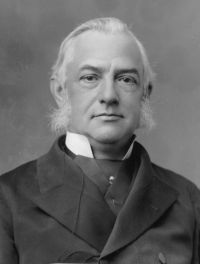 F. Max Müller,
Chips from a German Workshop, Volume 3
F. Max Müller,
Chips from a German Workshop, Volume 3