“ The great driving force of the oligarchs is the belief that they are doing right. Never mind the exceptions, and never mind the oppression and injustice in which the Iron Heel was conceived. All is granted. The point is that the strength of the Oligarchy today lies in its satisfied conception of its own righteousness. [2] [2] Out of the ethical incoherency and inconsistency of capitalism, the oligarchs emerged with a new ethics, coherent and definite, sharp and severe as steel, the most absurd and unscientific and at the same time the most potent ever possessed by any tyrant class. ”
Quotes about “Oligocene”
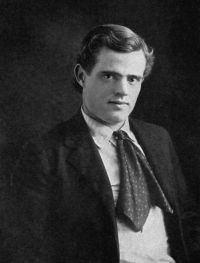 Jack London,
The Iron Heel
(1908)
Jack London,
The Iron Heel
(1908)
“ They constituted the balance of power in the struggles between the labor castes and the oligarchs, and now to one side and now to the other, threw their strength according to the play of intrigue and conspiracy. The oligarchs themselves were going through a remarkable and, it must be confessed, unexpected development. As a class, they disciplined themselves. Every member had his work to do in the world, and this work he was compelled to do. There were no more idle-rich young men. Their strength was used to give united strength to the Oligarchy. ”
Life of Henriette Sontag, Countess de Rossi
“ This circle, consisting of those who were once the great feudal lords of the overgrown empire, of the mediatized princes, of the nobles who had the highest rank and the greatest power, with a sprinkling of those who had the greatest talent to amuse society—there was formed a crême de la crême—a social oligarchy of exclusiveness, without example in any other capital. ”
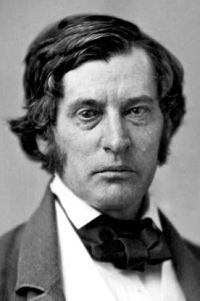 Charles Sumner,
Charles Sumner: his complete works…
Charles Sumner,
Charles Sumner: his complete works…
“ Standing on the bent necks of an enslaved race, with four millions of human beings as the black marble Caryatides to support its power, the Slave Oligarchy erects itself into a lordly caste which brooks no opposition. But when I speak of Caste, I mean nothing truly polite; and when I speak of Oligarchy, I mean nothing truly aristocratic. As despotism is simply an abuse of monarchy, so Oligarchy is simply an abuse of aristocracy, unless it be that most vulgar of all, “aristocracy of the skin.” ”
 Mrs. Oliphant,
The Wizard's Son, Vol. 2 (of 3…
Mrs. Oliphant,
The Wizard's Son, Vol. 2 (of 3…
“ If it be enough to hate this tyrannical influence, this cruel despotism——""As you have hated every influence and every rule all your life," said the other with a smile. "That is not the sort of man that does anything. Do you think it is agreeable to me to be the progenitor of a race of nobodies? I compensate myself by making them great against their will—the puppets! I allow you to wear my honours out of consideration to the prejudices of society: but they are all mine.""It was not you, however, who got them," said Walter. "Can a grandfather inherit what was given to his descendants?" ”
International Eugenics Congress, Abstracts of Papers Read at the First International Eugenics Congress
“ An oligarchy is invariably formed in all political parties for reasons based partly on individual psychology, partly on crowd psychology, and partly on the social necessity of party organisation. Under the first head is grouped the individual's consciousness of his own importance, which with opportunity develops into the natural human lust for power, and, further, such individual qualities as native tact, editorial ability, and so on. ”
 Plato,
The Republic of Plato
(1901)
Plato,
The Republic of Plato
(1901)
“ And if there be any ally which aids the oligarchical principle within him, whether the influence of a father or of kindred, advising or rebuking him, then there arise in his soul a faction and an opposite faction, and he goes to war with himself. ”
Mrs. Oliphant,
The Heir Presumptive and the Heir Apparent
“ She reflected, however, that her previous experience had been only of a few days, and that a fortnight was a long time for such a community to be put under the sway of a stranger like herself, whom they had no right to obey, and whom with the spirit of their class they despised as at once better and not so good as themselves—an inferior with the appearance of a superior—far below themselves in independence, while apparently placed over them. ”
Mrs. Oliphant,
The Makers of Modern Rome, in Four Books
“ They vexed his soul wherever he turned, men with no motive, no inspiration beyond that of their fellows, ready to scheme and struggle for the aggrandisement of the Church, if you will—for the increase of their own greatness and power and those of the corporations subject to them: but as little conscious of that other and holier ambition, that hope and dream of a reign of righteousness, as were their fellows and brethren, the dukes and counts, the fighting men, the ambitious princes of Germany and Lombardy. ”
 George Grote,
Plato and the Other Companions of Sokrates…
George Grote,
Plato and the Other Companions of Sokrates…
“ Out of this timocracy, or timarchy, the city will next pass into an oligarchy, or government of wealth. The rich will here govern, to the exclusion of the poor. Reason, in the timocracy, was under the dominion of energy or courage: in the oligarchy, it will be under the dominion of appetite. The love of wealth will become predominant, instead of the love of force and aggrandisement. ”
“ The oligarchical man and State resemble one another in their estimation of wealth: In their toiling and saving ways, in their want of cultivation. Yes, he said; at any rate the individual out of whom he came is like the State out of which oligarchy came. ”
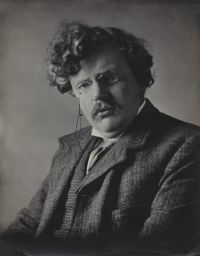 Gilbert Keith Chesterton,
Heretics — Chapter 12: Paganism and Mr…
(1905)
Gilbert Keith Chesterton,
Heretics — Chapter 12: Paganism and Mr…
(1905)
“ There are no wise few. Every aristocracy that has ever existed has behaved, in all essential points, exactly like a small mob. Every oligarchy is merely a knot of men in the street--that is to say, it is very jolly, but not infallible. And no oligarchies in the world's history have ever come off so badly in practical affairs as the very proud oligarchies--the oligarchy of Poland, the oligarchy of Venice. ”
Mrs. Oliphant,
The Makers of Modern Rome, in Four Books
“ If you thus judge in things spiritual, with how much more power ought you not to do so in things secular! And if you judge the angels who are the masters of the proudest princes, what may you not do with the princes, their slaves! Let the kings and great ones of the earth know to-day how great you are, and what your power is; let them fear to neglect the ordinances of the Church! Accomplish quickly your judgment on Henry so that to the eyes of all it may be apparent that it falls upon him not by chance but by your power. ”
Library of the best American literature (1897)
“ An oligarchy of learning, where the educated govern the ignorant, or even an oligarchy of race, where the Saxon rules the African, might be endured; but this oligarchy of sex, which makes father, brothers, husband, sons the oligarchs over the mother and sisters, the wife and daughters of every household; which ordains all men sovereigns, all women subjects; carries dissension, discord and rebellion into every home of the nation. ”
P. V. N. Myers, A General History for Colleges and High Schools…
“ The Oligarchies give Way to Tyrannies.—The nobles into whose hands the ancient royal authority thus passed were often divided among themselves, and invariably opposed by the common freemen, who, as they grew in intelligence and wealth, naturally aspired to a place in the government. The issue of long contentions was the overthrow almost everywhere of oligarchical government and the establishment of the rule of a single person. ”
Mrs. Oliphant,
The House on the Moor, v. 1/3
“ With a sensation of superiority, which he owed principally to his natural temper—for there was in reality very little distinction of breeding or character between himself and the society he frequented—he held a scornful dictatorial place among the humbler convives of the villages, and observed and amused himself with the peculiarities he saw, very much as if he had been a man of the world, trained to that odious criticism which is dignified by being called “the study of mankind.” ”
Mrs. Oliphant,
Royal Edinburgh: Her Saints, Kings…
“ Thus passive and helpless, yet with the fiction of supremacy in his name, we see the boy only by glimpses through the tumultuous crowd about him with all their struggles for power, until suddenly he flashes forth into the foreground, the chief figure in a scene more violent and terrible still than any that had preceded it, taking up in his own person the perpetual and unending struggle, and striking for himself the decisive blow. ”
 Thomas Hobbes,
The Elements of Law — Part II, Chapter 20
Thomas Hobbes,
The Elements of Law — Part II, Chapter 20
“ If the major part of a certain number of men named or distinguished from the rest, be supposed to involve the wills of every one of the particulars, then are they said to be an OLIGARCHY, or ARISTOCRACY; which two words signify the same thing, together with the divers passions of those that use them; for when the men that be in that office please, they are called an aristocracy, otherwise an oligarchy; wherein those, the major part of which declare the wills of the whole multitude, being assembled, are the sovereign, and every man severally a subject. ”
Mrs. Oliphant,
The House on the Moor, v. 1/3
“ You know what the proverb says: ‘A man is known by the company he keeps.’ ”“Had he better keep no company?” said Horace; “very possibly; but then I can’t help being young, poor devil that I am. I can’t make a woman of myself, or be a child all my life. I must have something out of my prison—and you are not the man to blame me, uncle. The fellows you blame are those who have society in their favour. As for those country blockheads, whom I see in the woods or in the alehouses, do you think I care for them? Do you care for a set of dancing dogs or a wandering monkey? ”
Margaret Oliphant, Jeanne D'Arc: her life and death (1896)
“ The interests of one part of the kingdom were not those of the other. Unity had no existence. Princes of the same family were more furious enemies to each other, at the head of their respective fiefs and provinces, than the traditional foes of their race; and instead of meeting an invader with a united force of patriotic resistance, one or more of these subordinate rulers was sure to side with the invader and to execute greater atrocities against his own flesh and blood than anything the alien could do. ”
 Friedrich Nietzsche,
On the Genealogy of Morality
(1887)
Friedrich Nietzsche,
On the Genealogy of Morality
(1887)
“ There is always lurking beneath every oligarchy—such is the universal lesson of history—the desire for tyranny. Every oligarchy is continually quivering with the tension of the effort required by each individual to keep mastering this desire. (Such, e.g., was the Greek; Plato shows it in a hundred places, Plato, who knew his contemporaries—and himself.) ”
Joel Chandler Harris' life of Henry W. Grady including his writings and speeches (1890)
“ Thus was gathered in the hands of a splendid and chivalric oligarchy the substance that should have been diffused among the people, as the rich blood, under certain artificial conditions, is gathered at the heart, filling that with affluent rapture but leaving the body chill and colorless. ”

“ In the presence of such a difficulty most men who are concerned both for the good of their country and for the general order of society incline, especially as they grow older, to one, or other of the old traditional organic methods by which a State may be expressed and controlled. They incline to an oligarchy such as is here in England where a small group of families, intermarried one with the other, dining together perpetually and perpetually guests in each other's houses, are by a tacit agreement with the populace permitted to direct a nation. ”
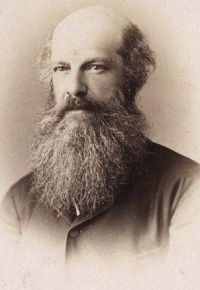 Laurence Oliphant,
Fashionable Philosophy, and Other Sketches
Laurence Oliphant,
Fashionable Philosophy, and Other Sketches
“ Church and State, and the whole economic system upon which society is based, would melt away before it like an iceberg under a tropical sun. I don’t mind discussing the religion of the future as a subject of interesting speculation; but, depend upon it, we had better let well alone. It seems to me that we—at least those of us who are well off—have nothing to complain of. ”
 Willard Huntington Wright,
What Nietzsche Taught
Willard Huntington Wright,
What Nietzsche Taught
“ In spite of local and political separation they form a cohesive society, whose members recognise and acknowledge each other, whatever public opinion and the verdicts of review and newspaper writers who influence the masses may circulate in favour of or against them. Mental superiority, which formerly divided and embittered, nowadays generally unites. ... Oligarchs are necessary to each other, they are each other's best joy, they understand their signs, but each is nevertheless free, he fights and conquers in his place and perishes rather than submit. ”
Mrs. Oliphant,
The Perpetual Curate
“ Nothing is perfect in this world; but at least to do something in it—to be good for something—and with your faculties, Gerald!" cried the admiring and regretful brother. "Can abstract right in an institution, if that is what you aim at, be worth the sacrifice of your existence—your power of influencing your fellow-creatures?" ”
 Scott Nearing,
Civilization and Beyond: Learning from History
Scott Nearing,
Civilization and Beyond: Learning from History
“ The net result, in every civilization, has been a ruling oligarchy, self-appointed and self-perpetuating, which has shaped policy, planned and directed administration, exercised authority and lived comfortably and at least semi-parasitically on the backs of the underlying urban and rural masses, sharing its sinecure with its middle class handymen. In some times and in certain localities the oligarchy has maintained a representative front. Elsewhere it has functioned arbitrarily. In extreme cases one man has ruled for a brief period. Generally the oligarchy has held the reins of authority. ”
Mrs. Oliphant,
The Days of My Life: An Autobiography
“ I said; “has anything changed? are our circumstances different from what they were?”“Yes,” he cried eagerly; “we have been apart, we have found out our true union, we have learned what it is to pine for a look, the very slightest, of the face most dear in the world to us. We have found how transitory, how poor all offences and resentments are, and how the original outlives and outlasts them. Hester, do I not speak the truth?” ”
Charles Stuart, A memoir of Granville Sharp (1836)
“ Such are the principles, the universal prevalence of which, would make the world a moral Eden—the rejection of which, keeps it a little hell; especially where freemen hold slaves; for of all governments, an oligarchy is the worst. ”
“ For Love to exalt himself by blood!'He turned his sightless eyes instinctively towards Olgiati, where the boy stood, a dark, fatalistic young figure, breathing himself by the forge. He, he guessed, or perhaps knew, was alone of the company actuated by impersonal motives in this dread conspiracy. But he did not guess that, by so much as the young man was a pure fanatic of liberty, his hand and purpose were the most of all to be dreaded. ”
Laurence Oliphant,
Piccadilly: A Fragment of Contemporary Biography
“ Unless you do something of this kind soon, you will reverse the whole system of nature. The men will be the candles and you the moths; they will be the flowers, and you the butterflies. If all the brothers in London persist in trying to imitate their sisters, and all the sisters ape their brothers, what a nice confusion we shall arrive at! ”
Eliza Burt Gamble, The Sexes in Science and History
“ Solicitude for the common weal, although still felt by the great mass of the people, had among the rulers given place to extreme egoism, and that association and combination of interests, which since the dawn of organized society had characterized the gens, was rapidly giving way before the love of dominion, the thirst for power, and the greed of gain—characters which in process of time came to represent the mainspring of human action. ”
 William Smith,
A Smaller Dictionary of Greek and Roman Antiquities
William Smith,
A Smaller Dictionary of Greek and Roman Antiquities
“ The preservation of power under such circumstances of course depended chiefly upon the possession of superior wealth and the other appliances of wealth which were its concomitants. Thus it came to be regarded as essentially characteristic of an oligarchy, that the main distinction between the dominant faction and the subject portion of the community was the possession of greater wealth on the part of the former. ”
William Ogilvie, Laird of Cool's ghost (1820s)
“ Ogil.— What is that you tell me Cool? Do not unworthy fellows break house every night and yet you, that can put yourself into so many hundred different shapes in a moment cannot do it. Cool.— It is true, Sir, against the living, men may find out some probable means of securing themselves: but if spirits departed were allowed, then no man would be secure; for, in that case every man I had a prejudice at would soon be beggared. ”
Mrs. Oliphant,
The Heir Presumptive and the Heir Apparent
“ Such a change, from the supremacy of an only child, monarch of all he surveyed, the idol of his father and of his aunt, to whom Mar was every thing, into a mere indefinite member of a large nursery party, nobody’s favorite, a little stranger whose tastes were not consulted, nor his fancies thought of—is more tremendous than anything that can happen to a man. ”
