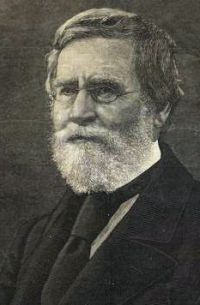
“ The force with which Pyrrhus returned to Tarentum was very nearly as large as that which he had taken away, but was composed of very different materials. The Greeks from Epirus, whom he had brought over with him in the first instance from his native land, had gradually disappeared from the ranks of his army. Many of them had been killed in battle, and still greater numbers had been carried off by exposure and fatigue, and by the thousand other casualties incident to such a service as that in which they were engaged. ”
Pyrrhus of Epirus
Definition and stakes
Pyrrhus of Epirus, a 3rd-century BCE king celebrated for his military endeavors, appears in historical and literary discussions as a figure marked by ambition and tactical intricacy. Authors such as Plutarch emphasize his strategic partnerships and the attraction of Italian Greeks to his cause, while Jacob Abbott describes the exhaustion of his troops due to the burdens of war.
Charles Morris highlights his tense interactions with Rome, including the famous "Pyrrhic victory" remark, and Terence contrasts his ethnocentric outlook with modern perspectives. These narratives together depict Pyrrhus as both a forward-thinking leader and a victim of excessive ambition, his reputation intertwined with the ascendancy of Roman power.
Quotes about “Pyrrhus of Epirus”
 Plutarch,
Plutarch's Lives — Pyrrhus
(1859)
Plutarch,
Plutarch's Lives — Pyrrhus
(1859)
“ So the public order was passed, and ambassadors sent into Epirus, not only in their own names, but in those of all the Italian Greeks, carrying presents to Pyrrhus, and letting him know they wanted a general of reputation and experience; and that they could furnish him with large forces of Lucanians, Messapians, Samnites, and Tarentines, amounting to twenty thousand horse, and three hundred and fifty thousand foot. This did not only quicken Pyrrhus, but raised an eager desire for the expedition in the Epirots. ”
The historians' history of the world in twenty-five volumes…
“ They summoned Pyrrhus, king of Epirus, promising him the support of the Lucanians and Samnites. He eagerly seized the opportunity to renew the attempt of his great-uncle, Alexander the Molossian. Ptolemy Ceraunus, [509] in order to rid himself of a dangerous competitor, furnished him with soldiers and elephants. Pyrrhus founded great hopes on this expedition. ”