“ Yudhishthira said,--"Thou hast won this stake of me by unfair means. But be not so proud, O Sakuni. Let us play staking thousands upon thousands. I have many beautiful jars each full of a thousand Nishkas in my treasury, inexhaustible gold, and much silver and other minerals. This, O king, is the wealth with which I will stake with thee!'"Vaisampayana continued,--"Thus addressed, Sakuni said unto the chief of the perpetuators of the Kuru race, the eldest of the sons of Pandu, king Yudhishthira, of glory incapable of sustaining any diminution. ”
Sakuni
Definition and stakes
The theme of “Sakuni” has been addressed by authors such as John Philip Quinn and Andrew Steinmetz. It is often associated with terms like Sakai, Japan, people, sake and Siddhartha.
Quotes about “Sakuni”
The Mahabharata of Krishna-Dwaipayana Vyasa…
“ Sakuni said.—‘O Duryodhana, thou shouldst not be jealous of Yudhishthira. The sons of Pandu are enjoying what they deserve in consequence of their own good fortune. O slayer of foes, O great king, thou couldst not destroy them by repeatedly devising numberless plans, many of which thou hadst even put to practice. Those tigers among men out of sheer luck escaped all those machinations. They have obtained Draupadi for wife and Drupada with his sons as also Vasudeva of great prowess as allies, capable of helping them in subjugating the whole world. ”
John Philip Quinn, Fools of Fortune; or, Gambling and Gamblers
“ Then Sakuni threw the dice, and won Draupadi for Duryodhana.Then all in that assembly were in great consternation, and the chieftains gazed upon one another without speaking a word. And Duryodhana said to her uncle Vidura. “Go now and bring Draupadi hither, and bid her sweep the rooms.” But Vidura cried out against them with a loud voice, and said: “What wickedness is this? Will you order a woman who is of noble birth, and the wife of your own kinsman, to become a household slave? ”
Andrew Steinmetz, The Gaming Table: Its Votaries and Victims…
“ Sakuni said,—"If you are so fearful of losing, you had better not play at all." At these words Yudhishthira was wroth, and replied:—"I have no fear either in play or war; but let me know with whom I am to play, and who is to pay me if I win." So Duryodhana came forward and said:—"I am the man with whom you are to play, and I shall lay any stakes against your stakes; but my uncle Sakuni will throw the dice for me." Then Yudhishthira said,—"What manner of game is this, where one man throws and another lays the stakes?" Nevertheless he accepted the challenge, and he and Sakuni began to play. ”
John Philip Quinn, Fools of Fortune; or, Gambling and Gamblers
“ Then Sakuni said to him: “You have done a bad act, Yudhisthira, in gaming away yourself and becoming a slave. But now, stake your wife, Draupadi, and if you win the game you will again be free.” And Yudhisthira answered and said: “I will stake Draupadi!” And all assembled were greatly troubled and thought evil of Yudhisthira; and his uncle Vidura put his hand to his head and fainted away, whilst Bhishma and Drona turned deadly pale, and many of the company were very sorrowful ”
Andrew Steinmetz, The Gaming Table: Its Votaries and Victims…
“ Then Vidura said to the Pandavas:—"Your uncle, the Maharaja, is about to give a great feast, and he has sent me to invite you and your mother, and your joint wife, to come to his city, and there will be a great match at dice-playing." When Yudhishthira heard these words he was troubled in mind, for he knew that gaming was a frequent cause of strife, and that he was in no way skilful in throwing the dice; and he likewise knew that Sakuni was dwelling at Hastinapur, and that he was a famous gambler. ”
 Mary F. Nixon-Roulet,
Japanese folk stories and fairy tales
(1908)
Mary F. Nixon-Roulet,
Japanese folk stories and fairy tales
(1908)
“ Then as he sailed a strange thing chanced; for from the very top of the mountain flew a huge bird, and it flew ahead of Sakino’s boat all the way. This he took as an omen, and he followed the bird closely until it stopped and hovered over a wooded hillside.“Here we shall build the temple of Mihashiranohime-o-kami, the gentle goddess of the earth’s fruitfulness. We shall raise a temple to do her honor,” he cried. “The torii shall rise up out of the sea; the light-bearing pillars shall guard the entrance, and men shall come from far and near to see the shrine. ”
Mary F. Nixon-Roulet,
Japanese folk stories and fairy tales
(1908)
“ Sakino hastened to Kioto and revealed all this to the Mikado. At that time there was a great famine in the far provinces of Nippon, and the Mikado said, “The goddess is displeased with us, and so this famine has come upon my people. Hasten your return to Itsuku and build there a temple to do her honor. Here is much treasure; go quickly and build.” “IT FLEW AHEAD OF SAKINO’S BOAT” Sakino was delighted with this task, and he hurried homeward as fast as he was able. ”
 Lafcadio Hearn,
Glimpses of Unfamiliar Japan: First Series
Lafcadio Hearn,
Glimpses of Unfamiliar Japan: First Series
“ Sakusa is a very small cluster of farmers' cottages before a temple at the verge of a wood—the temple of Yaegaki. The stepping-stones of the path vanish into the pavement of the court, just before its lofty unpainted wooden torii between the torii and the inner court, entered by a Chinese gate, some grand old trees are growing, and there are queer monuments to see. On either side of the great gateway is a shrine compartment, inclosed by heavy wooden gratings on two sides ”
 Sir Reginald Fleming Johnston,
Lion and Dragon in Northern China
Sir Reginald Fleming Johnston,
Lion and Dragon in Northern China
“ A native from Burma, Siam and Ceylon (where comparatively pure forms of Buddhism are still to be found) would recognise the image of Sakyamuni, but otherwise he would see hardly anything to indicate that the Light of Asia had ever penetrated to this far corner of the continent. The people, as we have seen, know nothing of the life of the Buddha and next to nothing of his teachings, while the priests—temple caretakers would be a more fitting description for them—know not much more than the people. ”
 John Fiske,
The Unseen World, and Other Essays
John Fiske,
The Unseen World, and Other Essays
“ Not only did Sakyamuni live five centuries earlier than Jesus, among a people that have at no time possessed the art of insuring authenticity in their records of events, and at an era which is at best but dimly discerned through the mists of fable and legend, but the work which he achieved lies wholly out of the course of European history, and it is only in recent times that his career has presented itself to us as a problem needing to be solved. ”
 Eliza Ruhamah Scidmore,
Jinrikisha Days in Japan
(1891)
Eliza Ruhamah Scidmore,
Jinrikisha Days in Japan
(1891)
“ Every reveller has his saké gourd, or tiny tub slung over his shoulder, which he empties and refills, as long as his money and consciousness last. Every man offers friend, neighbor, and stranger a cup of the cheering spirit. One booth in three is a saké stand, and pyramids of straw-covered saké tubs stand before every tea house. This saké, or rice brandy, tastes and looks like the weakest sherry, although it scents the air with alcoholic fumes. Made everywhere in Japan, the saké distilled from the rice of the broad Osaka plain is most esteemed by connoisseurs for a peculiarly delicate flavor. ”
Frank Rinder, Old-World Japan: Legends of the Land of the Gods
“ Ame-no-ko uprooted the holy sakaki trees [Pg 20] which grow on the Mountain of Heaven, and planted them around the entrance of the cave. High on the upper branches were hung the precious string of curved jewels which Izanagi had bestowed upon the Sun-Goddess. From the middle branches drooped a mirror wrought of the rare metals of the celestial mine. Its polished surface was as the dazzling brilliancy of the sun. Other gods wove, from threads of hemp and paper mulberry, an imperial robe of white and blue, which was placed, as an offering for the goddess, on the lower branches of the sakaki. ”
 William George Aston,
Shinto: The Way of the Gods
(1905)
William George Aston,
Shinto: The Way of the Gods
(1905)
“ The influence of Chinese systems of ethics and philosophy was also very perceptible, especially in more recent times. The Buddhism of Japan is not simply the doctrine of the founder, described by some as atheistic. It is a real religion, and besides the worship of other Buddhas, comprises that of an Infinite Being—the Buddha Amida—having certain attributes which we should term divine, and of his assessors, with doctrines far more abstruse and profound than those which were taught by Sakyamuni himself. ”
Mary F. Nixon-Roulet,
Japanese folk stories and fairy tales
(1908)
“ Then he beheld upon it the goddess Mihashirano, who spoke to him.“Sakino,” she said, “long have I passed to and fro in the Isles of Many Blades, and watched by field and moor and hillside to see the life-giving seeds which Amaterasu bestowed upon you. Well nourished have they been and watched so that you have had much rice and barley. Now, wherefore have I not a shrine built in my honor, where men may come to bring thanks, and where I may dwell in peace?“Go thou to the Mikado and request that he build for me a temple at Miyajima; then will I protect the Mikado’s land forever and ever.” ”
 Ernest W. Clement,
A Handbook of Modern Japan
Ernest W. Clement,
A Handbook of Modern Japan
“ To get only half of Sakhalin was not so much of a loss, because it was the better half; but to get not a single sen of indemnity was the bitterest kind of a pill, without even a coat of sugar. And, although most of the Japanese people, as is usual, quickly swallowed their disappointment, it is not strange that agitators utilized the occasion to stir up the rowdy element to break out in riots in Tōkyō early in September, 1905. ”
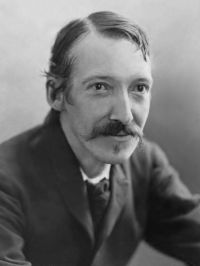 Robert Louis Stevenson,
Familiar Studies of Men and Books
Robert Louis Stevenson,
Familiar Studies of Men and Books
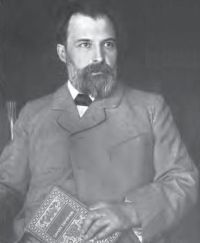
“ In Yeddo, with this nondescript political status, and cut off from any means of livelihood, he was joyfully supported by those who sympathised with his design. One was Sákuma-Shozan, hereditary retainer of one of the Shogun’s councillors, and from him he got more than money or than money’s worth. A steady, respectable man, with an eye to the world’s opinion, Sákuma was one of those who, if they cannot do great deeds in their own person, have yet an ardour of admiration for those who can, that recommends them to the gratitude of history. ”
 Paul Carus,
Gospel of Buddha
(1917)
Paul Carus,
Gospel of Buddha
(1917)
“ And when the Bodhisatta was ahungered, lo! Māra, the Evil One, approached him and said: "Thou art emaciated from fasts, and death is near. What good is thy exertion? Deign to live, and thou wilt be able to do good works." But the Sakyamuni made reply: "O thou friend of the indolent, thou wicked one; for what purpose hast thou come? Let the flesh waste away, if but the mind becomes more tranquil and attention more steadfast. What is life in this world? ”
Royal Asiatic Society of Great Britain and Ireland. Straits Branch, Journal of the Straits Branch of the Royal Asiatic Society (1878)
“ They build no houses, seldom stop more than two days in one spot, and pursue a thoroughly nomadic life, having no flocks or herds, existing from hand to month, but free and this they prize to a wonderful degree. Nothing will induce a Sakei to become civilized, even so much as the Malay of the interior; he is never happy except while roaming in his native forest, and, although he will eat rice and smoke tobacco, which he can only get from the Malays, he rushes off after satisfying his craving for the weed (of which he is inordinately fond) and does not appear again for months. ”
Osman Edwards, Japanese Plays and Playfellows (1901)
“ Saké flowed more copiously than tea. I was sorry to hear that the old-time processions were falling into disuse, and, though not yet abandoned entirely, were losing their antique splendour. The taiyu, too, was a thing of the past. The aureole of combs, the manifold robe over robe, the child attendants, had all gone. Varying now only in costume and accomplishment, all the women alike were cage-dwellers, whereas in former days the superior classes of them were spared that indignity. ”
J. Morris, Makers of Japan (1906)
“ To fully appreciate the risk that Sakuma ran in putting forward proposals so entirely subversive of the existing order of things, it must be brought to mind for an instant that early in the seventeenth century of the Christian era, at a time when the over-sea trade of Japan had attained to some importance, the Tokugawa Government sternly suppressed all trade with foreign nations on account of the attempts of the Jesuit missionaries, it was said, to obtain for their order that political influence in Japan that they had succeeded in securing at the time in China. ”
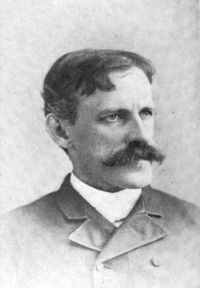 William Elliot Griffis,
The Religions of Japan, from the Dawn of History to the Era of Méiji
William Elliot Griffis,
The Religions of Japan, from the Dawn of History to the Era of Méiji
“ On them the people hang their votive offerings, twist on the branches their prayers written on paper, avoid cutting down, breaking or in any way injuring certain trees. The sakaki tree is especially sacred, even to this day, in funeral or Shintō services. To wound or defile a tree sacred to a particular god was to call forth the vengeance of the insulted deity upon the insulter, or as the hearer of prayer upon another to whom guilt was imputed and punishment was due. ”
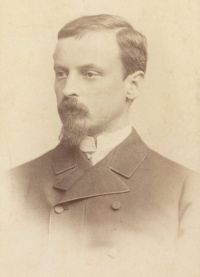 Henryk Sienkiewicz,
The Deluge: An Historical Novel of Poland…
Henryk Sienkiewicz,
The Deluge: An Historical Novel of Poland…
“ Sapyeha smiled when he saw that pride, but half of his smile was compassion. Every man may impose much with daring and impudence, but on people of a certain measure; the hetman was above the measure of Sakovich. “My master, prince in Birji and Dubinki, commander-in-chief of the armies of his princely highness the elector,” said Sakovich, “has sent me with a greeting, and to ask about the health of your worthiness.” ”
Giovanni Battista Cerruti, My Friends the Savages
“ With his blowpipe ready the Sakai penetrates into the forest, creeping softly among the tall grasses and bushes. No rustling, no crackling of dry leaves denounces the presence of the man who advances cautiously under the broad green roof, casting keen and restless glances [205] towards the branches of the trees. His ear catches the faintest flapping of wings. From time to time he utters a cry like that of a bird or a monkey, and quickly a feathered biped, moved by curiosity descends from a higher to a lower bough ”
 Isabella L. Bird,
Unbeaten Tracks in Japan
Isabella L. Bird,
Unbeaten Tracks in Japan
“ Japanese chess, story-telling, and the samisen fill up the early part of the evening, but later, an agonising performance, which they call singing, begins, which sounds like the very essence of heathenishness, and consists mainly in a prolonged vibrating “No.” As soon as I hear it I feel as if I were among savages. Saké, or rice beer, is always passed round before the visitors leave, in little cups with the gods of luck at the bottom of them. Saké, when heated, mounts readily to the head, and a single small cup excites the half-witted man-servant to some very foolish musical performances. ”
Nihongi: Chronicles of Japan from the Earliest Times to A.D. 697…
“ When the Sun-Goddess came to shut herself up in the Rock-cave of Heaven, all the Gods sent the child of Kogoto Musubi, Ama no Koyane no Mikoto, the ancestor of the Nakatomi no Muraji, and made him recite a liturgy. Hereupon Ama no Koyane no Mikoto rooted up a true Sakaki tree of the Heavenly Mount Kagu and hung upon its upper branches a mirror of eight hands, made by the ancestor of the mirror-makers, Ono-kori-dome, a child of Ama no Nukado ”
1911 Encyclopædia Britannica, Volume 15… (1911)
“ Muravief, the great Russian empire-builder in East Asia, under whose orders Nevelskoy acted, quickly appreciated the necessity of acquiring Sakhalin, which commands the estuary of the Amur. After the conclusion of the treaty of Aigun (1857) he visited Japan with a squadron, and required that the strait of La Pérouse, which separates Sakhalin from Yezo, should be regarded as the frontier between Russia and Japan. This would have given the whole of Sakhalin to Russia. ”
Giovanni Battista Cerruti, My Friends the Savages
“ Altogether the figure of the Sakai does not reveal any large amount of vigour perhaps because he is usually thin and is what might be termed pot-bellied, owing to the sort of food he eats and the cold he suffers during the night, but he is much more robust and taller (the average height of an adult is a little past one metre and a half) [7] than the other tribes and races around him who are in close reports with civilization. ”
 Amy Ella Blanchard,
The four Corners in Japan
Amy Ella Blanchard,
The four Corners in Japan
“ By the next day it was considered safe enough to make the trip to Sakusa. It was a tortuous way, and one that required the services of a guide, but a young Japanese, whom Mr. Montell knew, consented to make one of the party. He could speak English, and, being an intelligent, educated gentleman, was much more desirable as an adjunct than the ordinary interpreter. By bamboo forests, and rice-fields, past many a temple and shrine, they trudged, part of their journey being indicated by a stone path difficult to walk upon yet necessarily used. ”
Katsuro Hara, An Introduction to the History of Japan
“ It was natural, therefore, that, after the civil war of the Ohnin era, Sakai should be considered safer to live in than Kyoto. Sakai became the asylum for the civilisation of Japan, to save it from utter destruction. Poets, painters, musicians, and singers, who had found living in the turbulent metropolis intolerably hard, sought shelter in Sakai, and there occupied themselves quietly with their own professions. Various handicrafts, such as lacquering, porcelain-making, and weaving were all started there with enormous success. ”
