“ I'm considering if I continue contributing if there is a first-time 'perfectionist' agenda, as concerns had been raised previously about sloppy proofreading.Wikisource does not need contributors that can't meet the standard. ShakespeareFan00 (talk) 08:59, 28 July 2017 (UTC) On a more conciliatory note is there a list of red-linked templates as a report? This might help contributors identify dormant template typos not yet identified? ShakespeareFan00 (talk) 09:14, 28 July 2017 (UTC) The works is not important though you are welcome to review my edits, and you are missing the point. ”
ShakespeareFan00
Definition and stakes
The theme of “ShakespeareFan00” has been addressed by authors such as . It is often associated with terms like Shakespeare, William, literature, drama and play.
Quotes about “ShakespeareFan00”
“ I have a very long list of interesting projects before I can consider doing new stuff. ;) Religious works with one exception aren't generally my thing. ShakespeareFan00 (talk) 00:31, 9 July 2018 (UTC) Index:Asiatick Researches Vol 1.djvu Hi!I'm picking through the Category:Index - File to fix and taking care of the easy stuff (page removals, mostly) . On Index:Asiatick Researches Vol 1.djvu, you added this note: "Binder note inserted between pp. 482 and 483". I'm not entirely sure what you mean by this -- is this a page that should be removed from the file? ”
“ My documentation was on the now deleted {{cl-act-paragraph}} version, but essentially yes. Assuming all the intended features have been implemented. ShakespeareFan00 (talk) 14:29, 25 June 2018 (UTC) I've implemented all of it, so now all that's needed is to move the templates & documentation to their proper places, & fix up the documentation to reflect the current versions. I'll start that tomorrow, tho because it's about 8pm now. JustinCB (talk) 23:51, 25 June 2018 (UTC) Does everything seem to still be working & is the (incomplete) documentation reasonable? ”
“ ShakespeareFan00 (talk) 15:37, 30 June 2017 (UTC) i have combed through images. they appear to be all there. i will double check against the list of illustrations. but if some are missed or in wrong place it is ok, we can transclude with the article. will use crop tool on commons to make presentable. Slowking4 ‽ SvG's revenge 21:00, 30 June 2017 (UTC) Your proofreading I am again having to fix up errors in your applied formatting where you have made errors in the template names that you have applied, and not identified when you have saved the page. ”
 John Keats,
Keats: Poems Published in 1820
“ Shakespeare permeated his whole being, and his influence is to be detected not in a resemblance of style, for Shakespeare can have no imitators, but in a broadening view of life, and increased humanity. ”
C. C. Stopes, Shakespeare's environment (1914)
“ Shakespeare was not a prose diarist of the twentieth century, but a poet on the rising high tide of the most creative period of English literature, in the first fervours of poetic inspiration and romantic personal affection. ”
Robt. L. Taylor, Gov. Bob. Taylor's Tales
“ But the horizon of Shakespeare was broader than them all. There is no depth which he has not sounded, no height which he has not measured. He walked in the gardens of the intellectual gods and gathered sweets for the soul from a thousand unwithering flowers. ”
H. E. Marshall, English Literature for Boys and Girls
“ And yet, although we learn from him so much of what people did in those days, of how they talked and even of how they thought, the chief thing that we feel about Shakespeare's characters is, not that they are Elizabethan, but that they are human, that they are like ourselves, that they think, and say, and do, things which we ourselves might think, and say, and do. ”
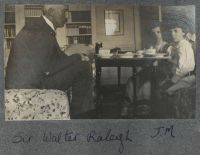 Sir Walter Alexander Raleigh,
Milton
“ We have to widen our conception of human nature in order to think of him as a man. How hard a thing it is to conceive of Shakespeare as of a human spirit, embodied and conditioned, whose affections, though higher mounted than ours, yet, when they stooped, stooped with the like wing, is witnessed by all biographies of Shakespeare, and by many thousands of the volumes of criticism and commentary that have been written on his works. ”
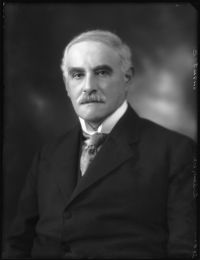 Sir Sidney Lee,
The Praise of Shakespeare: An English Anthology
“ Against such a degradation of Shakespeare’s character, or of any man’s character, it is our duty to protest. On trying to make Shakespeare more than human, the reckless panegyrist makes him considerably less than human: instead of the man whose prudence made him rich, whose affectionate nature made him loved almost to idolatry, and whose genius has been the wonder of the world, we are presented with plasticity in the abstract, an object not more interesting than a quarry of potter’s clay. ”
 Leslie Stephen,
Dictionary of National Biography…
(1897)
“ Only sixteen of the thirty-seven plays commonly assigned to Shakespeare were published in his lifetime, and it is questionable whether any were published under his supervision. But subject-matter and metre both afford rough clues to the period in his career to which each play may be referred. In his early plays the spirit of comedy or tragedy appears in all its simplicity, but as his powers grew to maturity he depicted life in its complexity, and portrayed with masterly insight all the gradations of human sentiment, and the mysterious workings of human passion. ”
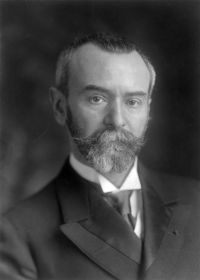 J. J. Jusserand,
The English Novel in the Time of Shakespeare
“ We shall be indulgent to him if we remember that no author of the time was entirely master of himself and faithful to his plot. Even Shakespeare rarely resists like temptation, and when a poetic image comes into his mind, little matters it to him what character is on the stage; he makes of him a dreamer, a poet, and lends to him the exquisite [315] language of his own emotion. ”
 Samuel Johnson,
Preface by Johnson
(1778)
“ This therefore is the praise of Shakespeare, that his drama is the mirror of life; that he who has mazed his imagination, in following the phantoms which other writers raise up before him, may here be cured of his delirious ecstasies, by reading human sentiments in human language; by scenes from which a hermit may estimate the transactions of the world, and a confessor predict the progress of the passions. His adherence to general nature has exposed him to the censure of criticks, who form their judgments upon narrower principles. ”
Various, Lippincott's Magazine of Popular Literature and Science…
“ Shakespeare had an ardent friendship, made all the livelier by the fervor of the poetic temperament, for a young man of noble birth and very great personal beauty, himself a lover of poetry, if not a poet. ”
 Ralph Waldo Emerson,
Representative Men — Uses of Great Men
(1850)
“ This pleasure of full expression to that which, in their private experience, is usually cramped and obstructed, runs also much higher, and is the secret of the reader's joy in literary genius. Nothing is kept back. There is fire enough to fuse the mountain of ore. Shakespeare's principal merit may be conveyed in saying that he of all men best understands the English language, and can say what he will. Yet these unchoked channels and floodgates of expression are only health or fortunate constitution. Shakespeare's name suggests other and purely intellectual benefits. ”
Sir Sidney Lee,
The Praise of Shakespeare: An English Anthology
“ We suspect that Shakespeare will long continue the only specimen of the genus. His contemporaries, in their comedies, either force what they call “a humour” till it becomes fantastical, or hunt for jokes, like rat-catchers, in the sewers of human nature and of language. In their tragedies they become heavy without grandeur, like Jonson, or mistake the stilts for the cothurnus, as Chapman and Webster too often do. Every new edition of an Elizabethan dramatist is but the putting of another witness into the box to prove the inaccessibility of Shakespeare’s standpoint as poet and artist. ”
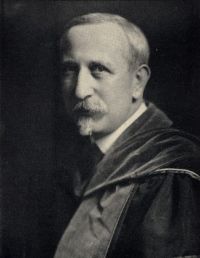 William Allan Neilson,
The Harvard Classics Vol. 51
(1914)
“ Yet the comedies of Shakespeare are far from superficial. Those written in the middle of his career, such as "As You Like It" and "Twelfth Night," not only display with great skill many sides of human nature, but with indescribable lightness and grace introduce us to charming creations, speaking lines rich in poetry and sparkling with wit, and bring before our imaginations whole series of delightful scenes. ”
Henry Thew Stephenson, The Elizabethan People (1910)
“ To assert that an early play of Shakespeare's is as excellent as a later is to assume that he began his literary career a finished artist, unhumanly god-like in his perfection—a man who does, not having learned. Yet Shakespeare is of supreme value to us to-day mainly because he is so human, human in his feelings, and human in his faults. ”
David Masson, The Three Devils: Luther's, Milton's…
“ By his powers of expression, in fact, Shakespeare has beggared all his posterity, and left mere practitioners of expression nothing possible to do. There is perhaps not a thought, or feeling, or situation, really common and generic to human life, on which he has not exercised his prerogative; and, wherever he has once been, woe to the man that comes after him! ”
Sir Sidney Lee,
A Life of William Shakespeare
“ With an inconsistency that is more apparent than real, the astute business transactions of these years (1597-1611) synchronise with the production of Shakespeare’s noblest literary work—of his most sustained and serious efforts in comedy, tragedy, and romance. In 1599, after abandoning English history with ‘Henry V,’ he addressed himself to the composition of his three most perfect essays in comedy—‘Much Ado about Nothing,’ ‘As You Like It,’ and ‘Twelfth Night.’ Their good-humoured tone seems to reveal their author in his happiest frame of mind ”
Sir Sidney Lee,
The Praise of Shakespeare: An English Anthology
“ His characters are so much Nature herself, that ’tis a sort of injury to call them by so distant a name as copies of her. Those of other poets have a constant resemblance, which shows that they received them from one another, and were but multipliers of the same image; each picture, like a mock rainbow, is but the reflection of a reflection. But every single character in Shakespeare is as much an individual as those in life itself; it is as impossible to find any two alike ”
Sir Sidney Lee,
The Praise of Shakespeare: An English Anthology
“ Our inimitable Shakespeare is a stumbling-block to the whole tribe of these rigid critics. Who would not rather read one of his plays, where there is not a single rule of the stage observed, than any production of a modern critic, where there is not one of them violated? Shakespeare was indeed born with all the seeds of poetry, and may be compared to the stone in Pyrrhus’s ring, which, as Pliny tells us, had the figure of Apollo and the nine Muses in the veins of it, produced by the spontaneous hand of Nature, without any help from art. ”
Sir Sidney Lee,
The Praise of Shakespeare: An English Anthology
“ Shakespeare is a well-spring of characters which are saturated with the comic spirit; with more of what we will call blood-life than is to be found anywhere out of Shakespeare; and they are of this world, but they are of the world enlarged to our embrace by imagination, and by great poetic imagination. ”
Eva March Tappan, The Children's Hour, v 5. Stories From Seven Old Favorites
“ Now when Shakespeare puts a thought into words, we find that no one else has expressed it so well. Moreover, he sees more clearly than any other writer how a person would feel and behave in various circumstances. ”
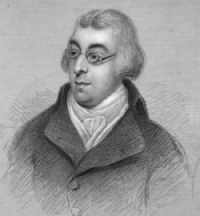 Isaac Disraeli,
Amenities of Literature
“ The vicissitudes of the celebrity of Shakespeare may form a chapter in the philosophy of literature and the history of national opinions. Shakespeare was destined to have his dramatic faculty contested by many successful rivals, to fall into neglect, to be rarely acted and less read, to appear barbarous and unintelligible, to be even discarded from the glorious file of dramatists by the anathemas of hostile criticism; and finally, in the resurrection of genius (a rare occurrence!) to emerge into universal celebrity. ”
Sir Sidney Lee,
The Praise of Shakespeare: An English Anthology
“ Others, again, seem full of amiable affection and tenderness, but cannot exalt themselves to the boldness of the hero, or magnanimity of the patriot. The genius of Shakespeare is unlimited. Possessing extreme sensibility, and uncommonly susceptible, he is the Proteus of the drama; he changes himself into every character, and enters easily into every condition of human nature.Many dramatic writers of different ages are capable, occasionally, of breaking out, with great fervour of genius, in the natural language of strong emotion. ”
Henry Thew Stephenson, The Elizabethan People (1910)
“ THE result of the prolonged and often superficial consideration of Shakespeare's plays during the nineteenth century has resulted in an idealisation of that dramatist which places him in an incorrect relation to his time and to all other literary artists. To assume, as some recent critics have done, that we appreciate Shakespeare truly only when we are able to prove that every detail of his work is perfectly planned and executed is equivalent to a denial of the fact that, during twenty years of writing, Shakespeare made any progress towards perfection in his art. ”
Sir Sidney Lee,
A Life of William Shakespeare
“ Shakespeare defied at every stage in his career the laws of the classical drama. He rode roughshod over the unities of time, place, and action. There were critics in his day who zealously championed the ancient rules, and viewed with distrust any infringement of them. But the force of Shakespeare’s genius—its revelation of new methods of dramatic art—was not lost on the lovers of the ancient ways ”
New York State Historical Association. Meeting, Proceedings of the New York Historical Association…
“ We must remember, however—a fact that is often overlooked—that Shakespeare was not only most extraordinary as a poet, but that he was one of the profoundest moralists that the world has known. His genius was supremely sane, calm, judicial, healthy. He painted men and women as they are. ”
Various, The Atlantic Monthly, Volume 04…
“ What the readers of Shakespeare, who are worthy to know aught of him, long to know, would have been the same, had he been bred lawyer, physician, soldier, or sailor. It is of his real life, not of its mere accidents, that they crave a knowledge ”
Samuel Johnson,
Preface to Shakespeare
“ Other dramatists can only gain attention by hyperbolical or aggravated characters, by fabulous and unexampled excellence or depravity, as the writers of barbarous romances invigorated the reader by a giant and a dwarf; and he that should form his expectations of human affairs from the play, or from the tale, would be equally deceived. Shakespeare has no heroes; his scenes are occupied only by men, who act and speak as the reader thinks that he should himself have spoken or acted on the same occasion: Even where the agency is supernatural the dialogue is level with life. ”
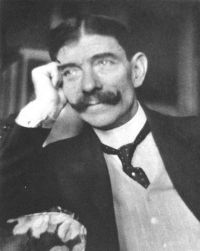 Frank Harris,
The Man Shakespeare and His Tragic Life Story
“ The critics who have ignorantly praised his Hotspur and Bastard as if he had been a man of deeds as well as a man of words have only obscured the truth that Shakespeare the poet-philosopher, the lover quand même, only reached a sane balance of nature through his overflowing humour. ”
Charles Herbert Sylvester, Journeys Through Bookland, Vol…
“ Then again, his knowledge of life is so profound and his insight into human nature so keen and penetrating, that the casual reader is liable not to follow his thought. In other words, Shakespeare must be studied to be appreciated; but if he is studied and appreciated, he gives a pleasure and exerts an influence that cannot be equaled. ”
Earl of Philip Dormer Stanhope Chesterfield, Letters to His Son, Complete
“ If Shakespeare’s genius had been cultivated, those beauties, which we so justly admire in him, would have been undisgraced by those extravagancies, and that nonsense, with which they are frequently accompanied. ”
David Nichol Smith, Eighteenth Century Essays on Shakespeare
“ Shakespeare is above all writers, at least above all modern writers, the poet of nature; the poet that holds up to his readers a faithful mirror of manners and of life. His characters are not modified by the customs of particular places, unpractised by the rest of the world; [pg 115] by the peculiarities of studies or professions, which can operate but upon small numbers; or by the accidents of transient fashions or temporary opinions: they are the genuine progeny of common humanity, such as the world will always supply, and observation will always find. ”
The World's Greatest Books — Volume 20…
“ So far from Shakespeare being the least known, he is the one person in all modern history known to us. What point of morals, of manners, of economy, of philosophy, of taste, of conduct of life has he not settled? What district of man's work has he not remembered? What king has he not taught statecraft? What maiden has not found him finer than her delicacy? What lover has he not outloved?Some able and appreciating critics think no criticism123 on Shakespeare valuable that does not rest purely on the dramatic merit; that he is falsely judged as poet and philosopher. ”
