Shorthorn cattle

Definition and stakes

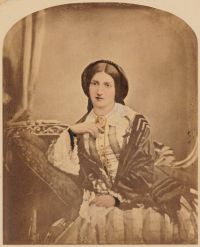
Portrait of Isabella Beeton Isabella Beeton,  Mrs. Beeton's Book of Household Management (1907)

“ Shorthorn Cattle deserve special notice, as combining both milking and feeding properties in a special degree. It is true that many of the highest bred Shorthorns are poor milkers, but the Lincoln Red strain is celebrated for milk, and some herds have been bred for milk, and yet retain their fattening properties. What are known as unpedigreed Shorthorns are perhaps the most generally distributed class of cattle in most dairy districts. ”
Source: Wikisource

Various,  Encyclopaedia Britannica, 11th Edition…

“ They are symmetrically built, of medium size, and of uniformly red colour. They have a tuft of hair on the poll. As dairy cattle, they are noted for the length of the period during which they continue in milk. Not less are they valued as beef-producers, and, as they are hardy and docile, they fatten readily and mature fairly early. Hence, like the Lincolnshire Red Shorthorn, they may claim to be a dual-purpose breed. As beef cattle they are always seen to advantage at the Norwich Christmas cattle show, held annually in November. ”
Source: Gutenberg

Various,  Encyclopaedia Britannica, 11th Edition…

“ The Shorthorn breed is exceedingly variable in colour; pure-bred specimens may be red, or white, or roan, or may be marked with two or more of these colours, the roan resulting from a blending of the white and red. Black is not seen in a pure-bred Shorthorn. The biggest and heaviest cattle come from the beef-making breeds, and are often cross-bred. Very large or heavy beasts, if pure-bred, usually belong to one or other of the Shorthorn, Hereford, Sussex, Welsh, West Highland, Aberdeen-Angus and Galloway breeds. The Devon, Red Polled and Guernsey are medium-sized cattle ”
Source: Gutenberg

Get perspective with Kwize: daily news enlightened by great literature