Skyrocket

Definition and stakes

Julian R. J. Jocelyn and David O. Masson,  1911 Encyclopædia Britannica (1911)

“ It serves the double purpose of cutting a way through the air and of holding the garniture of stars, sparks, crackers, serpents, gold and silver rain, &c., which are scattered by bursting fire as soon as the rocket reaches the highest point of its path. A great variety of beautiful effects may be obtained by the exercise of ingenuity in the choice and construction of this garniture. Many of the best results have been obtained by unpublished methods which must be regarded as the secrets of the trade. The stick of the sky-rocket serves the purpose of guiding and balancing it in its flight ”

Source: Wikisource

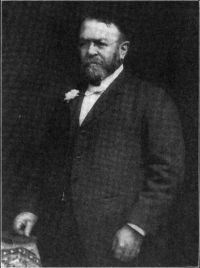
Portrait of Neil R. Jones Neil R. Jones,  The Jameson Satellite

“ Suppose his funeral rocket landed upon some other planet or, drawn by the pull of the great sun, were thrown into the flaming folds of the incandescent sphere? Then the rocket might continue on out of the solar system, plunging through the endless seas of space for millions of years, to finally enter the solar system of some far-off star, as meteors often enter ours. Suppose his rocket crashed upon a planet, or the star itself, or became a captive satellite of some celestial body? ”
Source: Gutenberg

Julian R. J. Jocelyn and David O. Masson,  1911 Encyclopædia Britannica (1911)

“ The sky-rocket is generally considered the most beautiful of all fireworks; and it certainly is the one that requires most skill and science in its construction. It consists essentially of two parts,—the body and the head. The body is a straight cylinder of strong pasted paper and is choked at the lower end, so as to present only a narrow opening for the escape of the fire. The composition does not fill up the case entirely, for a central hollow conical bore extends from the choked mouth up the body for three-quarters of its length. This is an essential feature of the rocket. ”
Source: Wikisource

Get perspective with Kwize: daily news enlightened by great literature