Supreme Court of Arizona

Definition and stakes

Supreme Court of the United States Cruz v. Arizona (2023)

The Court makes a case for why the Arizona Supreme Court’s interpretation of its own precedent is wrong. If I were on the Arizona Supreme Court, I might agree. But that call is not within our bailiwick. Our job is to determine whether the Arizona Supreme Court’s decision is defensible, and we owe the utmost deference to the state court in making that judgment. Cases of inadequacy are extremely rare, and this is not one.
Source: Wikisource

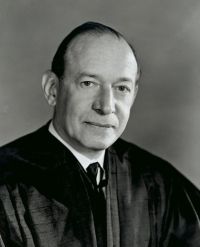
Portrait of William Howard Taft William Howard Taft Truax v. Corrigan — Opinion of the Court (1921)

To give operation to a statute whereby serious losses inflicted by such unlawful means are in effect made remediless, is, we think, to disregard fundamental rights of liberty and property and to deprive the person suffering the loss of due process of law.
If, however, contrary to the construction which we put on the opinion of the Supreme Court of Arizona, it does not withhold from the plaintiffs all remedy for the wrongs they suffered, but only the equitable relief of injunction, there still remains the question whether they are thus denied the equal protection of the laws.
Source: Wikisource

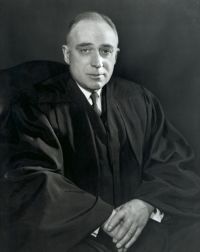
Portrait of Abe Fortas Abe Fortas In re Gault — Opinion of the Court

II The Supreme Court of Arizona held that due process of law is requisite to the constitutional validity of proceedings in which a court reaches the conclusion that a juvenile has been at fault, has engaged in conduct prohibited by law, or has otherwise misbehaved, with the consequence that he is committed to an institution in which his freedom is curtailed.
Source: Wikisource

Get perspective with Kwize: daily news enlightened by great literature