Supreme Court of Justice

Definition and stakes

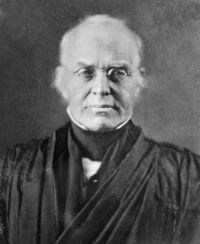
Portrait of John Stuart Mill John Stuart Mill,  Considerations on Representative Government (1861)

“ There must be a Supreme Court of Justice, and a system of subordinate courts in every state of the Union, before whom such questions shall be carried, and whose judgment on them, in the last stage of appeal, shall be final. Every state of the Union, and the federal government itself, as well as every functionary of each, must be liable to be sued in those courts for exceeding their powers, or for non-performance of their federal duties, and must in general be obliged to employ those courts as the instrument for enforcing their federal rights. ”
Source: Gutenberg

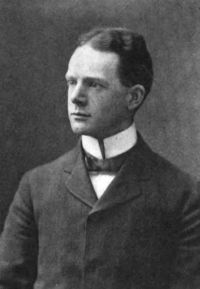
Portrait of Alexis de Tocqueville Alexis de Tocqueville,  Democracy in America (1835)

“ When we have successively examined in detail the organization of the Supreme Court, and the entire prerogatives which it exercises, we shall readily admit that a more imposing judicial power was never constituted by any people. The Supreme Court is placed at the head of all known tribunals, both by the nature of its rights and the class of justiciable parties which it controls.
In all the civilized countries of Europe the Government has always shown the greatest repugnance to allow the cases to which it was itself a party to be decided by the ordinary course of justice.
”
Source: Gutenberg

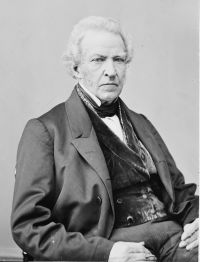
George Ticknor Curtis,  Life of James Buchanan, Fifteenth President of the United States…

“ I ask you whether it is equal justice, that whilst, in eighteen States of the Union, no man can be deprived of his life, his liberty, or his property, by the judgment of a circuit court, without the concurrence of two judges, and one of them a justice of the Supreme Court, in the remaining six the fate of the citizen is determined by the decision of a single district judge? ”
Source: Gutenberg

Get perspective with Kwize: daily news enlightened by great literature