Tamil language

Definition and stakes

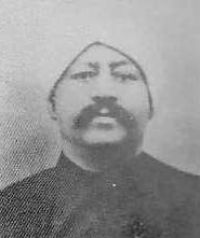
Portrait of Bijay Chandra Majumdar Bijay Chandra Majumdar,  The History of the Bengali Language (1920)

“ I have mentioned before, that according to the Dravidian traditions, all the dominant tribes of S. India migrated from Northern provinces to Peninsular India. It is a distinct and a definite characteristic of essential nature, in the Tamil language, that an initial of a word can never be formed of double consonants, and compound letters formed of consonants different Varga can occur nowhere in a word. If we refer the changes under consideration to the essential peculiarities of the Tamil speech, our problem will be solved. ”
Source: Wikisource

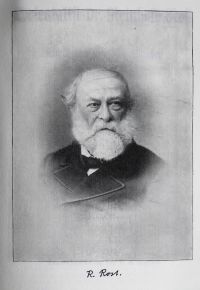
Portrait of Reinhold Rost Reinhold Rost,  1911 Encyclopædia Britannica (1911)

“ But practically the earliest extant records of the Tamil language do not ascend higher than the middle of the 8th century of the Christian era, the grant in possession of the Israelites at Cochin being assigned by the late Dr Burnell to about 750 A.D., a period when Malayâḷam did not exist yet as a separate language. There is every probability that about the same time a number of Tamil works sprung up, which are mentioned by a writer in the 11th century as representing the old literature (Burnell, loc. cit., p. 127, note) . ”
Source: Wikisource

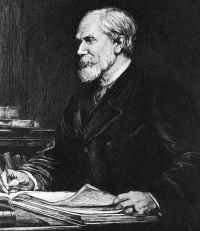
Portrait of Reinhold Rost Reinhold Rost,  Encyclopædia Britannica, Ninth Edition (1888)

“ The laws of euphony (avoiding of hiatus, softening of initial consonants, contact of final with initial consonants) are far more complicated in Tamil than in Sanskrit. But, while they were rigidly adhered to in the old poetical language (Sen-Tamil) , there is a growing tendency to neglect them in the language of the present day (Koḍun-Tamil) . It is true the Tamil rules totally differ from the prevailing Sanskrit; still the probability is in favour of a Sanskrit influence, inasmuch as they appear to follow Sanskrit models. ”
Source: Wikisource

Get perspective with Kwize: daily news enlightened by great literature