The Social Contract

Definition and stakes

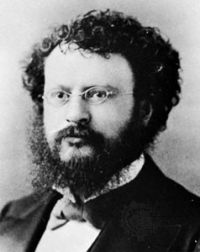
Georgii Valentinovich Plekhanov,  Anarchism and Socialism

“ If the contract is already this in its most general acceptation and in its daily practice, what will the social contract be—that contract which is meant to bind together all the members of a nation by the same interest? The social contract is the supreme act by which every citizen pledges to society his love, his intellect, his labour, his service, his products, his possessions, in exchange for the affection, the ideas, the labour, products, service, and possessions of his fellows ”
Source: Gutenberg

Portrait of Jean-Jacques Rousseau Jean-Jacques Rousseau,  The Social Contract (1762)

“ What man loses by the social contract is his natural liberty and an unlimited right to everything he tries to get and succeeds in getting; what he gains is civil liberty and the proprietorship of all he possesses. If we are to avoid mistake in weighing one against the other, we must clearly distinguish natural liberty, which is bounded only by the strength of the individual, from civil liberty, which is limited by the general will; and possession, which is merely the effect of force or the right of the first occupier, from property, which can be founded only on a positive title. ”
Source: Wikisource

Portrait of Jean-Jacques Rousseau Jean-Jacques Rousseau,  The Social Contract (1762)

“ What, then, strictly speaking, is an act of Sovereignty? It is not a convention between a superior and an inferior, but a convention between the body and each of its members. It is legitimate, because based on the social contract, and equitable, because common to all; useful, because it can have no other object than the general good, and stable, because guaranteed by the public force and the supreme power. ”
Source: Wikisource

Get perspective with Kwize: daily news enlightened by great literature