“ O wretched worms! ye should have fed Not on the books "extended" so, But on old Varro's flesh instead! Alas, that Marcus Varro lives And is a potent factor yet! Alas, that still his practice gives Good men occasion for regret! ”
Varro
Definition and stakes
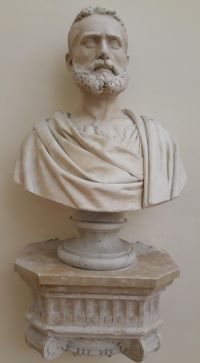
Varro, a prolific Roman scholar and writer of the 1st century BCE, is renowned for his encyclopedic efforts to preserve Greek and Latin literary and cultural knowledge, despite the near-total loss of his original works. Authors such as Cicero, Cato, and Pliny emphasize his role as a compiler of ancient texts, while Eugene Field’s satirical poem critiques his enduring influence on Roman intellectual life.
Though his writings lacked poetic artistry, Varro’s practical agricultural treatises and rhetorical commonplace-books left a lasting legacy, shaping both classical scholarship and later literary traditions. His voluminous output, though largely lost, remains vital through its integration into the works of poets and historians who followed.
Quotes about “Varro”
James Smith Reid, 1911 Encyclopædia Britannica (1911)
“ The dictator employed the scholar in aiding him to collect and arrange great stores of Greek and Latin literature for the vast public library which he intended to found. We have glimpses of Varro at this time in the Letters of Cicero. He appears as harsh and severe, and a poor stylist. The formation of the second triumvirate again plunged Varro into danger. Antony took possession anew of the property he had been compelled to surrender, and inserted Varro’s name on the list of the proscribed. His friends, however, afforded him protection. ”
Marcus Porcius Cato, Roman Farm Management: The Treatises of Cato and Varro
“ Whatever may have been Virgil's mistakes, every farmer of sentiment should thank God that one of the greatest poems in any language contains as much as it does of a sound tradition of the practical side of his art, and here is where Varro is entitled to the appreciation which is always due the schoolmaster of a genius. ”
 George Haven Putnam,
Authors and their public in ancient times
(1893)
George Haven Putnam,
Authors and their public in ancient times
(1893)
“ In support of this view [256] regarding a widespread distribution of books, Birt quotes a passage from Pliny concerning the service to literature rendered by Varro.“Varro was unwilling that the fame of great men should perish, or that the lapse of years should cause the memory of their deeds to be lost. He took pains, therefore, in the almost countless volumes of his writings, to preserve for posterity sketches or studies of more than seven hundred men who had won renown. ”
John Lord, The Old Roman World : the Grandeur and Failure of Its Civilization
“ Varro was the most learned writer whom Rome produced, and the most voluminous. Yet scarcely any thing remains of his productions. They were deficient in art, like German histories—very useful in their day, but only survive in the writings of those who made use of their materials. Hence science is not so enduring as poetry, when poetry is exalted, since it is superseded by new discoveries. Hence style in writing, when of great excellence, gives immortality to works which could not have lived without it, even had they been ever so profound. ”
“ That evening the Roman nobleman arrived, and was warmly welcomed by Lucius, and introduced to Venusta and Nika; and Varro was soon at home, for at first sight he loved the sailor's daughter, and at once made up his mind to lay siege; but, Roman-like, he would mature his plans before declaring war. Besides, he knew not if a rival were in the field and would join the girl as firm ally.It is well known how difficult it is to entertain a stranger the first quarter of an hour. One would know his pet theories and touch on them, so that the newcomer might lead off and rejoice ”
Edmund Luce, Helps to Latin Translation at Sight
“ As an historian he is most untrustworthy, but there are many gaps in Roman history (e.g. owing to the lost books of Livy) which he helps to supply. His style shows all the faults of his age and rhetorical training; his work was probably intended to be a commonplace-book for students and teachers of rhetoric.M. TERENTIUS VARRO, 116-27 B.C. 1. Life. VARRO.Born at Reate, in the Sabine territory, which was the nurse of all manly virtues, Varro was brought up in the good old-fashioned way. ”
1911 Encyclopædia Britannica (1911)
“ VARRO, PUBLIUS TERENTIUS, surnamed Atacintis (c. 82–36 B.C.) , Latin poet, was born near the river Atax in Gallia Narbonensis. He was perhaps the first Roman born beyond the Alps who attained eminence in literature. He seems to have taken at first Ennius and Lucilius as his models, and wrote an epic, entitled Bellum Sequanicum, eulogizing the exploits of Caesar in Gaul and Britain, and also Satires, of which Horace (Satires, i. 10) speaks slightingly. Accordingly to Jerome, Varro did not begin to study Greek literature until his thirty-fifth year. ”
 Joseph Trapp,
Lectures on Poetry
Joseph Trapp,
Lectures on Poetry
“ A third Kind was the Varronian or Menippean Satire, so call'd from Menippus, a Cynic Philosopher, among the Grecians, whose Doctrine Varro follow'd. It was a Sort of Medley, consisting not only of all Kinds of Verse, but of Verse and Prose mix'd together; a Specimen of which we have in Petronius's Satyricon [320] . We have none of Varro's poetical Works remaining, except some small Fragments; which is the more to be lamented, considering the Character Quintilian gives of him, That he was the most learned of all the Romans. ”
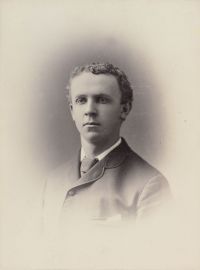 Harold North Fowler,
A History of Roman Literature
Harold North Fowler,
A History of Roman Literature
“ The Menippean Satires were written in prose interspersed with verses, in imitation of the works of the Cynic Menippus, who lived about 300 B. C., and probably belong to Varro’s earlier years. They treat of almost all the relations of human life in a satirical vein. The extant verses [Pg 94] show some ability in metrical composition and no little humor. It is evident, however, that Varro was not a great poet, and the loss of his other poems is little to be regretted. ”
John D. Quackenbos, Illustrated history of ancient literature… (1889)
“ Varro also prepared a treatise “On the Latin Language,” edited a popular encyclopædia of the liberal arts, and wrote [Pg 339] on history. Throughout his works he appears as a pure patriot, a defender of ancient simplicity and virtue. His satires on effeminacy and affectation are caustic; no one can help enjoying his humorous etchings of the spruce dandy, the dainty epicure, and the finical poet who gargles his throat before reciting his pieces. ”
Marcus Porcius Cato, Roman Farm Management: The Treatises of Cato and Varro
“ Thus, while he applies Varro ploughing rules to rich land and bids the farmer "exercetque frequens tellurem atque imperat arvis," he says (Geo. I, 62) that it will suffice to give sandy land a single shallow ploughing in September immediately before seeding, for fear, forsooth, that the summer suns will evaporate whatever moisture there is in it! Again, Virgil recommends, what Varro does not, cross-ploughing and burning the stubble and Virgil's advice was generally followed. ”
Duffield Osborne, The Lion's Brood
“ A nodding forest of crests, red and black, rising a cubit above the uncovered helmets of the legionaries, seemed to fill the eastern plain and extend almost to where the Adriatic beat upon the shingle. "Look at his front! Look at how closely the maniples are crushed together! Gods! they are almost 'within the rails' already." Sergius looked, and the frown upon his brow deepened. "Eighty thousand men," he muttered; "and we shall scarce outflank their forty thousand. Does Varro wish to cast aside every advantage! Gods! what gain is there in such depth? ”
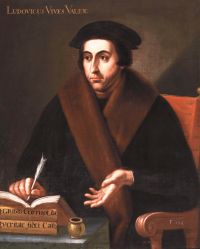 Juan Luis Vives,
Tudor school-boy life: the dialogues of Juan Luis Vives
Juan Luis Vives,
Tudor school-boy life: the dialogues of Juan Luis Vives
“ The most learned is a certain Varro; but the most industrious and the most upright is Philoponus, whose erudition, moreover, is not to be despised. Varro has the best frequented school, and in his house he has a numerous flock of boarders. Philoponus does not seem to delight in numbers, but is content with fewer boys.Father. I should prefer him. That must be he walking 10into the hall of the school. Son, this is, as it were, the laboratory for the formation of men, and he is the artist-educator. ”
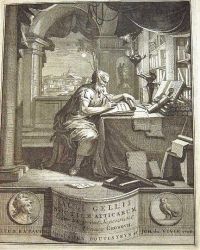 Aulus Gellius,
Attic Nights — Book 1
(1927)
Aulus Gellius,
Attic Nights — Book 1
(1927)
“ In the same vein Varro also said in the Menippean Satire which he entitled On the Duty of a Husband: “A wife’s faults must be either put down or put up with. He who puts down her faults, makes his wife more agreeable; he who puts up with them, improves himself.” Varro contrasted the two words tollere and ferre very cleverly, to be sure, but he obviously uses tollere in the sense of “correct.” It is evident too that Varro thought that if a fault of that kind in a wife cannot be corrected, it should be tolerated, in so far of course as a man may endure it honourably ”
James Smith Reid, 1911 Encyclopædia Britannica (1911)
“ That the remains exhibit variety and fertility, that there are in them numerous happy strokes of humour and satire, and many felicitous phrases and descriptions, is true, but the art is on the whole heavy, awkward and forced, and the style rudely archaic and untasteful. The Latin is frequently as rough and uncouth as that of Lucilius. No doubt Varro contemned the Hellenizing innovations by which the hard and rude Latin of his youth was transformed into the polished literary language of the late republican and the Augustan age. ”
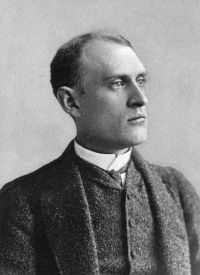 Eugene Field,
The Love Affairs of a Bibliomaniac
Eugene Field,
The Love Affairs of a Bibliomaniac
“ Now, Pliny is not the only one who has contributed to the immortalization of Marcus Varro. I have had among my papers for thirty years the verses which Judge Methuen dashed off (for poets invariably dash off their poetry) , and they are such pleasant verses that I don't mind letting the world see them. ”
Marcus Porcius Cato, Roman Farm Management: The Treatises of Cato and Varro
“ Appian gives the list of officers and the limits of their commands, saying: "The coasts of Sicily and the Ionian sea as far as Acarnania were entrusted to Plotius and Varro." It is difficult to understand Varro's own reference to Delos, but Appian makes clear how it happened that Varro was stationed on the coast of Epirus and so fell in with the company of "half Greek shepherds" who are the dramatis personae of the second book. ”
Hannah Blaney Washburn, A winter in retirement (1914)
“ Two citizens met near the Temple of Fortune; “Health and happiness, noble Varro,” said a rich patrician to a stately noble, “may the deities be propitious; have you heard the rumor?” “I have been witnessing the betrothal of my son to the daughter of Publius Dentatus, and have heard no rumor. Of what nature?” “A most happy betrothal; may their years be auspicious! The reports are of a most astounding character. It is rumored that the Senate, in full council, have condemned Nero, and, that Servius Galba, so lately returned from Spain, will be chosen, by the soldiery, as his successor.” ”
 Jesse Benedict Carter,
The Religion of Numa
Jesse Benedict Carter,
The Religion of Numa
“ It is an accomplishment of which History may well be modestly proud, that modern scholars have been able to eliminate, to a large degree, the personal equation and the myopic effects of his own time from the statements of the greatest scholar of Roman antiquity, and thus though handicapped by the possession of merely a small percentage of the facts which Varro knew, to arrive at a concept of the whole matter infinitely more correct than that which his books contained. ”
 Gaius Suetonius Tranquillus,
Lives of Eminent Grammarians
Gaius Suetonius Tranquillus,
Lives of Eminent Grammarians
“ If those Orbilius with rod or ferule thrashed. And not even men of rank escaped his sarcasms; for, before he became noticed, happening to be examined as a witness in a crowded court, Varro, the advocate on the other side, put the question to him, "What he did and by what profession he gained his livelihood?" He replied, "That he lived by removing hunchbacks from the sunshine into the shade," alluding to Muraena's deformity. He lived till he was near a hundred years old ”
Cyril Bailey, The Religion of Ancient Rome
“ Its object was, as Varro explains it, to avert the entrance of the half-wild Silvanus by giving three unmistakeable signs of human civilisation; we shall probably not be wrong in seeing in it rather an actual hacking, beating, and sweeping away of evil spirits. ”
 Tenney Frank,
Vergil: A Biography
Tenney Frank,
Vergil: A Biography
“ That call the youths to drivelings insane.Epidius, to be sure, is not mentioned, but we happen to know that Varro—if this be the erudite friend of Cicero—was devoted to the Asianic principles. And Epidius, the teacher of the flowery Mark Antony, may well be concealed in Vergil's list of names even if mention of him was omitted for reasons of propriety. ”
James Smith Reid, 1911 Encyclopædia Britannica (1911)
“ There are many allusions to persons and events of the day, but political bitterness seems to have been commonly avoided. The whole tone of the writer is that of a laudator temporis acti, who can but scoff at all that has come into fashion in his own day. From the numerous citations in later authors it is clear that the Menippean Satires were the most popular of Varro’s writings. ”
John Colin Dunlop, History of Roman Literature from its Earliest Period to the Augustan Age…
“ St Augustine informs us that Varro examined in it all the various sects of philosophers, of which he enumerated upwards of 280. The sect of the old Academy was that which he himself followed, and its tenets he maintained in opposition to all others. He classed these numerous sects in the following curious manner: All men chiefly desire, or place their happiness in, four things—pleasure—rest—these two united, (which Epicurus, however, termed pleasure,) or soundness of body and mind. ”
 Marcus Tullius Cicero,
Cicero: Letters to Atticus, Vol…
Marcus Tullius Cicero,
Cicero: Letters to Atticus, Vol…
“ There is no delay about the books dedicated to Varro. They are finished, as you have seen; there is only the correction of the copyists' mistakes. About those books you know I have had some hesitation, but you must look to it. The copyists have in hand, too, those I am dedicating to Brutus.Carry out my instructions as you say. However what about that abatement? [128] Trebatius says everybody is taking advantage of it. What do you suppose my debtors will do? You know the gang. ”
Eugene Field,
The Love Affairs of a Bibliomaniac
“ It seems that Atticus, the friend of Cicero, wrote a book on the subject of portraits and portrait-painting, in the course of which treatise he mentions that Marcus Varro "conceived the very liberal idea of inserting, by some means or another, in his numerous volumes, the portraits of several hundred individuals, as he could not bear the idea that all traces of their features should be lost or that the lapse of centuries should get the better of mankind." ”
The New International Encyclopædia (1905)
“ Of his numerous plays—130 bore his name in the last century of the Republic—only 20 have come down to us. Many of them, however, were regarded as spurious by the Roman critics, among whom Varro (in his treatise Quæstiones Plautinæ, cited by Gellius) limits the genuine comedies of the poet to twenty-one. ”
Harold North Fowler,
A History of Roman Literature
“ These included poems, works on grammar, history, geography, law, rhetoric, philosophy, mathematics, literary history and education, miscellaneous essays, orations, and letters. Of all these there remain one complete work, On Agriculture (De Re Rustica) , in three books, six (v-x) of the original twenty-five books of the treatise On the Latin Language (De Lingua Latino) , numerous short fragments of the Menippean Satires (Saturæ Menippeæ) , and a few fragments of some of the other works. The collection of maxims that passes under Varro’s name is probably spurious. ”
 James George Frazer,
The Golden Bough: A Study in Magic and Religion…
James George Frazer,
The Golden Bough: A Study in Magic and Religion…
“ If we had had only the statements of Athenaeus and Pliny, we should have known only the rule which forbade the sacrifice of goats to Athena and excluded them from the Acropolis, without being aware of the important exception which the fortunate preservation of Varro's work has revealed to us. Annual sacrifice of a horse at Rome in October. The conjecture that once a year a horse may have been sacrificed in the Arician grove as a representative of the deity of the grove derives some support from the similar sacrifice of a horse which took place once a year at Rome. ”
 Vitruvius,
Ten Books on Architecture
(1914)
Vitruvius,
Ten Books on Architecture
(1914)
“ In Sparta, paintings have been taken out of certain walls by cutting through the bricks, then have been placed in wooden frames, and so brought to the Comitium to adorn the aedileship of Varro and Murena. ”
Juvenal, Juvenal and Persius (1920)
“ The slight fragments preserved of Menippus are not enough to enable us to judge of his style; but from sundry notices of him in Lucian we may gather that his Satires were written in prose, [3] that they frequently introduced dialogue, and that they embraced a large variety of topics, including especially the ridicule of false philosophers. Varro's Satires gained the name of Menippea, as Cicero informs us, from their general likeness to those of Menippus in style and subject. Both emploved dialogue, both discoursed on many subjects, and both conveyed instruction in a humorous and playful form. ”
 Frank L. Packard,
Greater Love Hath No Man
(1913)
Frank L. Packard,
Greater Love Hath No Man
(1913)
“ A NEW life had opened for Varge. There was the vast, limitless blue overhead; the warm sunshine, tanning his face to a ruddy brown and chasing the pallor of prison and of illness from his cheeks; the balmy air of springtime to drink in full, deep draughts, like precious nectar spiced with the smell of fresh, new earth and growing things—and it was her garden. He remembered the first morning, a week ago now, when Doctor Kreelmar had discharged him from the infirmary and they had sent him to the warden's house—and he had found her on the lawn. ”
Related terms
Authors who wrote about “Varro”
Marcus Porcius CatoJames Smith ReidAulus GelliusDuffield OsborneJohn Colin DunlopRichard ShortEugene FieldHarold North FowlerGeorge Haven PutnamJohn LordJoseph TrappJohn D. QuackenbosJuan Luis VivesHannah Blaney WashburnEdmund LuceJesse Benedict CarterGaius Suetonius TranquillusCyril BaileyTenney FrankMarcus Tullius Cicero
Aulus GelliusDuffield OsborneJohn Colin DunlopRichard ShortEugene FieldHarold North FowlerGeorge Haven PutnamJohn LordJoseph TrappJohn D. QuackenbosJuan Luis VivesHannah Blaney WashburnEdmund LuceJesse Benedict CarterGaius Suetonius TranquillusCyril BaileyTenney FrankMarcus Tullius Cicero