Vedic culture

Definition and stakes

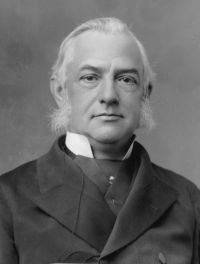
Portrait of F. Max Müller F. Max Müller,  India: What can it teach us?

“ I maintain then that for a study of man, or, if you like, for a study of Aryan humanity, there is nothing in the world equal in importance with the Veda. I maintain that to everybody who cares for himself, for his ancestors, for his history, or for his intellectual development, a study of Vedic literature is indispensable; and that, as an element of liberal education, it is far more important and far more improving than the reigns of Babylonian and Persian kings. ”
Source: Gutenberg

Portrait of F. Max Müller F. Max Müller,  India: What can it teach us?

“ We are not called upon either to admire or to despise that ancient Vedic literature; we have simply to study and to try to understand it.
There have been silly persons who have represented the development of the Indian mind as superior to any other, nay, who would make us go back to the Veda or to the sacred writings of the Buddhists in order to find there a truer religion, a purer morality, and a more sublime philosophy than our own.
”
Source: Gutenberg

Portrait of F. Max Müller F. Max Müller,  India: What can it teach us?

“ The ancient Vedic poetry was said to be, if not of foreign origin, at least very much infected by foreign, and more particularly by Semitic influences. It had always been urged by Sanskrit scholars as one of the chief attractions of Vedic literature that it not only allowed us an insight into a very early phase of religious thought, but that the Vedic religion was the only one the development of which took place without any extraneous influences, and could be watched through a longer series of centuries than any other religion. ”
Source: Gutenberg

Get perspective with Kwize: daily news enlightened by great literature