Veneti

Definition and stakes

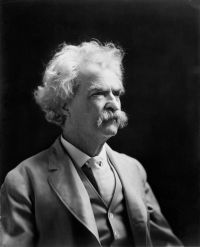
Portrait of William Shakespeare William Shakespeare,  Shakespeare's play of the Merchant of Venice

“ In this way they soon became prosperous, and their numbers increased so rapidly, that in the year 697 they made application to the Emperor to be elected into a body politic, and obtained authority to elect a chief, to whom they gave the name of Duke or Doge. The town, continuing to increase, gradually extended its buildings to the adjacent islands, and, at the same time, acquired considerable tracts of territory on the mainland, then inhabited by the Veneti, from whence the rising city is supposed to have borrowed its name of Venetia or Venice. ”
Source: Gutenberg

Hester Lynch Piozzi,  Observations and Reflections Made in the Course of a Journey through France…

“ A Venetian has no such notions; by force of mind and dint of elegance inherent in it, he pleases himself first, and finds every body else delighted of course, nor would quit his own country except for paradise; while an English nobleman clumps his trees, and twists his river, to comply with his neighbour’s taste, when perhaps he has none of his own; feels disgusted with all he has done, and runs away to live in Italy. ”
Source: Gutenberg

vicomte de François-René Chateaubriand,  The Memoirs of François René Vicomte de Chateaubriand sometime Ambassador to England…

“ The Veneti were an ancient Celtic people living in Brittany, near the coast of the Bay of Biscay. They were subdued by Cæsar, after a severe maritime war, in 56 b.c.—T.
[124] A people dwelling near the head of the Adriatic, between the Po and the Adige.—T.
[125] Vannes, or, in Breton, Gwened is the capital of the Department of Morbihan and is the ancient Civitas Venetorum, the capital of the Veneti.—T.
”
Source: Gutenberg

Get perspective with Kwize: daily news enlightened by great literature