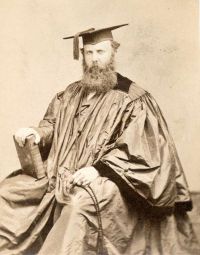
William Collins

Definition and stakes

Portrait of William J. Long William J. Long,  Outlines of English and American Literature

“ Among those who made vigorous protest against the precise and dreary formalism of the age were Collins and Gray, whose names are commonly associated in poetry, as are the names of Addison and Steele in prose. They had the same tastes, the same gentle melancholy, the same freedom from the bondage of literary fashion. Of the two, William Collins (1721-1759) was perhaps the more gifted poet. His exquisite "Ode to Evening" is without a rival in its own field, and his brief elegy beginning, "How sleep the brave," is a worthy commemoration of a soldier's death and a nation's gratitude. ”
Source: Gutenberg

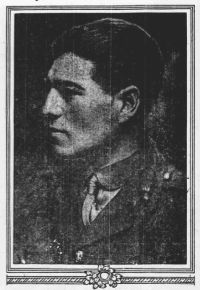
Portrait of A. Hamilton Gibbs A. Hamilton Gibbs,  Rowlandson's Oxford

“ William Collins—Joins the Smarts—Forgets how to work—Oxford kills his will-power—Loses his reason—Samuel Johnson at Pembroke—A lonely freshman—Translates Pope’s Messiah—Suffers horribly from poverty—Dr Adam, his tutor—Readiness and physical pluck—Love of showing off—His love of Pembroke.
William Collins has been claimed as the greatest lyric poet of the eighteenth century. But, as is so often the case with famous men, his genius during his life time received no recognition.
”
Source: Gutenberg

William Collins,  The Poetical Works of William Collins…

“ When Collins is spoken of as one of the minor poets, it is a sad misapplication of the term. Unless he be minor because the number and size of his poems is small, no one is less a minor poet. In him every word is poetry, and poetry either sublime or pathetic. He does not rise to the sublimity of Milton or Dante, or reach the graceful tenderness of Petrarch; but he has a visionary invention of his own, to which there is no rival. As long as the language lasts, every richly gifted and richly cultivated mind will read him with intense and wondering rapture ”
Source: Gutenberg

Get perspective with Kwize: daily news enlightened by great literature