“ Usually abstract thinking develops man’s capacity for apprehending the bent of his mind at certain moments and laying it to heart, but my inclination for abstract thought developed my consciousness in such a way that often when I began to consider even the simplest matter, I would lose myself in a labyrinthine analysis of my own thoughts concerning the matter in question. ”
Abstract thought
Definition and stakes
The theme of “abstract thought” has been addressed by authors such as Bertrand Russell, William James, Georg Wilhelm Friedrich Hegel, Alfred North Whitehead and Various. It is often associated with terms like idea, abstraction, philosophy, perception and reason.
Quotes about “abstract thought”
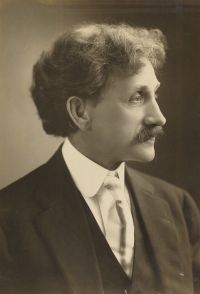 J. Howard Moore,
The Universal Kinship
J. Howard Moore,
The Universal Kinship
“ For, when the highest product of abstract thought is analysed, the ultimate elements must always be found to consist in material given directly by the senses; and every stage in the symbolic construction of ideas, in which the process of abstraction consists, depends on acts of perception taking place in the lower stages’. ”
 Bertrand Russell,
The Analysis of Mind — Lecture XI: General Ideas and Thought
(1921)
Bertrand Russell,
The Analysis of Mind — Lecture XI: General Ideas and Thought
(1921)
“ Taken as a problem in logic, the answer is, of course, that absolutely nothing in the way of abstract mental content is inferable from the mere fact that we can use intelligently words of which the meaning is abstract. ”
 James Frederick Ferrier,
Philosophical Works of the Late James Frederick Ferrier
(1875)
James Frederick Ferrier,
Philosophical Works of the Late James Frederick Ferrier
(1875)
“ Abstract thinking is a contradiction, and has no place in the economy of the intellect. Such thinking is only apparent—never real. All knowledge and all thought are concrete, and deal only with concretions—the concretion of the particular and the universal. What the particular and the universal are, which constitute the concrete reality of cognition, is declared in the next proposition. ”
 Arthur Schopenhauer,
The World as Will and Representation
(1819)
Arthur Schopenhauer,
The World as Will and Representation
(1819)
“ That the objective world would exist even if there existed no conscious being certainly seems at the first blush to be unquestionable, because it can be thought in the abstract, without bringing to light the contradiction which it carries within it. But if we desire to realise this abstract thought, that is, to reduce it to ideas of perception, from which alone (like everything abstract) ”
Various, The Catholic World, Vol. 03, April to September…
“ The entire falsity of this whole philosophy of the abstract, and the nullity of all abstractions considered as self-subsisting objects of thought, will be more directly shown hereafter. For the present we say no more on this head, but proceed to consider another form in which the argument from abstract, à priori principles is presented. We have an idea of the good, the beautiful, the true, as being necessary, universal, and eternal. ”
 Georg Wilhelm Friedrich Hegel,
The Phenomenology of Mind — PrefaceOn Scientific Knowledge in General
Georg Wilhelm Friedrich Hegel,
The Phenomenology of Mind — PrefaceOn Scientific Knowledge in General
“ Thought determinations get their substance and the element of their existence from the ego, the power of the negative, or pure reality; while determinations of sense find this in impotent abstract immediacy, in mere being as such. Thoughts become fluent and interfuse, when thinking pure and simple, this inner immediacy, knows itself as a moment, when pure certainty of self abstracts from itself. ”
Jaime Luciano Balmes, Fundamental Philosophy, Vol. 2…
“ If, then, we consider that these sensations all have something in common with all that is in us, in so far as they modify us in a certain manner, we shall form an idea of a modification of the me, making abstraction, however, of its being a sensation, a thought, or an act of the will; and if, finally, we abstract from these things being in us, their being substances or modifications, and attend only to the fact that they are something, we shall have attained the idea of being. ”
 Alfred North Whitehead,
Science and the modern world
(1925)
Alfred North Whitehead,
Science and the modern world
(1925)
“ Accordingly, if you have a logical head, you can deduce a variety of conclusions respecting the relationships between these abstract entities. Furthermore, if the abstractions are well-founded, that is to say, if they do not abstract from everything that is important in experience, the scientific thought which confines itself to these abstractions will arrive at a variety of important truths relating to our experience of nature. We all know those clear-cut trenchant intellects, immovably encased in a hard shell of abstractions. ”
 Walter Pater,
The Renaissance: Studies in Art and Poetry
Walter Pater,
The Renaissance: Studies in Art and Poetry
“ Philosophical theories or ideas, as points of view, instruments of criticism, may help us to gather up what might otherwise pass unregarded by us. "Philosophy is the microscope of thought." The theory or idea or system which requires of us the sacrifice of any part of this experience, in consideration of some interest into which we cannot enter, or some abstract theory we have not identified with ourselves, or what is only conventional, has no real claim upon us. ”
 Fyodor Dostoyevsky,
The House of the Dead; or, Prison Life in Siberia
Fyodor Dostoyevsky,
The House of the Dead; or, Prison Life in Siberia
“ Reality is a thing of infinite diversity, and defies the most ingenious deductions and definitions of abstract thought, nay, abhors the clear and precise classifications we so delight in. Reality tends to infinite subdivision of things, and truth is a matter of infinite shadings and differentiations. ”
Joseph Haven, Mental Philosophy: Including the Intellect…
“ Conception of the Abstract.—The Discursive or Reflective Power.—In the cases thus far described we have conceived of some sensible object, considered in and by itself, capable of being represented to thought. We may, however, conceive not of an object in itself considered, but of the properties and relations of objects in the abstract. ”
Georg Wilhelm Friedrich Hegel,
Hegel's Lectures on the History of Philosophy…
“ In regard to knowledge, very abstract thoughts are to be found—though of a truth they are quite as good as ours, and more ingenious—which according to their content ought to be concrete, and also were so. ”
 Friedrich Schiller,
Aesthetical Essays of Friedrich Schiller
Friedrich Schiller,
Aesthetical Essays of Friedrich Schiller
“ But as both only represent true humanity very imperfectly—that normal humanity which requires the absolute harmony of these two operations—their contradictory objections have no weight, and if their judgments prove anything, it is rather that the author has succeeded in attaining his end. The abstract thinker finds that the substance of the work is solidly thought; the reader of intuitive ideas finds his style lively and animated ”
 William Walker Atkinson,
Thought-Culture; Or, Practical Mental Training
William Walker Atkinson,
Thought-Culture; Or, Practical Mental Training
“ Abstract ideas are merely the mental conception of qualities or properties divorced from their associated objects by Abstraction.Conception or Generalization is that faculty of the Mind by which it forms and groups together several particular ideas in the form of a general idea. By the processes of Conception we form classes or generalizations from particular ideas arising from our percepts. First, we perceive things ”
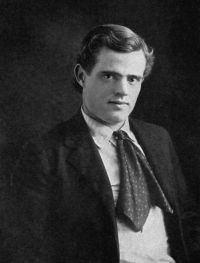 Jack London,
Revolution, and Other Essays
(1910)
Jack London,
Revolution, and Other Essays
(1910)
“ Your trouble, I repeat, is with definitions. You have grasped that man performs what is called abstract reasoning, you have made a definition of abstract reason, and, betrayed by that great maker of theories, the ego, you have come to think that all reasoning is abstract and that what is not abstract reason is not reason at all. ”
Georg Wilhelm Friedrich Hegel,
Science of Logic
(1816)
“ All other men have it in common with me to be 'I': just as it is common to all my sensations and conceptions to be mine. But 'I,' in the abstract, as such, is the mere act of self-concentration or self-relation, in which we make abstraction from all conception and feeling, from every state of mind and every peculiarity of nature, talent, and experience. ”
William James, A Pluralistic Universe
“ Both theoretically and practically this power of framing abstract concepts is one of the sublimest of our human prerogatives. We come back into the concrete from our journey into these abstractions, with an increase both of vision and of power. It is no wonder that earlier thinkers, forgetting that concepts are only man-made extracts from the temporal flux, should have ended by treating them as a superior type of being, bright, changeless, true, divine, and utterly opposed in nature to the turbid, restless lower world. ”
William James, Pragmatism: A New Name for Some Old Ways of Thinking
“ But like all abstractions, it will prove to have its use. If philosophers can treat the life of the universe abstractly, they must not complain of an abstract treatment of the life of philosophy itself. ”
Walter Pater,
Marius the Epicurean — Volume 1
“ Abstract theory was to be valued only just so far as it might serve to clear the tablet of the mind from suppositions no more than half realisable, or wholly visionary, leaving it in flawless evenness of surface to the impressions of an experience, concrete and direct. ”
John Anderson, The course of creation (1851)
“ Power, wisdom, and goodness, may, indeed, be regarded in one way as abstract qualities. We can reason about them, and hold them up to our contemplation, as something distinct or different from the bodies in which they reside. Hence all our speculations respecting the laws of nature, the primary and secondary qualities of matter, the relations of cause and effect, to [372] which principle of abstraction in man the various sciences owe their origin. The inductive philosophy is entirely built upon it. ”
Alfred North Whitehead,
An enquiry concerning the principles of natural knowledge
(1919)
“ Thus scientific objects are the concrete causal characters, though we arrive ‘at them by a route of apprehension which is a process of abstraction. In the same way, what, in the form of a sense-object, is concrete for our awareness, is abstract in its character of a complex of relations between scientific objects. ”
Charles H. Ham, Mind and Hand: Manual Training the Chief Factor in Education (1900)
“ We rightly seek the meaning of the abstract in the concrete, because we cannot act in relation to the abstract, which is only a representative sign; we must give it a concrete form in order to make it a clear and distinct idea; until we have done so we do not know that we really believe—only believe that we believe it. ”
 Aristotle,
Aristotle's Psychology (On the Soul…
Aristotle,
Aristotle's Psychology (On the Soul…
“ As there is, according to the common opinion, no object outside the magnitudes of sense, it follows that the ideas of reason are contained in the forms of sense, both the so-called abstract conceptions and the various qualities and attributes that determine sensible phenomena. ”
James Frederick Ferrier,
Philosophical Works of the Late James Frederick Ferrier
(1875)
“ Our psychologists may guard and explain themselves as they please, but their attribution to man of a faculty called abstraction has been, from first to last, the most disconcerting and misleading hypothesis which either they or their readers could have entertained. We are supposed to have a power of forming abstract conceptions; but it is obvious from the foregoing observations that we have no such power, and that no abstract idea, either particular or general, can be attained by any intelligence. Such conceptions can only be approximated. ”
 John Taylor,
Journal of Discourses — Volume 7…
John Taylor,
Journal of Discourses — Volume 7…
“ Something that will be of some real practical use is, in my opinion, what we want; but to talk about abstract theories, idealities, and things that have not much substance or reality in them, I do not think is of much use to anybody. ”
Georg Wilhelm Friedrich Hegel,
The Philosophy of Fine Art, volume 1…
“ As finite intelligence we are aware in feeling of the inner no less than the outer objects of consciousness; we observe them, perceive them to be true to our senses, allow them to form part of the content of our perceptions, concepts, and finally, no doubt, to become the abstractions which our understanding presents to us, reflecting on their appearance, and endowing them with the abstract form of universality. ”
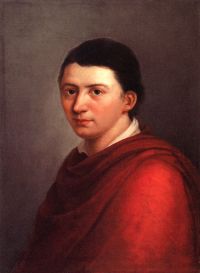 Friedrich von Schlegel,
The philosophy of life, and philosophy of language…
Friedrich von Schlegel,
The philosophy of life, and philosophy of language…
“ And this is the only true and legitimate abstraction which holds good both for science and for life. But thus to abstract our own Me and subjective peculiarities is a duty which is far from being commonly observed, and is, in truth, extremely difficult, even with the greatest honesty of purpose, perfectly to accomplish. ”
Various, The Catholic World, Vol. 08, October…
“ Yet we hold that whatever the mind cognizes at all, it cognizes in the concrete, as an individual object. And therefore we deny that the ideas of the necessary, the universal, of necessary cause, and the like, which the author calls intuitions, and treats as first principles, necessary assumptions, abstract ideas, etc., are abstractions, mental conceptions, or generalizations ”
William Hazlitt, Essays on the Principles of Human Action (1835)
“ I may be allowed to set off one paradox against another, and as these writers affirm that all abstract ideas are particular images, so I shall try to prove that all particular images are abstract ideas. ”
William Hazlitt, The Collected Works of William Hazlitt…
“ So that the depth of the understanding or reasoning in such cases may be explained to mean, that there is a pile of implicit distinctions analyzed from a great variety of facts and observations, each supporting the other, and that the mind, instead of being led away by the last or first object or detached view of the subject that occurs, connects all these into a whole from the top to the bottom, and by its intimate sympathy with the most obscure and random impressions that tend to the same result, evolves a principle of abstract truth. ”
Bertrand Russell,
Philosophy
(1927)
“ Knowledge of external events, as we have seen, consists of a certain sensitivity to their presence, but not in having in or before our minds anything similar to them, except in certain abstract structural respects. Is knowledge of our own minds equally abstract and indirect? ”
William Hazlitt, The collected works of William Hazlitt… (1902)
“ For this feeling, this custom, is itself a general impression, and could not, without a power of abstraction in the mind, think, without a power of being acted upon by a number of different impulses of pleasure and pain, concurring to produce a general effect, abstracted from the particular feelings themselves, or the objects first exciting them. All abstract ideas are several impressions of the same kind, and are merely customary affections of the mind, not distinct images of things. ”
 John Stuart Mill,
A System of Logic, Ratiocinative and Inductive
John Stuart Mill,
A System of Logic, Ratiocinative and Inductive
“ The metaphysical inquiry into the nature and composition of what have been called Abstract Ideas, or, in other words, of the notions which answer in the mind to classes and to general names, belongs not to Logic, but to a different science, and our purpose does not require that we should enter upon it here. ”
 David Hume,
Treatise of Human Nature/Book 1…
(1739)
David Hume,
Treatise of Human Nature/Book 1…
(1739)
“ For this is one of the most extraordinary circumstances in the present affair, that after the mind has produc’d an individual idea, upon which we reason, the attendant custom, reviv’d by the general or abstract term, readily suggests any other individual, if by chance we form any reasoning, that agrees not with it. ”
Friedrich Schiller,
Aesthetical Essays of Friedrich Schiller
“ This is the pure product of a process of abstraction from everything material and accidental, a pure object free from every subjective barrier, a pure state of self-activity without any admixture of passive sensations. There is indeed a way back to sensation from the highest abstraction; for thought teaches the inner sensation, and the idea of logical or moral unity passes into a sensation of sensual accord. But if we delight in knowledge we separate very accurately our own conceptions from our sensations ”
William Hazlitt, The collected works of William Hazlitt… (1902)
“ If particular objects or qualities were single things, there would then be some precise limit between them and abstract or general ideas, but as the most particular object, or qualities, as well as the most general combinations and classes of things are necessarily confused and mixed results, and nothing more than a number of impressions, never distinctly analyzed by the mind, there can be no general reasoning to disprove abstracted ideas in the common sense of the word. ”
Jaime Luciano Balmes, Fundamental Philosophy, Vol. 2…
“ The essences of things in the abstract mean nothing, nor can they become the object of affirmation or negation, unless we suppose a necessary being in which is the reason of the relations of things, and of the possibility of their existence. ”
 Hippolyte Taine,
The Ancient Regime
Hippolyte Taine,
The Ancient Regime
“ No abstract definitions exist at the outset; abstraction is ulterior and derivative; foremost in each science must be placed examples, experiences, evident facts; from these we derive our general idea. ”
David Hume,
Four Dissertations
(1757)
“ It is evident, that none of the rules of composition are fixed by reasonings a priori, or can be esteemed abstract conclusions of the understanding, from comparing those habitudes and relations of ideas, which are eternal and immutable. ”
J. Marshall, A Short History of Greek Philosophy
“ Their completeness of abstraction from the accidents of experience, from the differences, qualifications, variations which contribute so largely to the personal interests of life, this it is which makes the abstract sciences demonstrative, exact, and universally applicable. In so far, therefore, as we are permitted to grasp the conception of a perfectly abstract existence prior to, and underlying, and enclosing, all separate existences, so far also do we get to a conception which is demonstrative, exact, and universally applicable throughout the whole world of knowable objects. ”
Related terms
Authors who wrote about “abstract thought”
Bertrand RussellWilliam JamesGeorg Wilhelm Friedrich HegelAlfred North WhiteheadVariousWilliam HazlittWalter Pater Maurice MaeterlinckDavid HumeJaime Luciano BalmesLord Henry Home KamesJack LondonFriedrich SchillerArthur SchopenhauerJames Frederick Ferrier
 Immanuel Kant
 Ralph Waldo EmersonJohn Stuart MillWilliam Walker AtkinsonJ. Howard Moore