“ Each year of this planet equals ten of yours. When I saw myself, as I have just told you, I appeared to be about twenty years of age according to earthly reckoning, but following the way of reckoning on that planet, I was only two years old. There the age of fifteen years is often reached, which is considered the limit of life on that globe, and is equivalent to 150 years on the Earth. ”
Age of Earth
Definition and stakes
The theme of “age of Earth” has been addressed by authors such as Camille Flammarion, Edwin Sharpe Grew, Caroline Pridham, Christiaan Huygens and Percival Lowell. It is often associated with terms like geology, geologist, life, time and human.
Quotes about “age of Earth”
Various, Popular Science Monthly (1887)
“ But as for the mere age of the sun, irrespective of the question of uniformity, we have proof of something vastly more than three thousand years in geological history, with its irrefragable evidence of continuity of life on the earth in time past for tens of thousands, and probably for millions of years. ”
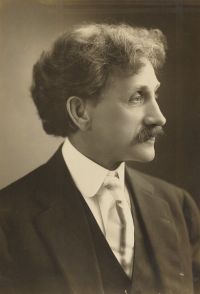 J. Howard Moore,
The Universal Kinship
“ If the age of the human species be estimated at 50,000 years and the age of the life-process at 100,000,000 years, the time during which man has been on the earth is, when compared with the entire period during which the planet has been tenanted, as 1 to 2,000. And the time during which the earth has been inhabited—immense as that time is when compared with the little span of human history—is also insignificant when compared with the enormous lapse of time during which the planet was slowly cooling and solidifying preliminary to the existence of life. ”
William Crosbie Hunter, Think: A Book for To-day
“ The pages of the earth's surface carry in their stratification indelible records harmonizing with this scriptural account of the evolution of the earth from its chaotic misty past to its concrete definite present. Yes, this earth of ours is old, so old that mere man cannot contemplate or accurately estimate its wondrous age. ”
 Archibald Geikie,
Landscape in History, and Other Essays
“ He thinks that 'almost anything is possible as to the present internal state of the earth,' and he concludes in these words: 'To sum up, we can find no published record of any lower maximum age of life on the earth, as calculated by physicists, than 400 millions of years. ”
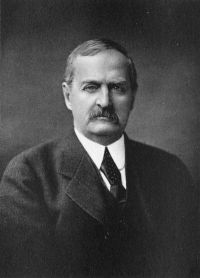 Henry Cadwalader Chapman,
Evolution of Life
(1873)
“ Physical and Geological science cannot at present assign any definite age to the Earth; and, from the rate at which deposits are formed at the present day, millions and millions of years would have passed away in the formation of the Aqueous Rocks. ”
 Alfred Russel Wallace,
Island Life; Or, The Phenomena and Causes of Insular Faunas and Floras
“ The subjects discussed in the last three chapters introduce us to a difficulty which has hitherto been considered a very formidable one—that the maximum age of the habitable earth, as deduced from physical considerations, does not afford sufficient time either for the geological or the organic changes of which we have evidence. ”
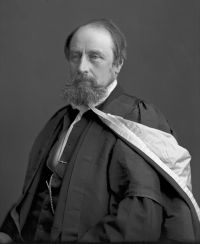 Sir John William Dawson,
Relics of Primeval Life: Beginning of Life in the Dawn of Geological Time
(1897)
“ If, in accordance with the previous statements, we choose to divide the earth's history by the development of animal life rather than by rock formations, and to regard each period as presided over by dominant animal forms, we shall thus have an age of man, an age of mammals, an age of reptiles and birds, an age of amphibians and fishes, and an age of crustaceans and mollusks. ”
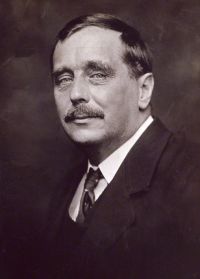 Herbert George Wells,
A Short History of the World
(1922)
“ The truth is that the physical and astronomical sciences are still too undeveloped as yet to make anything of the sort more than an illustrative guesswork. The general tendency has been to make the estimated age of our globe longer and longer. It now seems probable that the Earth has had an independent existence as a spinning planet flying round and round the sun for a longer period than 2,000,000,000 years. ”
Arthur M. Lewis, Evolution Social and Organic
“ Lord Kelvin asserted the age of the earth to be between twenty and forty million years. George Darwin estimates the separation of the moon from the earth as having taken place some fifty-six million years ago. ”
Archibald Geikie,
1911 Encyclopædia Britannica, Volume 11…
(1911)
“ The arguments from the geological side against the physical contention that would limit the age of our globe to some 10 or 20 millions of years are mainly based on the observed rates of geological and biological changes at the present time upon land and sea, and on the nature, physical history and organic contents of the stratified crust of the earth. ”
 William Whewell,
The Plurality of Worlds
“ Such estimations of age can, indeed, as we have intimated, be only of the widest and loosest kind; yet they all concur in assigning very great and gigantic periods of time, as having been occupied by the events which have formed the earth's strata, and brought them into their present position. For not only must there have been long ages employed, as we have said, while the successive generations of each group of animals lived, and died, and were entombed in the abraded fragments of the then existing earth ”
 James Croll,
Stellar Evolution and Its Relations to Geological Time
“ But the 12,000,000 years would not in reality be available for plant and animal life; for undoubtedly millions of years would elapse before our globe could become adapted for either flora or fauna. If there is no other source of heat for our system than gravitation, it is doubtful if we can calculate on much more than half that period for the age of life on the earth. ”
William Harmon Norton, The Elements of Geology
“ It is because the onward march of life has taken the same general course the world over that we are able to use it as a universal time scale and divide geologic time into ages and minor subdivisions according to the ruling or characteristic organisms then living on the earth. Thus, since vertebrates appeared, we have in succession the Age of Fishes, the Age of Amphibians, the Age of Reptiles, and the Age of Mammals. ”
Albert N. Williams, The Black Hills, Mid-Continent Resort
“ For centuries men have attempted to determine the earth’s exact age, but except for the famed Archbishop James Ussher of Ireland, who gravely calculated that the earth was formed at precisely nine o’clock on the morning of the twelfth of October in the year 4004 B.C., no scientist has been able to come closer than a few million years in the figures. ”
Theodore Graebner, Evolution: An Investigation and a Critique
“ The physicist, who has measured the heat of the sun, rises up and says that the age of the earth, as estimated by specialists like Lord Kelvin, is not nearly so great as is demanded by the Darwinian. The period which the physicists, in their mercy, appear to be willing to grant the inhabitable globe is from twenty to forty million years. ”
Various, Popular Science Monthly (1895)
“ The views respecting the possible age of the earth have undergone several modifications by geologists and physicists alternately, with accepted periods ranging from four hundred millions down to ten millions of years. ”
 B. H. Roberts,
The Gospel: An Exposition of its First Principles
“ Scientists have been talking of the earth's strata that were formed in a previously existing planet; they have considered the fossilized flora and fauna imbedded in those strata, and have speculated as to the probable lapse of time since those animal and vegetable forms of life existed; and have generally concluded that the age is so far remote that there is no possible chance of harmonizing it with the account of the creation as given in the Bible. ”
Caroline Pridham, Twilight and Dawn; Or, Simple Talks on the Six Days of Creation
“ The marking off stages in the life-history of the earth, and speaking of its Old, Middle, and New Age has been done to help in the study of its crust. Nothing is known, however, with certainty about these different periods or where one ends and another begins, and no one knows whether the first, or oldest, layer has yet been discovered. ”
 Joseph McCabe,
The Story of Evolution — Chapter XI. The Middle Ages of the Earth
“ If the first be conceived as comprising sixteen million years—a very moderate estimate—the second will be found to cover less than eight million years, the third less than three million years, and the fourth, the Age of Man, much less than one million years ”
Various, Popular Science Monthly (1893)
“ It has often been suggested that some broad question, as the probable age of the earth, be considered at a joint meeting of all the sections of the American Association. Physicists, geologists, and naturalists vary by millions of years in their estimates of the length of our planet's life. ”
 Thomas Sigismund Stribling,
Birthright
(1922)
“ The proof offered was a résumé of the vegetable, animal, and mineral kingdoms, showing their perfect fitness for man's use, and the immediate induction was that they were designed for man's use. Still another work calculated the exact age of the earth by the naïve method of counting the generations from Adam to Christ, to the total adding eighteen hundred and eighty-five years (for the book was written in 1885) , and the original six days it required the Lord to build the earth. ”
Emory Adams Allen, The Prehistoric World; Or, Vanished Races
“ When it was acknowledged on all hands that on geological grounds the age of the earth was certainly very great, many times the few thousand years hitherto relied on, it is not strange that popular thought swung to the other extreme, and hundreds of millions of years were thought necessary to explain the series of changes which the geologists unfolded. ”
 John Andreas Widtsoe,
Joseph Smith as Scientist: A Contribution to Mormon Philosophy
“ During the age of these prehistoric monsters, the earth was yet more fully prepared for higher life. Following the age of reptiles, came the age of mammals, which still persists, though, since the coming of man upon the earth, the geological age has been known as the age of man. ”
Sir John William Dawson,
Some Salient Points in the Science of the Earth
“ In the present case it will be necessary to consider these vicissitudes in their more general aspects, and with some reference to their effects on the distribution of living beings.The modern or human period of geology, that in which man and his contemporaries are certainly known to have inhabited the earth, was immediately preceded by an age of climatal refrigeration known as the Glacial or Ice age. ”

“ We estimate the age of certain strata of the earth's formation by means of a union of our knowledge of plant and animal life, coupled with our geological research and a good memory. The older scientists in the field of geology do not rely solely upon the tracks of the hadrasaurus or the cornucopia for their data. ”
 Frank W. Blackmar,
History of Human Society
“ Historical geology shows us that the crust of the earth has been made by a series of layers, one above the other, and that the geologist determining the order of their creation has a means of ascertaining their relative age, and thus can measure approximately the life of the plants and animals connected with each separate layer. [7] The relative ages of fishes, reptiles, and mammals, including man, are thus readily determined. ”
Baron Edward Bulwer Lytton Lytton, The Disowned — Volume 08
“ Thou sweepest over our graves, and Joy is born from the ashes: thou sweepest over Joy, and lo, it is a grave! Engine and tool of the Almighty, whose years cannot fade, thou changest the earth as a garment, and as a vesture it is changed; thou makest it one vast sepulchre and womb united, swallowing and creating life! and reproducing, over and over, from age to age, from the birth of creation to the creation's doom, the same dust and atoms which were our fathers, and which are the sole heirlooms that through countless generations they bequeath and perpetuate to their sons. ”
 Robert S. Ball,
The Earth's Beginning
“ Such a period then seems to be but a trifle—it is nothing. Eighty years may be long enough to witness the growth of children and grandchildren; but it is too short for a single heartbeat in the great life of Nature. Even the longest lifetime is far too brief to witness a perceptible advance in the grand transformation. The periods of time demanded in the great evolution shadowed forth by the nebular theory utterly transcend our ordinary notions of chronology. ”
 Horace G. Hutchinson,
The greatest story in the world…
“ It required countless ages for such a process; but the discoveries of geologists and astronomers—the earth-diggers and the star-gazers—combined to show that such countless ages not only might, but must, be assigned to the process. Our universe and our earth are by many millions of years older than men had thought. ”
James Croll,
Stellar Evolution and Its Relations to Geological Time
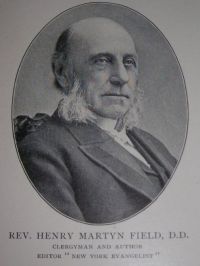
“ When we come to the question of the age of the sun’s heat, and the length of time during which that orb has illuminated our globe, it becomes a matter of the utmost importance which of the two theories is to be adopted. ”
 Henry Martyn Field,
On the Desert - Recent Events in Egypt
(1883)
“ One thing all must admit, that the world is more than six thousand years old, and that the six periods of creation could not have been six days of twenty-four hours, but six successive epochs, during which the earth underwent great geological changes. ”
 Louis Figuier,
The World Before the Deluge
“ The fundamental character of the period we are about to study is the immense development of a vegetation which then covered much of the globe. The great thickness of the rocks which now represent the period in question, the variety of changes which are observed in these rocks wherever they are met with, lead to the conclusion that this phase in the Earth’s history involved a long succession of time. ”
John Anderson, The course of creation (1851)
“ When such premises are made the grounds of such inferences, and, again, when the geologist reiterates the statement that these great periods of time correspond wonderfully with the gradual increase of animal life, and the successive creation and extinction of numberless orders of being, and with the incredible quantity of organic remains buried in the crust of the earth, we have just to remind him that betwixt great periods of time, and the gradual increase of animal life, there is no necessary connection. ”
 Ernst Haeckel,
Last Words on Evolution: A Popular Retrospect and Summary
“ Even the duration of the organic history of the earth—that is to say, the period during which the plant and animal population of our planet was developing—must itself be put at more than a hundred million years. ”
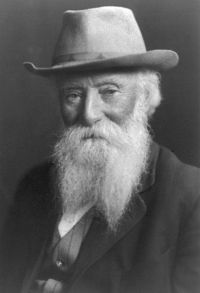 John Burroughs,
Time and Change
“ The Christian era would make but a few seconds of the vast cycle of the earth's history. Geologic time! The words seem to ring down through the rocky strata of the earth's crust; they reverberate under the mountains, and make them rise and fall like the waves of the sea; they open up vistas through which we behold the continents and the oceans changing places, and the climates of the globe shifting like clouds in the sky; whole races and tribes of animal forms disappear and new ones come upon the scene. Such a past! the imagination can barely skirt the edge of it. ”
 H. G. Wells,
A Short History of the World
“ The earth aged. One million years followed another, and the day lengthened, the sun grew more distant and milder, the moon’s pace in the sky slackened; the intensity of rain and storm diminished and the water in the first seas increased and ran together into the ocean garment our planet henceforth wore. ”
William J. Miller, Geology: The Science of the Earth's Crust
“ As a result of the work of many able students of geology during the past century and a quarter, it is now well established that our planet has a definitely recorded history of many millions of years, and that during the lapse of those eons, revolutionary changes in earth features have occurred, and also that there has been a vast succession of living things which, from very early times, have gradually passed from simple into more and more complex forms. ”
Robert S. Ball,
Time and Tide: A Romance of the Moon
“ So far as a human life or the life of the human race is concerned, the decline of a tenth of a degree per century in the earth's internal heat is absolutely void of significance. I cannot, however, impress upon you too strongly, that the mere few thousands of years with which human history is cognizant are an inappreciable moment in comparison with those unmeasured millions of years which geology opens out to us, or with those far more majestic periods which the astronomer demands for the events he has to describe. ”
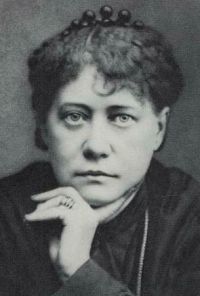 H. P. Blavatsky,
The Secret Doctrine, Vol. 2 of 4
“ The Chronology of the Brâhmans. No greater riddle exists in Science, no problem is more hopelessly insoluble, than the question: How old—even approximately—are the Sun and Moon, the Earth and Man? What does Modern Science know [pg 070] of the duration of the Ages of the World, or even of the length of Geological Periods? ”
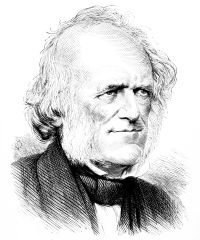 Sir Charles Lyell,
Principles of Geology
“ Prepossessions in regard to the duration of past time—Prejudices arising from our peculiar position as inhabitants of the land—Of those occasioned by our not seeing subterranean changes now in progress—All these causes combine to make the former course of Nature appear different from the present—Objections to the doctrine, that causes similar in kind and energy to those now acting, have produced the former changes of the earth's surface, considered. ”
Related terms
Authors who wrote about “age of Earth”
 Camille FlammarionEdwin Sharpe GrewCaroline Pridham
 Christiaan Huygens
 Percival LowellGerald MolloyRobert S. Ball
 E. Walter MaunderH. P. BlavatskyJohn Andreas Widtsoe
 Walt Whitman
 George MacDonald
 Nathaniel HawthorneEmory Adams AllenBaron Edward Bulwer Lytton LyttonVarious
 Julia McNair Wright
 Thomas Henry Huxley
 Charles LyellJoseph McCabe
