Blacksmithy

Definition and stakes

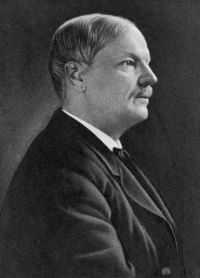
Harold B. Gill,  The Blacksmith in Eighteenth-Century Williamsburg

“ Only the close daily supervision of an expert and years of practice will enable a smith to know when the eye of his fire is large enough—but not too large ... when the forced draft of his bellows has made the fire hot enough—but not too hot ... when his iron is red enough—but not too red ... when his hammer blows fall heavily enough—but not too heavily to accomplish the particular job at hand.
Readers unfamiliar with the processes and products of a smithy are likely to be strangers also to many of the smith’s tools—which makes for something of a problem in trying to describe them.
”
Source: Gutenberg

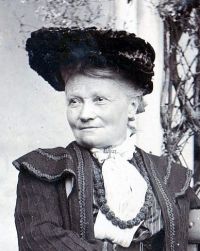
Portrait of Jeffery Farnol Jeffery Farnol,  The Broad Highway

“ Yes, a fine, free, manly art is smithing, and those who labor at the forge would seem, necessarily, to reflect these virtues.
Since old Tubal Cain first taught man how to work in brass and iron, who ever heard of a sneaking, mean-spirited, cowardly blacksmith? To find such an one were as hard a matter as to discover the Fourth Dimension, methinks, or the carcass of a dead donkey.
Your true blacksmith is usually a strong man, something bowed of shoulder, perhaps; a man slow of speech, bold of eye, kindly of thought, and, lastly—simple-hearted.
”
Source: Gutenberg

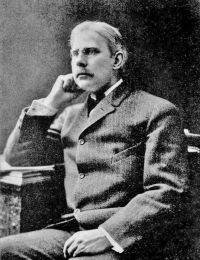
Karl Weule,  Native life in East Africa (1909)

“ By the time the final tapping duet begins, everything about them is shining—their eyes, their teeth, their whole faces—in fact they shine all over, for they keep crowding together more and more closely, and it is by no means cool. “Die Schmiede im Walde” (“The Forge in the Forest”) scarcely heightens their pleasure; it is true that the enjoyment is great and general, but the blacksmith is a familiar figure of everyday life, and the rhythm of his hammer as well known to them as it is to us. ”
Source: Gutenberg

Get perspective with Kwize: daily news enlightened by great literature