Brick oven

Definition and stakes

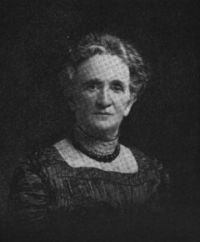
Portrait of Mrs. Loudon Mrs. Loudon,  The Lady's Country Companion; Or…

“ Little iron grates are sometimes sold for heating ovens, but they are more suitable for coal than wood; and, though an oven may be heated with great rapidity with coal, it does not retain its heat so long, and is more fitted for baking French bread, or cakes, than large-sized household loaves. When, on the contrary, a brick oven is heated with wood, and the hot embers are pushed by the scraper to every part of the oven, the whole mass of brick becomes what is technically called soaked, and is in a fit state for a family baking of bread. ”

Source: Gutenberg

Mrs. Beeton,  The Book of Household Management

“ Brick ovens are generally considered the best adapted for baking bread: these should be heated with wood faggots, and then swept and mopped out, to cleanse them for the reception of the bread. Iron ovens are more difficult to manage, being apt to burn the surface of the bread before the middle is baked. To remedy this, a few clean bricks should be set at the bottom of the oven, close together, to receive the tins of bread. In many modern stoves the ovens are so much improved that they bake admirably ”
Source: Gutenberg

Thomas Wilhelm,  A Military Dictionary and Gazetteer

“ A brick oven large enough to bake 500 rations can be constructed in less than twenty-four hours. The cylindrical form is greatly to be preferred, as it is more easily made and requires less material than the ordinary forms. The want of brick for the arch and fireplace of ovens may be supplied in the field by two gabions of semicircular or semi-elliptical form. They are placed one above the other on the flat side, and form a cradle. The interior and exterior is plastered with clay, which must penetrate the interstices of the basket-work. ”
Source: Gutenberg

Get perspective with Kwize: daily news enlightened by great literature