Building lot

Definition and stakes

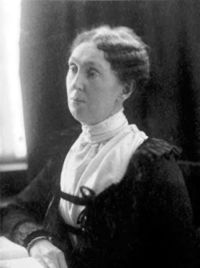
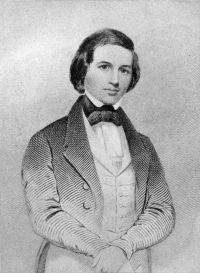
Portrait of Frank A. Fetter Frank A. Fetter,  The Principles of Economics, with Applications to Practical Problems

“ The school-room, laboratory, or college class-room could be used at midnight, it is true, but not conveniently; and as students increase, buildings must be added. The same is true of any industry. We cannot conveniently increase the business of a lumber-yard without a larger yard-space, or of a factory without a larger floor-space. But the added space may be gotten by spreading horizontally or piling up perpendicularly. A ten-story building on an acre lot represents ten acres of floor-space. Putting up higher buildings is an expansion in area by the more intensive utilization of the land. ”
Source: Gutenberg

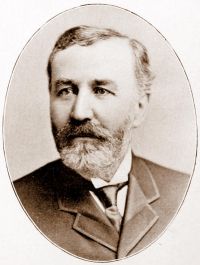
Richard M. Hurd,  Principles of City Land Values

“ Since the proportion of land occupied by streets averages about 35%, the conversion of acreage into lots means a loss in building area of that percentage, so that with the expenses of platting, opening streets, taxes, loss of interest, etc, it is generally estimated that property bought by the acre must sell by the lot for double the acre price in order to avoid loss in handling. ”
Source: Wikisource

Flavel Shurtleff,  Carrying out the city plan (1914)

“ Most modern building codes interfere with the use of land by provisions limiting the amount of the lot which can be occupied and the height to which certain classes of buildings can be erected. Some cities impose an absolute height limit beyond which no building of whatever class of construction can be erected. ”
Source: Gutenberg

Get perspective with Kwize: daily news enlightened by great literature