“ It is impossible that this interval be spent in sleep, for the animals expel fæces and urine. Kirchner maintained the necessity of drawing a white line from the beak of the animal, so that it should imagine itself bound by this mark; but this is not true, as they remain just as motionless without the line, and cataplexy is even more easily produced when the animal sees nothing. Crabs taken out of the water allow themselves to be put into the strangest positions, and remain for a long time motionless. Preyer made similar experiments on frogs and mice. ”
Quotes about “cataplexy”
A system of practical medicine… (1886)
“ In true apoplexy certain peculiar changes in pulse, respiration, and temperature can always be expected, and these differ from those noted in catalepsy. The stertorous breathing, the one-sided helplessness, the usually flushed face, the conjugate deviation of the eyes and head, the loss of control over bowels and bladder, are among the phenomena which can be looked for in most cases of apoplexy, and are not present in catalepsy.It is hardly probable that a cataleptic will often be supposed to be drunk, or a man intoxicated to be a cataleptic ”
Walter Cooper Dendy, The Philosophy of Mystery
“ The body indeed is, to the external world, dead; for although the cataleptic will often swallow food, while all the other muscles are in spasm, this may, I believe does, depend on mere irritability, by which, as I before told you, the brain is first excited, and then directs a movement without the mind’s feeling. Catalepsy is so peculiar to young females of extreme sensibility, that it may be considered an intense hysteria, depending on certain sympathies, or resulting from sudden or powerful influences on the passions. The form of catalepsy marked by hysteria is least dangerous ”
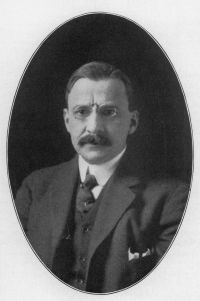 August Hoch,
Benign Stupors: A Study of a New Manic-Depressive Reaction Type
August Hoch,
Benign Stupors: A Study of a New Manic-Depressive Reaction Type
“ The last of the cardinal symptoms to be considered is catalepsy. It occurred in thirteen of thirty-seven cases, although it was present only as a tendency in three of these. If we define it as the maintenance of position in which a part of the body is placed regardless of comfort, we can see that sometimes it is difficult to differentiate from the phenomenon of resistiveness with its rigidity. It is most frequently observed in the hands and arms, perhaps because it is, as a rule, most convenient to demonstrate the retention of awkward positions in the upward extremities. ”
Frederick William Headland, The Action of Medicines in the System
“ It is just possible that a Cathartic may be serviceable by purging away from the blood some effete matters, as Sulphuretted Hydrogen, formed by the continual decomposition of the tissues, which would have hindered the operation of the Chalybeate in the blood, by decomposing it.The use of Iron may, I think, be summed up by saying that it cures Anæmia. In this way it may benefit, and sometimes cure, other disorders, in which Anæmia is apt to be a prominent symptom. Such are Amenorrhœa, Scrofula, Cancer, chronic Ague, Hysteria, Chorea, and Bright's disease of the kidney. ”
Mme. Du Hausset, Memoirs of the Courts of Louis XV and XVI.…
“ A pen's business is to write, and not to speak.'" Madame, who liked the Keeper of the Seals, was very much concerned, and begged the first physician not to mention what he had perceived. Four days after this, M. Berryer was seized with catalepsy, after having talked incoherently. This is a disease which I did not know even by name, and got it written down for me. The patient remains in precisely the same position in which the fit seizes him; one leg or arm elevated, the eyes wide open, or just as it may happen. ”
A. Alpheus, Complete Hypnotism, Mesmerism, Mind-Reading and Spiritualism
“ The right hand and forearm rise up and assume the primitive position of the left hand, which is now stretched out on the arm of the chair, with the waxen pliability that pertains to the cataleptic state.” An interesting experiment may be tried by throwing a patient into lethargy on one side and catalepsy on the other. To induce what is called hemi-lethargy and hemi-catalepsy is not difficult. First, the lethargic stage is induced, then one eyelid is raised, and that side alone becomes cataleptic, and may be operated on in various interesting ways. ”
Walter Cooper Dendy, The Philosophy of Mystery
“ In some cases, indeed, a purple hue will suddenly suffuse the cataleptic body; the limbs are then extremely rigid, but become pliant when the healthy tint is restored.The sensation in the brain of the cataleptic, as of those recovering from drowning, resembles the pricking of needles, the circulation soon becoming accelerated. Hunger is usually intense when the patient awakes. The usual duration of catalepsy is from twenty to forty hours. The return of volition is commonly marked by perspiration ”
Walter Cooper Dendy, The Philosophy of Mystery
“ Ida. Catalepsy, I believe, has been often feigned; and, although it is astonishing with what apathy pain may be endured, the imposture, I presume, may be usually discovered by the proposition of some horrible remedy.Ev. Frequently; but many impostors have withstood the test, and triumphed in their deception. Yet it is true that the perfect state of catalepsy has been, in very rare instances, voluntarily produced; thus exhibiting the complete influence of will over an involuntary muscle, the heart. ”
Catherine Crowe, The Night-Side of Nature; Or, Ghosts and Ghost-Seers
“ Perhaps, in these latter cases, the disunion is less complete. Dr. Werner relates of his somnambule, that it was after those attacks of catalepsy, in which her body had lain stiff and cold, that she used to say she had been wandering away through other spheres. Where the catalepsy is spontaneous and involuntary, and resembles death so nearly as not to be distinguished from it, we may naturally conclude, if we admit this hypothesis at all, that the seeing of the spirit would be clear in proportion to its disentanglement from the flesh. ”
Walter Cooper Dendy, The Philosophy of Mystery
“ Previous to the cataleptic acme girls are often maniacally violent, and will then suddenly regain their temper and their reason. They will sit and play with their fingers in a sullen mood, and the power of motion and speech and other acts of volition may be alternately impaired or lost. In some, the sleep has been preceded by fits of lethargy, by lassitude, and inaptitude to exertion, and perhaps a propensity to sleep-walking. The decided state of catalepsy has begun in an epileptic convulsion. In all, I think, I have seen combined with this disorder, irregular determination of blood ”
Otis Adelbert Kline, The Thing of a Thousand Shapes (1923)
“ The best thing to do is to let him waken himself, as he directed us to do in the telepathic message. He is, as he says, recuperating from his illness and should not be disturbed. You are, perhaps, unaware that catalepsy, although believed by many people to be a disease, is really no disease at all. ”
“ He gesticulates wildly, claps his hands, makes faces, scribbles and rubs on the ground, walls, and windows, beats and drums on the floor, strips off his clothes, tears them to ribbons, etc.”162 Since movement and its opposite are closely connected, the question arises whether the strange rigidity of body manifested in catalepsy is not referable to the same cause. There is certainly often a certain designedness about it. “When any attempt is made to change the position of the patient every muscle is found to be tense. ”
Austin O'Malley, Essays In Pastoral Medicine
“ As a matter of fact, catarrh, when it means anything, means only that stage of inflammation in which there is an increased secretion and which represents an inflammatory condition so mild as often to be described as only hyperaemic, that is, due to an increase of blood in the part. It is rather easy to understand that if more blood flows through a mucous membrane, there will be greater secretion from it than would normally be the case. ”
Alexander Miles, Manual of Surgery Volume First…
“ Infection with the staphylococcus albus, the streptococcus, or the pneumococcus also causes a mild form of osteomyelitis which may go on to suppuration.Necrosis without suppuration, described by Paget under the name “quiet necrosis,” is a rare disease, and would appear to be associated with an attenuated form of staphylococcal infection (Tavel) . It occurs in adults, being met with up to the age of fifty or sixty, and is characterised by the insidious development of a swelling which involves a considerable extent of a long bone. ”
Ray Vaughn Pierce, The People's Common Sense Medical Adviser in Plain English
“ Acute Catarrh also occurs during the initial stage of such eruptive diseases as measles, typhus, typhoid, erysipelas, etc.Seldom do we meet with an otherwise healthy individual, who is subjected to a frequent cold in the head. Impure blood, inherited scrofulous taints, enfeebled circulation, debility, either general or nervous, are all advance agents, inviting catarrhal disease, and preventing rapid recovery from an acute attack, so that a low grade of Chronic Catarrh is generally the sequence. ”
Edward Adams, Surgery, with Special Reference to Podiatry
“ The area of coagulation necrosis becomes filled with white blood cells, and the dry necrosed part is liquefied by the cocci. Suppuration in dense structures causes considerable masses of tissue to die and to be cast off, and these masses float in the pus.An abscess heals by the collapse of its walls, and the formation of an abundance of granulation tissue; in many cases granulations of one wall join those of the other side, the entire mass of granulations being converted into fibrous tissue, and this tissue contracting, heals by third intention. ”
Alexander Miles, Manual of Surgery Volume First…
“ Results of Bacterial Growth.—Some organisms, such as those of tetanus and erysipelas, and certain of the pyogenic bacteria, show little tendency to pass far beyond the point at which they gain an entrance to the body. Others, on the contrary—for example, the tubercle bacillus and the organism of acute osteomyelitis—although frequently remaining localised at the seat of inoculation, tend to pass to distant parts, lodging in the capillaries of joints, bones, kidney, or lungs, and there producing their deleterious effects. ”
“ Catarrh.—Is simply an inflammation due to impurity of the blood. These impurities arise from bad air or wrong food, and remain in the body till a chill of some kind or other forces the blood and the impurities with the blood to some part, resulting in inflammation. Catarrh in the mucous membrane, connected with respiration, is commonly called a "cold," and is decidedly infectious (see Air) . A cold must be regarded as an effort of Nature to get rid of these impurities. Breathing of fresh, even cold air, will expedite, not hinder the cure. ”
 German Sims Woodhead,
1911 Encyclopædia Britannica
(1911)
German Sims Woodhead,
1911 Encyclopædia Britannica
(1911)
“ In the streptococcal inflammations spreading by the lymph channels appears to be specially prevalent. In the blood the organisms, if in small numbers, are usually destroyed by the plasma, which has a powerful bactericidal action; should they escape, however, they are carried without multiplication into the capillaries of the general circulation, of the lung, or of the liver, where, being stopped, they may give rise to a second focus of infection, especially if at the point of impaction the vitality of the tissues is in any way lowered. ”
M. Schele de Vere, Modern Magic
“ According to his theory, currents of what he calls the galvanic-neururgic fluid, are capable of producing all the well-known symptoms and phenomena of thought from idiocy to genius, and from unconscious sleep to the highest excitement; the process by which these results can be obtained is a suspension of the vital equilibrium by disease, intoxication, abstinence, long-continued fasting and prayer and the like. If the marvelous fluid is unequally distributed through the system, catalepsy ensues. ”
Robert H. Elliot, The Indian operation of couching for cataract (1918)
“ From these cases we pass on to consider those in which the lens cannot be seen at all, owing to the occlusion of the pupil. Here our difficulties are greater still, and, if the history fails us, we must fall back on a careful search for signs of wound scars in the cornea or sclera, or of tears in the iris. A point which is always suggestive is the existence of a cataract in the opposite eye. In such cases as these, the contents of the chamber may be found to consist of pus or of blood. ”
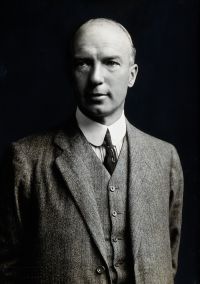 Alexis Thomson,
Manual of Surgery, Sixth Edition…
(1921)
Alexis Thomson,
Manual of Surgery, Sixth Edition…
(1921)
“ This condition of the blood, which is known as _leucocytosis_, is believed to be due to an excessive output and rapid formation of leucocytes by the bone marrow, and it probably has as its object the arrest and destruction of the invading organisms or toxins. To increase the resisting power of the system to pathogenic organisms, an artificial leucocytosis may be induced by subcutaneous injection of a solution of nucleinate of soda (16 minims of a 5 per cent. solution) . ”
Robert H. Elliot, The Indian operation of couching for cataract (1918)
“ The patient is informed that this “cataract-cleansing drug is about to be applied to the eye,” and under cover of the suggestion the operator plunges the lancet through the tunic of the globe at the spot already selected. The alarm thus occasioned is allayed by the assurance that the “medicinal application” is over. The copper probe is next produced, and is inserted through the wound up to its stop, being held between the thumb and two fingers; a circular movement is given to its point, the stop resting against the puncture, and serving as a pivot for the movement. ”
Alexander Miles, Manual of Surgery Volume First…
“ If the wound is aseptic, the fate of the foreign body varies with its character. A substance that is absorbable, such as catgut or fine silk, is surrounded and permeated by the phagocytes, which soften and disintegrate it, the debris being gradually absorbed in much the same manner as a fibrinous exudate. Minute bodies that are not capable of being absorbed, such as particles of carbon, or of pigment used in tattooing, are taken up by the phagocytes, and in course of time removed. ”
 Jean-Henri Fabre,
The Life of the Caterpillar
Jean-Henri Fabre,
The Life of the Caterpillar
“ Very happy in my suffering, which sets me on a safe path, I continue my enquiry by arguing thus: the virus in the blood cannot be a living substance, one that takes part in the working of the organism; it is rather, like urea, a form of decay, an offthrow of the vital process, a waste product which is expelled as and when it forms. If this be the case, I ought to find it in the caterpillar’s droppings, which are made up of both the digestive and the urinary residues. ”
Edward Adams, Surgery, with Special Reference to Podiatry
“ The primary area of infection is always in the bone marrow. The bony trabeculae and the cortex are destroyed only secondarily. The process nearly always begins in the diaphysis, but then may extend into the epiphysis and produce suppuration of the joint. Once the organisms have gained access to the marrow, they produce a toxin which causes necrosis of the adjacent marrow cells, and this necrosis may extend over a very considerable portion of the bone before marked infiltration with leucocytes occurs. ”
Paul Ehrlich, Histology of the Blood, Normal and Pathological
“ Bearing in mind that polynuclear neutrophil cells are developed and stored up only in the bone-marrow, that in ordinary leucocytosis only the polynuclear forms are increased in the blood-stream, it is evident that leucocytosis is purely a function of the bone-marrow, as Ehrlich has always insisted with all distinctness. ”
A system of practical medicine… (1886)
“ The researches in hypnotism during the present century, and particularly those of Heidenhain and of Charcot and Richer, have thrown new light on many cataleptic phenomena.ETIOLOGY.—In catalepsy, as in hysteria, insanity, and many neuroses, inheritance frequently plays a predisposing part. Eulenburg places it in the large group of diseased conditions designated by Griesinger constitutional neuropathies. The cataleptic of one generation may be the descendant of the insane, the epileptic, the syphilitic, or the alcoholized of a former. ”
Charles Otto Dhonau, Anatomy and Embalming
“ Although the arteries have been injected, yet we find that sometimes the fluid does not reach the cavities. Any cavity may contain gas or material for decomposition, such as blood, pus, lymph, or as in perforation of the intestines, feces in the abdominal cavity. Besides these we always have the bacteria of decomposition, called saprophytes, which have thoroughly invaded the organs and tissues of the body as soon as sixteen hours after death. Then, if for any reason the fluid has not reached a certain part, fermentation, and putrefaction will immediately set in. ”
