Cellular theory

Definition and stakes

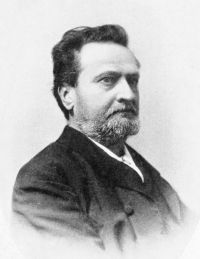
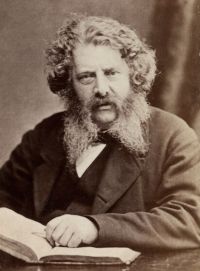
Portrait of Charles Darwin Charles Darwin,  The Variation of Animals and Plants Under Domestication…

“ But besides this means of increase I assume that cells, before their conversion into completely passive or "formed material," throw off minute granules or atoms, which circulate freely throughout the system, and when supplied with proper nutriment multiply by self-division, subsequently becoming developed into cells like those from which they were derived. These granules for the sake of distinctness may be called cell-gemmules, or, as the cellular theory is not fully established, simply gemmules. ”
Source: Gutenberg

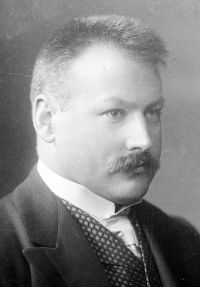
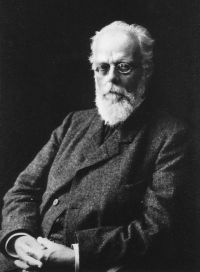
Portrait of August Weismann August Weismann,  The Evolution Theory, Vol. 2 of 2

“ He imagines the cell to be made up of a large number, perhaps millions, of different kinds of fistellæ, of which one presides over the power of turgidity, another over endosmosis, a third over contraction, a fourth over the conduction of stimuli, &c., so that there results a high degree of cellular complexity, a composition out of numerous kinds of biophors arranged on a definite architectural plan. ”
Source: Gutenberg

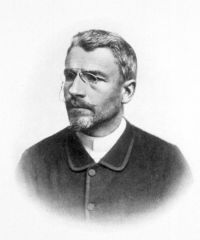
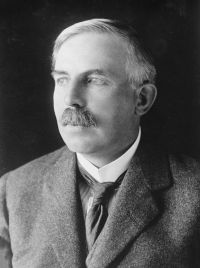
William A. Locy,  Biology and Its Makers

“ During the time protoplasm was being observed the cell had likewise come under close scrutiny, and naturalists had now an extensive collection of facts upon which to found a theory. It has been shown that many animal cells have no cell-wall, and the final conclusion was inevitable that the essential part of a cell is the semifluid living substance that resides within the cavity when a cell-wall is present. Moreover, when the cell-wall is absent, the protoplasm is the "cell." ”
Source: Gutenberg

Get perspective with Kwize: daily news enlightened by great literature