Chemical theory

Definition and stakes

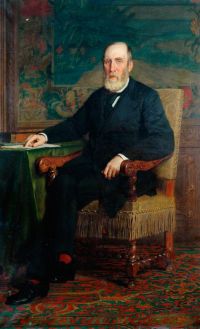
Portrait of Edward Salisbury Dana Edward Salisbury Dana,  A century of science in America (1918)

“ He thus arrived at his dualistic theory of chemical compounds, which attained great prominence and prevailed for a long time in chemical theory. According to this idea, each compound was supposed to be made up of a positive and a 304negative atom or group of atoms. For example, the formulas for potassium nitrate, calcium carbonate, and sulphuric acid corresponded to K2O.N2O5, CaO.CO2 and H2O.SO3 where we now write KNO3, CaCO3 and H2SO4, and the theory was extended to embrace organic compounds also. ”
Source: Gutenberg

Charles Morris,  Famous Men and Great Events of the Nineteenth Century

“ The view long maintained—until late in the nineteenth century, in fact—that organic and inorganic chemistry are separated from each other by a wide gap, is no longer held. Hundreds of organic substances, some of them of great complexity, have been made in the chemist’s laboratory, and can now be classed as properly with inorganic as with organic substances. The gap has been closed, and there is now but one chemistry. Only the most intricate chemical compounds still lie beyond the chemist’s grasp, and the isolation of these may be at any time overthrown. ”
Source: Gutenberg

Get perspective with Kwize: daily news enlightened by great literature