Circulation (physiology)

Definition and stakes

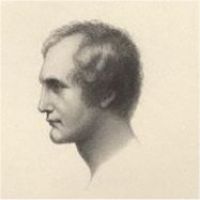
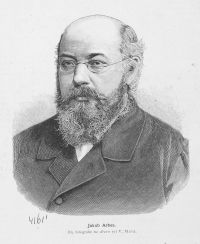
Portrait of Xavier Bichat Xavier Bichat,  General Anatomy, Applied to Physiology and Medicine…

“ What has greatly retarded the progress of the physiology of the circulation, is the idea that is attached to the velocity of the course of the red blood. This velocity cannot be rightly estimated, because the motion is not successive, because, to speak correctly, the blood does not flow; it is suddenly driven by a general impulse, in which we cannot calculate any thing. ”
Source: Gutenberg

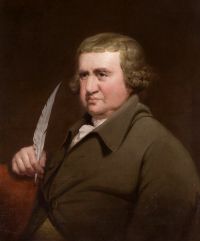
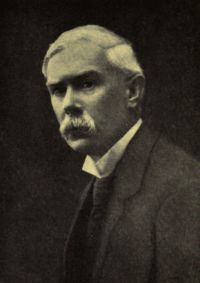
Portrait of William Walker Atkinson William Walker Atkinson,  Mind and Body; or, Mental States and Physical Conditions

“ The circulation does not go round as [Pg 27] most text-books would lead us to believe, as the result merely of the action of a system of elastic tubes, connected with a self-acting force-pump. It is such views as these that degrade physiology and obscure the marvels of the body. The circulation never flows for two minutes in the same manner. In an instant, miles of capillaries are closed or opened up, according to the ever-varying body needs, of which, consciously, we are entirely unaware. ”
Source: Gutenberg

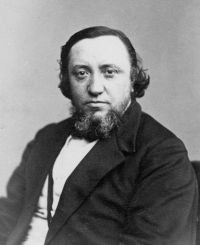
Joseph C. Hutchison,  A Treatise on Physiology and Hygiene

“ Circulation.—The blood is in constant motion during life. From the heart, as a centre, a current is always setting toward the different organs; and from these organs a current is constantly returning to the heart. In this way a ceaseless circular movement is kept up, which is called the Circulation of the Blood. This stream of the vital fluid is confined to certain fixed channels, the blood-vessels. Those branching from the heart are the arteries; those converging to it are the veins. ”
Source: Gutenberg

Get perspective with Kwize: daily news enlightened by great literature