Plenum

Definition and stakes

Government of Greece,  Constitution of Greece (2001)

“ Article 72 Parliament debates and votes in Plenum on its Standing Orders, on Bills and law proposals on the subjects of articles 3, 13, 27, 28 paragraphs 2 and 3, 29 paragraph 2, 33 paragraph 3, 48, 51, 54, 86, on Bills and proposals for laws implementing the Constitution on the exercise and protection of individual rights, on Bills and law proposals on the authentic interpretation of the laws as well as on every other matter referred to Parliament in Plenum by special provision of the Constitution or for the regulation of which a special majority is required. ”
Source: Wikisource

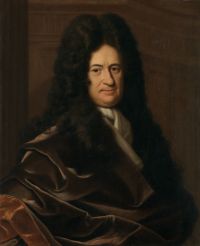
Portrait of Gottfried Leibniz Gottfried Leibniz,  Monadology (1898)

“ But a soul can read in itself only that which is there represented distinctly; it cannot all at once unroll everything that is enfolded in it, for its complexity is infinite.
62. Thus, although each created Monad represents the whole universe, it represents more distinctly the body which specially pertains to it, and of which it is the entelechy; and as this body expresses the whole universe through the connexion of all matter in the plenum, the soul also represents the whole universe in representing this body, which belongs to it in a special way.
”
Source: Wikisource

Portrait of Aristotle Aristotle,  Politics (4th century BC)

“ For the power does not reside in the dicast, or senator, or ecclesiast, but in the court, and the senate, and the assembly, of which individual senators, or ecclesiasts, or dicasts, are only parts or members. And for this reason the many may claim to have a higher authority than the few; for the people, and the senate, and the courts consist of many persons, and their property collectively is greater than the property of one or of a few individuals holding great offices. ”
Source: http://classics.mit.edu/Aristotle/politics.html

Get perspective with Kwize: daily news enlightened by great literature