Contingent being

Definition and stakes

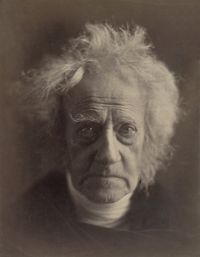
Portrait of F. H. Bradley F. H. Bradley,  Appearance and Reality — Chapter XXIV (1893)

“ And the same, again, is true of the contingent. Each idea is relative, and each lays stress on an opposite aspect of the same complex. And hence each, forced to a one-sided extreme, disappears altogether.
We are led from this to ask whether there are degrees of possibility and contingency, and our answer to this question must be affirmative. To be more or less possible, and to be more or less true, and intrinsically necessary,—and, from the other side, to be less or more contingent—are, in the end, all the same. And we may verify here, in passing, the twofold application of our standard.
”
Source: Wikisource

Portrait of Georg Wilhelm Friedrich Hegel Georg Wilhelm Friedrich Hegel,  Science of Logic (1816)

“ As possibility is the mere inside of actuality, it is for that reason a mere outside actuality, in other words, Contingency. The contingent, roughly speaking, is what has the ground of its being not in itself but in somewhat else. Such is the aspect under which actuality first comes before consciousness, and which is often mistaken for actuality itself. But the contingent is only one side of the actual,—the side, namely, of reflection on somewhat else. It is the actual, in the signification of something merely possible. ”
Source: Gutenberg

Portrait of Georg Wilhelm Friedrich Hegel Georg Wilhelm Friedrich Hegel,  The Logic of Hegel

“ Accordingly we consider the contingent to be what may or may not be, what may be in one way or in another, whose being or not-being, and whose being on this wise or otherwise, depends not upon itself but on something else. To overcome this contingency is, roughly speaking, the problem of science on the one hand; as in the range of practice, on the other, the end of action is to rise above the contingency of the will, or above caprice. ”
Source: Gutenberg

Get perspective with Kwize: daily news enlightened by great literature