Copperas

Definition and stakes

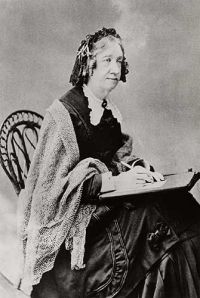
Portrait of Catharine Esther Beecher Catharine Esther Beecher,  A Treatise on Domestic Economy… (1845)

“ Copperas, (sulphate of iron, or green vitriol,) a bright green mineral substance, formed by the decomposition of a peculiar ore of iron, called pyrites, which is a sulphuret of iron. It is first in the form of a greenish-white powder, or crust, which is dissolved in water, and beautiful green crystals of copperas are obtained by evaporation. It is principally used in dyeing, and in making black ink. Its solution, mixed with a decoction of oak bark, produces a black color. ”
Source: Gutenberg

Arnold James Cooley,  Cooley's Cyclopædia of Practical Receipts and Collateral Information in the Arts…

“ Boil the goods in a mordant of alum and sulphate of iron, then pass them through a bath of madder. The more copperas the darker will be the dye. Good proportions are 2 parts of alum and 3 of copperas.
3. Give a mordant of alum and tartar, then pass the goods through a madder bath; next run them through a bath of galls and sumach or logwood to which a little acetate or sulphate of iron has been added.
”
Source: Gutenberg

Leyden Papyrus X

“ Gilding gives the same effect. Lamellose arsenic, copperas, golden sandarach, mercury, gum tragacanth, pith of arum, equal parts; dilute the whole with the bile of a goat. It is applied upon copper objects, upon silver objects, upon figures (in metal) and upon small shields. The copper should not have a rough surface.
76. Another (Procedure) .
Misy from the mines, 3 staters; alum from the mines, 3 staters; celandine, 1 stater; pour on these the urine of a small child; grind together until the mixture becomes viscous and immerse (the object in it) .
”
Source: Wikisource

Get perspective with Kwize: daily news enlightened by great literature