Calamine

Definition and stakes

Richard Bright and George Cumberland,  On the Strata in the Neighbourhood of Bristol (1817)

“ The calamine has hitherto been worked in a very imperfect manner: the vein is broken into, when it meets the surface; a rough windlass is placed over the hole, and a bucket is attached to a few fathoms of rope; two or three men work at the vein as long as the ore is found in abundance, or until the water impedes their progress. ”
Source: Wikisource

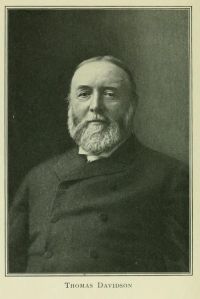
Portrait of Thomas Davidson Thomas Davidson,  Chambers's Twentieth Century Dictionary 1908… (1908)

“ Calamine, kal′a-mīn, n. an ore consisting essentially of carbonate of zinc. [Fr.—Low L. calamina, most prob. from L. cadmia.]
Calamint, kal′a-mint, n. a genus of Labiate plants closely allied to balm and thyme. [Fr.—Low L. calamentum, through L. from Gr. kalaminthē.]
Calamite, kal′a-mīt, n. a fossil plant abundant in the coal-measures, believed to be a kind of gigantic horse-tails (Equisetaceæ) . [Formed from L. calamus, a reed.]
”
Source: Wikisource

Richard Bright and George Cumberland,  On the Strata in the Neighbourhood of Bristol (1817)

“ All the roads in the neighbourhood of Bristol are repaired with the limestone, as are those in the neighbourhood of Gloucester, whither it is conveyed by means of the Severn.
Calamine is the most important mineral in point of frequency and value that the limestone yields. It is found in veins of calcareous spar crossing the limestone, accompanied by heavy spar and frequently by galena. The calamine is either amorphous or assumes the form of calcareous crystals which have been encased by it and since removed. The calcareous crystals in these veins have generally the dog's-tooth form
”
Source: Wikisource

Get perspective with Kwize: daily news enlightened by great literature