Court of record

Definition and stakes

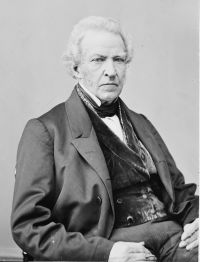
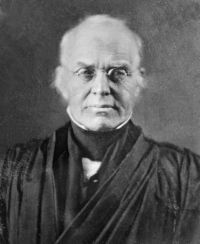
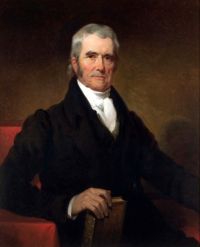
Portrait of John Marshall John Marshall Bank of Hamilton v. Jun — Opinion of the Court

That a court of record, whose proceedings can be proved by the record alone, should, at a subsequent term, determine that an order was made at a previous term, of which no trace could be found on its records, and that too after the repeal of the law which gave authority to make such an order; is a proceeding of so much delicacy and danger, which is liable to so much abuse; that some of us question the existence of the power.
Source: Wikisource

Various Blackwood's Edinburgh Magazine…

But independently of this, my lords, let us look at the record itself, and see whether, on the face of the record, there is any ground whatever for this objection. Every record must be construed according to its legal effect—according to its legal operation. You cannot travel out of the record. Now, what is the judgment? Why, 'that the court adjudges the defendant, for his offences aforesaid, to be fined and imprisoned.' What is an 'offence' on this record? There are two counts defective: but why? Because they charged, according to the unanimous opinion of the judges, NO offence.
Source: Gutenberg

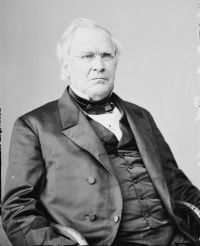
Portrait of James Moore Wayne James Moore Wayne Den v. Baskerville — Opinion of the Court

The inferior evidence to establish the existence of a judicial record must be something officially connected with it, such as the journals of the court, or some other entry, though short of the judgment or record, which shows that it has been judicially made. The burning of an office and of its records is no proof that a particular record had ever existed.
Source: Wikisource

Get perspective with Kwize: daily news enlightened by great literature