Crest (animal)

Definition and stakes

Cassell's Natural History, Vol…

“ Large as are the crests in the old males, they are barely present in the females and young, and they must be regarded partly as of use to the larger animals, and partly as ornamental; for in animal nature, as a rule, the gentlemen are more beautiful than the ladies, the idea of beauty being, of course, very much a matter of taste. They are evidently protections against falls, and they also give origin to muscles. The back crest, when looked at from behind, is almost fan-shaped, the bone being broad, and the great muscles of the neck and back are attached to it. ”
Source: Gutenberg

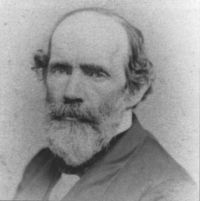
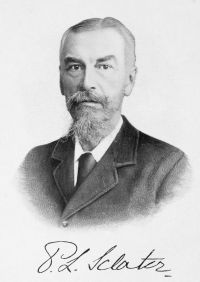
Portrait of Philip Lutley Sclater Philip Lutley Sclater,  The book of antelopes, vol. 3… (1897)

“ Ears long and pointed, their backs white or pale fawn. Posterior back with a strongly contrasted pure white line, the white hairs of which are placed in a fold of the skin, which fold is everted when the animal is excited, and then forms a prominent white [57] crest; rump white, in continuation with the dorsal line; tail also white basally, black and crested terminally. Belly pure white. Limbs fawn-coloured externally, white on their inner sides and behind.
Skull-dimensions of a male:—Basal length 7·8 inches, greatest breadth 3·7, muzzle to orbit 4·7.
”
Source: Gutenberg

Portrait of W. P. Pycraft W. P. Pycraft,  The Courtship of Animals

“ This animal is remarkable for the development, in the males alone, of a great crest or casque on the head, which is formed by a large inflatable air-sac over the ridge of the nose, and communicating with the nostrils. When fully inflated, it covers the head as far back as the eye. ”
Source: Gutenberg

Get perspective with Kwize: daily news enlightened by great literature