Dairy cow

Definition and stakes

James Russel Roberts,  Stock and stalks (1921)

“ The cow boys on the range rarely think of milking a cow that has lost her calf. The typical beef animals give so little milk that they can go dry at any time even on good grass with little or no injury to themselves. Some dairy cows would die even though sucked by a big husky calf if they were not milked, because they give so much more than the calf could take. The dairy cow is bred and trained for generations to digest all she can and to give it all away, keeping nothing with which to protect herself against hard times. ”
Source: Gutenberg

James Russel Roberts,  Stock and stalks (1921)

“ The udder should be attached high behind and the thighs should be narrow. In fact, we want a cow that is not an “easy keeper” but that will milk out clean. The cow should be soft skinned and fine haired. Beware of the wild-eyed, nervous, quick-moving cow for she wastes her energy. Beware of the sluggish cow for she will be sluggish in appetite and will convert her feed into fat instead of milk. Perhaps the best way to describe the disposition of a good dairy cow would be to say that she is alert and intelligent but calm and sensible. ”
Source: Gutenberg

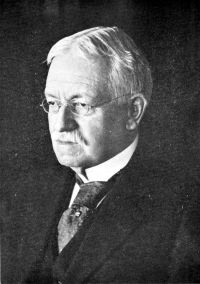
Portrait of Alfred Charles True Alfred Charles True,  The New International Encyclopædia…

“ In the modern dairy cow the tendency to lay on flesh, so highly developed in beef animals, has been largely eliminated, and in its place the ability to convert economically the food eaten into milk has been cultivated in a high degree. Continued breeding to a special purpose has changed the former short milking period, limited almost to the pasture season, to a comparatively even flow of milk during ten or eleven months of every year. A cow that does not average six or seven quarts of milk a day for 300 days in the year, aggregating 4000 pounds, is not considered very profitable. ”
Source: Wikisource

Get perspective with Kwize: daily news enlightened by great literature