“ Authors Disambiguation pages are for listing authors that share the same name. Where authors of the same name, the method of disambiguation is to use full names, and, as required, years of life with a hyphen separator, eg. John Smith (1522-1596) .Template to be used {{disambiguation}} (or {{disambig}}) Example: Author:John Smith The guidance of author page nomenclature is pertinent, and neither use of titles (eg. Sir, Lord, etc.) nor name suffixes (Snr. Jnr., etc.) , is to be used as the means to disambiguate people. ”
Disambiguation page
Definition and stakes
The theme of “disambiguation page” has been addressed by authors such as . It is often associated with terms like error, psychology, dissimulation, dissension and change.
Quotes about “disambiguation page”
 Jeremy Bentham,
Not Paul, But Jesus
“ Here then is either a deficiency in the standard [Pg 16] narrative,—and this deficiency, as already observed, an inexcusable one,—or a redundancy in the subsequent account: a redundancy, the cause of which seems sufficiently obvious: a redundancy—in that account which, being premeditated on the part of the historian, is given by him as being premeditated on the part of the speaker, whom he represents as delivering it: a redundancy,—and that in a word a falsehood: a falsehood, and for what purpose?—for deception: the hero represented by his historian as using endeavours to deceive. ”
 Agnes Repplier,
In the dozy hours, and other papers
(1894)
“ The gradual debasement of a word into a term of reproach is sometimes a species of scandal. It is wilfully perverted in the course of years, and made to tell a different tale,—a false tale, probably,—which generations receive as true. ”
 Charles Reade,
The Cloister and the Hearth: A Tale of the Middle Ages
“ For, the longer the dissension endures, the wider and deeper it grows by the fallibility and irascibility of human nature: these are not confined to either side, and finally the invariable end is reached—both in the wrong. ”
 Romain Rolland,
Clerambault
(1921)
“ The people bend their backs, and accept with a passive, ironic resignation.... "No need to borrow trouble." Ages and ages of misery have rolled over this stone, but in the end stones do wear down and become mud. ”
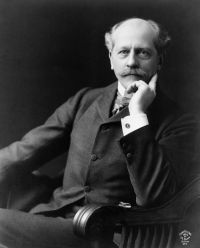 Percival Lowell,
The Soul of the Far East
“ The word abdicate has to our ears a certain regal sound. We instinctively associate the act with a king. Even the more democratic expression resign suggests at once an office of public or quasi public character. ”
 Lydia Sigourney,
Moral Pieces in Prose and Verse
(1815)
“ THERE are few constitutional misfortunes that lead to more unhappiness and disgrace than a wavering, unsettled disposition. In all its aspects of ambiguous expression, variable opinion, and contradictory behaviour, it is blameable and hideous. It is always open to censure, and is often the parent of deceit, dissimulation, and treachery. ”
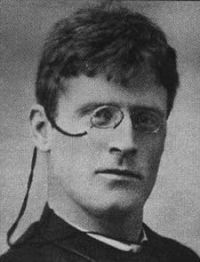
“ Even life's worst brutalities are related with an offhandedness of manner that makes you look for the joke that must be at the bottom of them. The word reform would seem to be strangely eliminated from his dictionary, or, if present, it might be found defined as a humorous conception of something intrinsically unachievable. ”
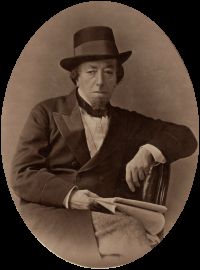 Benjamin Disraeli,
Tancred — Chapter X. A Visionary
(1847)
“ Change, 'in the abstract,' is what is wanted by a people who are at the same time inquiring and wealthy. Instead of statesmen they desire shufflers; and compromise in conduct and ambiguity in speech are, though nobody will confess it, the public qualities now most in vogue. ”
 Mikhail Aleksandrovich Bakunin,
God and the State
“ Every development, I have said, implies the negation of its point of departure. The basis or point of departure, according to the materialistic school, being material, the negation must be necessarily ideal. ”
 George Q. Cannon,
Journal of Discourses — Volume 14…
“ The best method of disposing of us and our system has given rise to much controversy and discussion in years past. That we ought to be disposed of in some manner has been a very general opinion and feeling in certain quarters ”
“ This aversion to all kinds of disguise, whatever be its cause, is universally diffused, and incessantly in action; nor is it necessary, that to exasperate detestation or excite contempt, any interest should be invaded, or any competition attempted; it is sufficient, that there is an intention to deceive, an intention which every heart swells to oppose, and every tongue is busy to detect. ”
Baron Edward Bulwer Lytton Lytton, Godolphin, Complete
“ You saw, or fancied you saw in them the shrewdness, the delicacy of tact; the consciousness of duping others; the subtle and intuitive, yet bland and noiseless penetration into the characters around him, which made the prominent features of his mind. And, indeed, of all qualities, dissimulation is that which betrays itself the most often in the physiognomy. A fortunate thing, that the long habit of betraying should find at times the index in which to betray itself. ”
 ʻAbdu'l-Bahá,
Tablets of Abdul-Baha Abbas
“ Should ye attribute a mistake to a person, it will be a cause of offense and grief to him—how much greater would this be if it is attributed to a number of people! How often it hath occurred that a slight difference hath caused a great dissension and hath been made a reason for division. ”
 Francis Bacon,
The Harvard Classics Vol. 3
(1909)
“ Whosoever is found variable, and changeth manifestly without manifest cause, giveth suspicion of corruption. Therefore always when thou changest thine opinion or course, profess it plainly, and declare it, together with the reasons that move thee to change ”
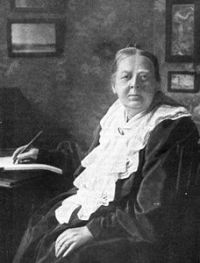 Mary Everest Boole,
Logic Taught by Love
(1905)
“ And I think that if we give a few moments' attention to considering how the well-meaning servant above referred to came to make such a mistake as she did, and what exactly was the nature of her mistake, it may help us to find our way to some of the great principles by which false Reform ought to be distinguished from true. ”
 Arthur Schopenhauer,
The Essays of Arthur Schopenhauer…
“ If you find that you are being worsted, you can make a diversion—that is, you can suddenly begin to talk of something else, as though it had a bearing on the matter in dispute, and afforded an argument against your opponent. ”
Thomas Carlyle, Sartor Resartus, and On Heroes… (1901)
“ Alas, the battling Reformer too is, from time to time, a needful and inevitable phenomenon. Obstructions are never wanting: the very things that were once indispensable furtherances become obstructions; and need to be shaken off, and left behind us,—a business often of enormous difficulty. ”
 Samuel Johnson,
The Works of Samuel Johnson, LL.D. Volume 10
“ To charge this gentleman with the dismission of any of his colleagues, can, after the strongest aggravations, rise no higher than to an accusation of having advised his majesty to dismiss him, and even that, my lords, stands, at present, unsupported by evidence; nor could it, however uncontestably proved, discover either wickedness or weakness, or show any other authority than every man would exercise, if he were able to attain it. ”
James Lovell, An oration delivered April 2d, 1771… (1771)
“ In quarrels—risen to a certain height, the first cause of dissention is no longer remembered, the minds of the parties being wholly engaged in recollecting and resenting the mutual expressions of their dislike. ”
Aegineta Paulus, The seven books of Paulus Ægineta… (1844)
“ We must not have recourse to cupping at the commencement of complaints, nor when the body is in a plethoric state, but when the general system has been evacuated, and when there is no defluxion any longer to the part, and especially when there is a necessity of removing, dislodging, and determining something outwardly. ”
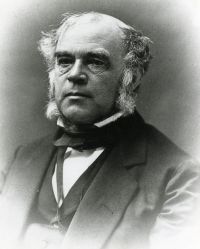 John William Draper,
History of the Intellectual Development of Europe…
“ No matter what might be the plausible guise of the beginning, and the ostensibly cogent arguments for its necessity, once let the decomposition commence, and no human power could arrest it until it had become thorough and complete. ”
Hans Gross, Criminal Psychology: A Manual for Judges…
“ In time we learn another word, and word and meaning have changed, correctly or incorrectly. A comparison of these changes in individuals would show how easy both approximations and diversifications in meaning are. It must follow that any number of misunderstandings can develop, and many an alteration in the conception of justice and decency, considered through a long period, may become very significant in indicating the changes in the meaning of words. ”
Earl of Philip Dormer Stanhope Chesterfield, Letters to His Son, 1748
“ It is a trite, commonplace observation, that courts are the seats of falsehood and dissimulation. That, like many, I might say most, commonplace observations, is false. Falsehood and dissimulation are certainly to be found at courts ”
G. R. Gleig, Germany, Bohemia, and Hungary, Visited in 1837…
“ The stranger rules us, the shackles are on our wrists;—what can we do?" Then would follow a shrug of the shoulders, a wink of the eye, and a hasty return to the sort of manner which a careless observer might easily mistake for the external proof of content, but which is, in fact, a disguise put on to hide feelings directly the reverse. ”
W. A. Chapple, The Fertility of the Unfit
“ But the distinguishing characteristic of all defectives, within or without our public institutions, is defective inhibition,—they are unable to control the spontaneous impulses that continually arise, and which may indeed be normal. ”
Earl John Russell Russell, Adventures in the Moon, and Other Worlds
“ But having said thus much against the lovers of novelty, I must observe, that I equally disapprove of another sect, who see ruin in every alteration. You are to understand that, for some time past, my kingdom has been divided by a great dispute concerning the efficacy of change. One side maintain that there can be no peace, commerce, or fertility, under a government which is the same for six months together, and they recommend change to the people as something that they can feed upon ”
S. H. Hammond, Wild Northern Scenes; Or, Sporting Adventures with the Rifle and the Rod
“ How know we but that a single change, the slightest alteration of a simple law, would go jarring through all the universe, throwing everything into confusion, and bringing utter chaos, where now all is order. ”
Henry Green, Shakespeare and the Emblem Writers
“ Discord as one of the great causes of confusion is also spoken of with much force (1 Henry VI., act iv. sc. 1, l. 188, vol. v. p. 68) ,—“No simple man that seesThis jarring discord of nobility,This should’ring of each other in the court,This factious bandying of their favourites,But that he doth presage some ill event.’Tis much, when sceptres are in children’s hands;But more when envy breeds unkind division;There comes the ruin, there begins confusion.” The Paris edition of Horapollo’s Hieroglyphics, 1551, subjoins several to which there is no Greek text (pp. 217–223) . ”
Sutton E. Griggs, The Hindered Hand; or, The Reign of the Repressionist
“ And finally upon the question of reconstruction we find that perpetual disbarment is not visited upon the people of the mightiest city of the new world, because it has from time to time made mistakes and put bad men to the fore. ”
Benjamin Homer Hall, A Collection of College Words and Customs
“ If the disquisitionist should ever reform his habits, and turn his really brilliant talents to some good account, then future gonuses will swear by his name, and quote him in their daily maledictions of the appointment system.—Amherst Indicator, Vol. ”
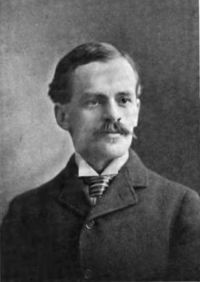 Alfred H. Lloyd,
The will to doubt
“ Would that I had the ability to write with the penetration and the clearness of statement that the [p.101] subject should certainly elicit, upon the strange equanimity with which mankind, in science or in practical life, receives and faces a direct negative or an open contradiction. Perhaps the habit of easy division into positive and negative, the ready resort to dichotomy, explains the mystery; perhaps the fact that negation or opposition is and can only be in kind, that there never is or can be any real change or need of change in a mere negation, is at least an important factor in the case ”
William Pitt Scargill, Blue-Stocking Hall, (Vol. 1 of 3…
“ A certain impatience of decision leads people frequently to pronounce upon as anomalies, [Pg 185] what a severer scrutiny would prove to be well understood, and belonging to accredited divisions of human character. ”
 Friedrich Schiller,
The Thirty Years War — Volume 02
“ Dissension, combined with growing scarcity, gradually produced a feeling of despondence, many began to tremble at the desperate nature of their undertaking, and the magnitude of the power to which they were opposed. ”
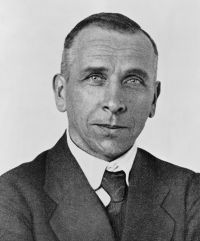 Alfred Wegener,
The Origin of Continents and Oceans
(1924)
“ Each is based on only that portion of the facts necessary for a favourable judgment and receives its refutation directly the other portion is introduced. The displacement theory will fit the entire facts, and therefore prepares the way for a reconciliation of these hostile doctrines in a manner which satisfies all reasonable demands of both parties. ”
 Ralph Waldo Emerson,
Representative Men — Goethe; or…
(1850)
“ In actions of enthusiasm this drawback appears, but in those lower activities, which have no higher aim than to make us more comfortable and more cowardly; in actions of cunning, actions that steal and lie, actions that divorce the speculative from the practical faculty and put a ban on reason and sentiment, there is nothing else but drawback and negation. ”
Frank H. Vizetelly, A Desk-Book of Errors in English
“ But suppose the alleged misuse of mistaken gives rise to no misunderstanding whatever—that everybody, high or low, throughout the English-speaking world, knows what is meant when one says “You are mistaken”—in that case, to let alone seems to be wisdom. The corruption, if it be one, has the sanction not only of universal employment, but of antiquity.mitten: An obsolete substitute for glove now revived as a colloquialism in the phrase to get the mitten, that is “to get the glove with the hand withdrawn: said of a rejected suitor for a lady’s hand.” An allied phrase is to give the mitten to. ”
 George Grote,
Plato and the Other Companions of Sokrates…
“ The unanimity in the first case, the discrepancy in the second, is alike an aggregate of judgments, each individual, distinct, and relative. You pronounce an opponent to be in error: but if you cannot support your opinion by evidence or authority which satisfies his senses or his reason, he remains unconvinced. ”
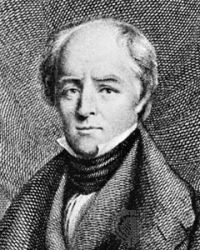 Basil Hall,
Fragments of voyages and travels…
(1831)
“ If, however, these seeds of dissension can only be weeded out before they begin to germinate, their evil growth may not only be checked, but actual good, in most instances, be made to spring up in their place. ”
 F. H. Bradley,
Appearance and Reality — Chapter XI
(1893)
“ The problem of change is given up, and we fall back upon our laws, persisting and appearing in successions of fleeting elements. If so, phenomena seem now to have become temporal illustrations of laws. ”
Jukichi Inouye, Sketches of Tokyo Life (1895)
“ Many people who discover to their dismay that the direction in which they wish to remove is unlucky, only reach the desired point by making two successive removals in lucky directions which form a triangle with the unlucky one. ”
 George William Erskine Russell,
Prime Ministers and Some Others…
“ If any lover of the ancient ways should demur on the ground of incongruity, I reply that this objection might hold good in normal times, but that just now the "humorous stage" of public life so abounds in incongruities that one more or less would make no perceptible difference. ”
Francis Bacon,
The Advancement of Learning
(1605)
“ for surely the continual habit of dissimulation is but a weak and sluggish cunning, and not greatly politic. ”
Georges Clemenceau, The Surprises of Life
“ The mistake lies in regarding as immutable, and acting upon it as such, a thing that is, in fact, the most unstable and variable in the world, viz.: the human being, in perpetual process of change. To ensure the durability of a union for that lightning flash which we pompously term "all time," the parallel development of two beings would be necessary, two beings whom differing heredities in most cases predispose to the most fatal divergences. ”
Viscount James Bryce Bryce, William Ewart Gladstone
“ Both these qualities—his disposition to revise his opinions in the light of new arguments and changing conditions, and the reticence he maintained till the process of revision had been completed—exposed him to misconstruction. Commonplace men, unwont to give serious scrutiny to their opinions, ascribed his changes to self-interest, or at best regarded them as the index of an unstable mind. ”
by Editor of "Charleston Mercury", The Past and the Future (1857)
“ Our columns, for some time past, have teemed with a record of facts that it is impossible to review without feelings of strong indignation, and even of amazement -- indignation at the humiliations that have been forced upon us, and amazement at the quiet submission that has marked our counsels and repressed our action. ”
Lee J. Levinger, Anti-Semitism in the United States (1925)
“ One notable result of this sudden relaxation of unity, this sudden predominance of the subgroups, appeared in the phenomena of displacement. Displacement is a common matter among paranoiacs, where one object is substituted for another with the same meaning and the same feeling-tone of resentment or of pleasure. ”
