Double boiler

Definition and stakes

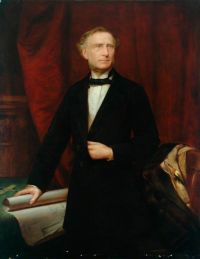
Portrait of Francis Trevithick Francis Trevithick,  Life of Richard Trevithick, with an Account of His Inventions…

“ The flame has been carried round from the bottom of the boiler in a spiral direction, and conveyed through the body of the water in a tube (one, two, or three) before its arrival at the chimney.
"Some have used a double boiler, so that fire might act on every possible point of contact, and some have built a moorstone boiler, heated by three tubes of flame passing through it.
"A judicious engineer does not attempt to load his engine with a column of water heavier than 7 lbs. on each square inch of the piston."
”
Source: Gutenberg

Edward Bindon Marten,  Records of Steam Boiler Explosions

“ The grates are usually twice as large as the fair proportion to the heating surface, producing the double evil of forcing more heat through the iron plates over the fire than they can transmit without injury, and allowing a great amount of heat to pass away to the chimney without useful effect. Careful experiment shows that nearly as good duty can be obtained with the plain cylindrical boiler as with any other form, provided the rate of combustion is in fair proportion to the extent of heating surface in the boiler. ”
Source: Gutenberg

James Tayler Milton and Joseph Gregory Horner,  1911 Encyclopædia Britannica, Volume 4… (1911)

“ Incrustations on the heating surface not only lessen the efficiency of the boiler by obstructing the transmission of heat through the plates and tubes, but if excessive they become a source of considerable danger by permitting the plates to become overheated and thereby weakened. When the feed-water is very impure, therefore, the boilers used are those which permit of very easy cleaning, such as the Lancashire, Galloway and Cornish types, to the exclusion of multitubular or water-tube boilers in which thorough cleaning is more difficult. ”
Source: Wikisource

Get perspective with Kwize: daily news enlightened by great literature