Electrobiology

Definition and stakes

George W. Hunter,  A Civic Biology, Presented in Problems

“ These animals are evidently taking in oxygen by osmosis. They are breathing. A careful inspection of the jar containing paramœcia shows thousands of tiny whitish bodies collected near the surface of the jar. In the paramœcium, as in the one-celled plants, the protoplasm composing the cell responds to certain agencies acting upon it, coming from without; these agencies we call stimuli. Such stimuli may be light, differences of temperature, presence of food, electricity, or other factors of its surroundings. Plant and animal cells may react differently to the same stimulus. ”
Source: Gutenberg

Gilbert Charles Chubb,  1911 Encyclopædia Britannica (1911)

“ In all cases, however, whether the cell-unit lives freely as a unicellular organism or forms an integral part of a multicellular individual, it exhibits in itself all the phenomena characteristic of living things. Each cell assimilates food material, whether this is obtained by its own activity, as in the majority of the protozoa, or is brought, as it were, to its own door by the blood stream, as in the higher Metazoa, and builds this food material into its own substance, a process accompanied by respiration and excretion and resulting in growth. ”
Source: Wikisource

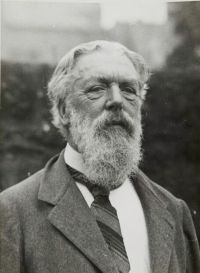
Portrait of D'Arcy Wentworth Thompson D'Arcy Wentworth Thompson,  On Growth and Form

“ Within the cell, chemical forces are at work, and so also in all probability (to judge by analogy) are electrical forces; and the organism reacts also to forces from without, that have their origin in chemical, electrical and thermal influences. The processes of diffusion and of chemical activity within the cell result, by the drawing in of water, salts, and food-material with or without chemical transformation into protoplasm, in growth, and this complex phenomenon we shall usually, without discussing its nature and origin, describe and picture as a force. ”
Source: Gutenberg

Get perspective with Kwize: daily news enlightened by great literature