Engine power

Definition and stakes

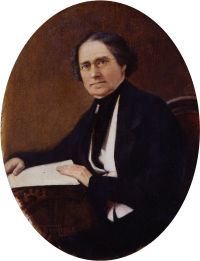
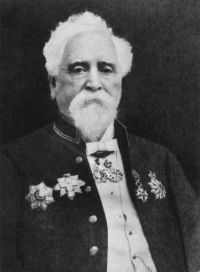
Portrait of Charles T. Porter Charles T. Porter,  Engineering reminiscences contributed to "Power" and "American machinist" (1908)

“ My visitors always wound up with the same question, “How do you drive your air-pump?” And in my innocence I uniformly replied, “The engine is a non-condensing engine; it has no air-pump”; all unconscious that every time I said that I was consigning the engine to the rubbish heap. This reply was taken necessarily as a frank admission that the high-speed engine was not adapted for condensing. ”
Source: Gutenberg

Alfred Charles William Harmsworth,  Motors and Motor-Driving (1902)

“ Steam cars do not put such hard work on the tyres as those driven by petrol, as the engine power is softer in action, and nearly all of the steam cars are lighter in weight than the others. The transmission of the power from the engine to the road wheels is much simpler than it is in the case of the petrol car, but the boiler, burner, &c. ”
Source: Wikisource

Jim Ray,  The Story of American Aviation

“ With the introduction of the air-cooled, radial engine twenty years later, a pound and a half of engine had been made to produce one horsepower. Thus the new 350-pound radial engine of 200 horsepower put all but a fraction of weight into load-carrying power.
While we are discussing horsepower, it might be well to find out just what we mean by the term. In connection with steam and gasoline engines it is used for the reason that the horse had for years been man’s most common power plant. One horsepower represents the power ascribed to a heavy dray horse in the days of horse-drawn vehicles.
”
Source: Gutenberg

Get perspective with Kwize: daily news enlightened by great literature