Epiglottis

Definition and stakes

Joseph C. Hutchison,  A Treatise on Physiology and Hygiene

“ The epiglottis? When it does not close in time, what is the consequence?
5. Over the opening of the larynx is found the epiglottis, which fits like the lid of a box at the entrance to the lungs, and closes during the act of swallowing, so that food and drink shall pass backward to the œsophagus, or gullet (Fig. 38) . Occasionally it does not close in time, and some substance intrudes within the larynx, when we at once discover, by a choking sensation, that "something has gone the wrong way," and, by coughing, we attempt to expel the unwelcome intruder.
”
Source: Gutenberg

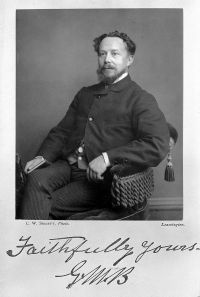
Portrait of George M. Gould George M. Gould,  Anomalies and Curiosities of Medicine

“ Anomalies of the Epiglottis.—Morgagni mentions a man without an epiglottis who ate and spoke without difficulty. He thought the arytenoids were so strongly developed that they replaced the functions of the missing organ. Enos of Brooklyn in 1854 reported absence of the epiglottis without interference with deglutition. Manifold speaks of a case of bifurcated epiglottis. Debloisi records an instance of congenital web of the vocal bands. Mackenzie removed a congenital papillomatous web which had united the vocal cords until the age of twenty-three, thus establishing the voice. ”
Source: Gutenberg

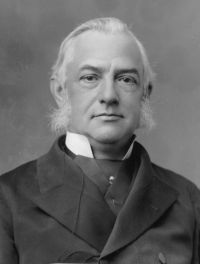
Portrait of William Youatt William Youatt,  The Dog

“ The
epiglottis
is placed at the extremity of the opening into the windpipe, with its back opposed to the pharynx, so that when a pellet of food passes from the pharynx in its way to the œsophagus, the epiglottis is applied over the glottis, and by this means closes the aperture of the larynx, and prevents any portion of the food from passing into it. The food having passed over the epiglottis, that cartilage, from its elastic power, again rises and resumes its former situation.
”
Source: Gutenberg

Get perspective with Kwize: daily news enlightened by great literature