Execration

Definition and stakes

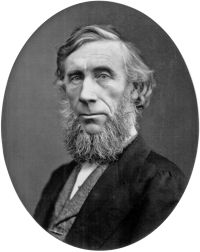
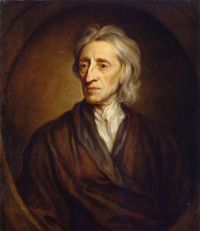
Portrait of John Locke John Locke,  An Essay Concerning Human Understanding…

“ Expansion not bounded by matter. The mind, having got the idea of the length of any part of expansion, let it be a span, or a pace, or what length you will, can, as has been said, repeat that idea, and so, adding it to the former, enlarge its idea of length, and make it equal to two spans, or two paces ; and so, as often as it will, till it equals the distance of any parts of the earth one from another, and increase thus till it amounts to the distance of the sun or remotest star. ”
Source: Wikisource

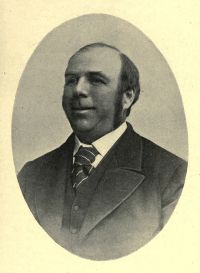
Granville F. Foster,  Popular Science Monthly (1877)

“ Calling the force which A exerts on B, or B exerts on A, one, then will the sum of the forces which B, C, D, and E exert on A be equal to four, but the sum of A's attractions for B, C, D, and E, will also be equal to four, since A's attraction for B is in no way either increased or diminished by the fact that at the same time it also exerts an attraction on C, D, or E. Now, let B, C, D and E, be united into one mass, F, and it will be readily perceived that the truth of the foregoing statements cannot thereby be affected. ”
Source: Wikisource

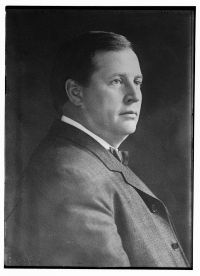
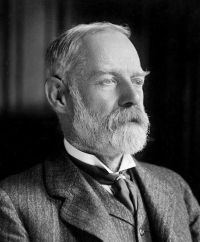
Portrait of George Howard Darwin George Howard Darwin,  1911 Encyclopædia Britannica, Volume 26… (1911)

“ Now it is a general law of frictionless oscillation that, if a slowly varying periodic force acts on a system which would oscillate quickly if left to itself, the maximum excursion on one side of the equilibrium position occurs simultaneously with the maximum force in the direction of the excursion; but, if a quickly varying periodic force acts on a system which would oscillate slowly if left to itself, the maximum excursion on one side of the equilibrium position occurs simultaneously with the maximum force in the direction opposite to that of the excursion. ”
Source: Wikisource

Get perspective with Kwize: daily news enlightened by great literature