Foot binding

Definition and stakes

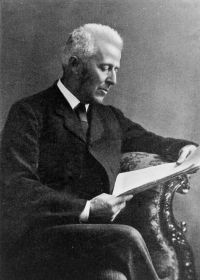
Portrait of Thomas Henry Huxley Thomas Henry Huxley,  Lectures and Essays

“ Before we can discuss the first point with advantage we must consider with some attention, and compare together, the structure of the human hand and that of the human foot, so that we may have distinct and clear ideas of what constitutes a hand and what a foot.
The external form of the human hand is familiar enough to every one. It consists of a stout wrist followed by a broad palm, formed of flesh, and tendons, and skin, binding together four bones, and dividing into four long and flexible digits, or fingers, each of which bears on the back of its last joint a broad and flattened nail.
”

Source: Gutenberg

John Lord Peck,  Dress and care of the feet (1872)

“ Supposing these to represent the bones of the great toe and its metatarsal bone—which, in their normal position, are on the same line—we can see that if the toe bones a are bent toward the other toes first, and then pushed backward, it necessarily forces out the joint in the only direction in which it can bend, which is inward. The greater and more constant the pressure against the end of the toe by the short boot or shoe, the larger the joint, and the more it will project from the inside of the foot ”
Source: Gutenberg

John Lord Peck,  Dress and care of the feet (1872)

“ The way of their prevention is already made plain, but to remove the disfigurement after it has become a settled thing is a much more difficult matter. The toe must be forced back to its former position, and kept there by a steady, constant pressure, and the parts be allowed time to gradually re-adapt themselves and grow fixed in their proper shape. The straightening of the toe will allow the bones to come nearer together at the joint, and this, when not sore, may perhaps be pushed back slightly, toward the middle of the foot, by the pressure of a narrow boot. ”
Source: Gutenberg

Get perspective with Kwize: daily news enlightened by great literature