Gem cutting

Definition and stakes

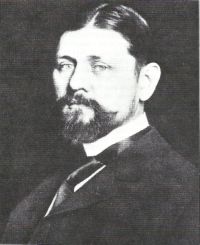
Portrait of George Frederick Kunz George Frederick Kunz,  1911 Encyclopædia Britannica, Volume 16… (1911)

“ Any valuable gem must first be trimmed, cleaved or sawed into suitable shape and size, then cut into the desired form, and finally polished upon the faces which have been cut. The stages in diamond working are, therefore, (1) cleavage or division; (2) cutting; (3) polishing; but in point of fact there are four processes, as the setting of the stone for cutting is a somewhat distinct branch, and the workers are classed in four groups—cleavers, setters, cutters and polishers. ”
Source: Wikisource

Paul E. Desautels,  Gems in the Smithsonian Institution

“ Since each species of gemstone differs in its characteristics, each must be treated somewhat differently as to sawing and lapping speeds, kind of lap, and choice of abrasives. Because of the greatly increased interest in gem cutting as a hobby and the large number of amateur cutters, a substantial market has developed in the United States for lapidary supplies and equipment. New kinds of machinery, new abrasives, and new kinds of saws and laps are introduced regularly. ”
Source: Gutenberg

Portrait of George Frederick Kunz George Frederick Kunz,  1911 Encyclopædia Britannica, Volume 16… (1911)

“ The greatest ingenuity is used to make a speck of colour, as in a sapphire, tone up an entire gem, by cutting it so that there is a point of high colour at the lower side of the gem.
In later times a few facets are sometimes cut upon a generally rounded stone. The cabochon method is still used for opaque or translucent stones, as opal, moonstone, turquoise, carbuncle, &c.; but for transparent gems the facetted cutting is almost always employed, on account of its fine effect in producing brilliancy, by reflection or refraction of light from the under side of the gem.
”
Source: Wikisource

Get perspective with Kwize: daily news enlightened by great literature