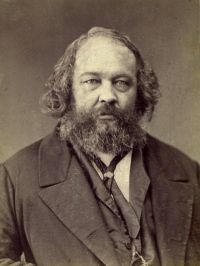
 Mikhail Bakunin,
God and the State — Chapter 2
“ The general idea is always an abstraction and, for that very reason, in some sort a negation of real life. ”
Mikhail Bakunin,
God and the State — Chapter 2
“ The general idea is always an abstraction and, for that very reason, in some sort a negation of real life. ”
 Bertrand Russell,
The Analysis of Mind — Lecture XI: General Ideas and Thought
(1921)
“ Now, if we will annex a meaning to our words, and speak only of what we can conceive, I believe we shall acknowledge that an idea which, considered in itself, is particular, becomes general by being made to represent or stand for all other particular ideas of the same sort. ”
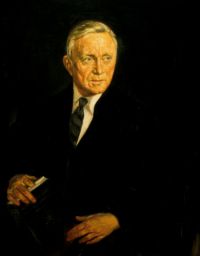 William O. Douglas,
Pierson v. Ray — Dissent
(1967)
“ This view conceives the mind to be directed toward individual things, rather than toward general ideas, toward distinct situations of fact rather than toward some significance in human affairs that these situations may share. ”
William Hazlitt, Essays on the Principles of Human Action (1835)
“ For since all things that exist are only particulars, how come we by general terms, or where find we those general natures they are supposed to stand for? Words become general by being made the signs of general ideas, and ideas become general by separating from them the circumstances of time and place, and any other ideas that may determine them to this or that particular existence. ”
 Josiah Royce,
The World and the Individual, Second Series
(1901)
“ Upon the basis of the general theory of human knowledge thus broadly sketched, we shall next pass to a study of the questions offered to our scrutiny by Nature, when viewed in its relation to Man. Here our main purpose shall be to apply our general idealistic doctrine, concerning what is meant by Reality in general, to the problem as to the sense in which Nature and Man are real. ”
Cora May Williams, A Review of the Systems of Ethics Founded on the Theory of Evolution
“ That which they express is the True, if only the True for, and in, mankind. In this lies their worth; as worth in Science also, and in the Beautiful, lies in the truth of the Idea that is therein expressed. ”
 John Stuart Mill,
A System of Logic, Ratiocinative and Inductive
“ Without attempting in this place to justify my opinion, or even to define the kind of justification which it admits of, I merely declare my conviction, that the general principle to which all rules of practice ought to conform, and the test by which they should be tried, is that of conduciveness to the happiness of mankind, or rather, of all sentient beings ”
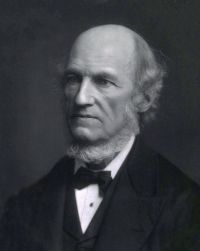 William Benjamin Carpenter,
Popular Science Monthly
(1873)
“ But, on the other hand, there are certain things we feel to be too strange and absurd to be believed; and that feeling we come to especially, when we have endeavored to cultivate our Common-Sense in the manner which I described to you in my last lecture. The higher our common-sense—that is, the general resultant of the whole character and discipline of our minds—the more valuable is the direct judgment that we form by the use of it. ”
 Victor Cousin,
Lectures on the true, the beautiful and the good
“ The same good sense which admits universal and necessary truths, easily distinguishes them from those that are not universal and necessary, and are only general, that is to say, are applied only to a greater or less number of cases. ”
 Thomas Hill Green,
Lectures on the Principles of Political Obligation
“ By a consciously self-realising principle is meant a principle that is determined to action by the conception of its own perfection, or by the idea of giving reality to possibilities which are involved in it and of which it is conscious as so involved; or, more precisely, a principle which at each stage of its existence is conscious of a more perfect form of existence as possible for itself, and is moved to action by that consciousness. ”
 Georg Wilhelm Friedrich Hegel,
The Philosophy of Fine Art, volume 2…
“ What we have, however, to deal with now is a natural phenomenon, an occurrence, which, in its passage, exhibits a particular relation, which maybe accepted as symbol for a general significance in the circle of human deeds and dealings, in other words for an ethical maxim, a saw, for a significance, therefore, whose content unfolds a reflection over the nature of the course which either is taken or ought to be taken in human matters, that is, facts which are related to volition. ”
John Stuart Mill,
Auguste Comte and Positivism
“ Instead of recognizing, as in the Cours de Philosophic Positive, an essentially sound view of philosophy, with a few capital errors, it is in their general character that we deem the subsequent speculations false and misleading, while in the midst of this wrong general tendency, we find a crowd of valuable thoughts, and suggestions of thought, in detail. ”
Josiah Royce,
The World and the Individual, First Series
(1899)
“ And now, finally, after surveying all these so various types of beings, we have to recall the comment often already made in these lectures, and to assert that not only these different kinds of realities, but also the concrete experiences whereby we come to observe, and the ideas whereby we ourselves define, describe, and in general undertake to know these very objects, are themselves also in their own measure real, and are as truly real as are the various finite objects of common sense that we know. ”
Josiah Royce,
The World and the Individual, First Series
(1899)
“ The idea, I have said, seeks its own. It can be judged by nothing but what it intends. Whether I think of God or of yesterday’s events, of my own death, or of the destiny of mankind, of mathematical truth, or of physical facts, of affairs of business, or of Being itself, it is first of all what I mean, and not what somebody merely external to myself might desire me to mean, that both gives me an object, and determines for me the standard of correspondence to the object whereby I must be judged. ”
Josiah Royce,
The World and the Individual, First Series
(1899)
“ It is true that, in ordinary life, we learn to make a very sharp distinction between the wished for and the real. And this distinction is, indeed, in the world of common sense, a very unconquerable one. ”
Josiah Royce,
The World and the Individual, First Series
(1899)
“ In other words, we shall find that while, for our purposes, we, the critics, must first sharply distinguish the apparently external purpose that, as it were, from without, we assign to the idea, from the internal meaning of the idea, as present to a passing conscious instant, still, this our assignment of the external purpose, this our assertion that the idea knows or resembles, or imitates, or corresponds to, fact wholly beyond itself, must in the end be justified, if at all, by appeal to the truth, i.e. ”
Josiah Royce,
The World and the Individual, First Series
(1899)
“ Results in philosophy must needs lead to new problems. With this definition in mind of what it is to be, how shall we next undertake to describe that more special constitution of the world which our concept of Being involves? ”
Josiah Royce,
The World and the Individual, First Series
(1899)
“ By thus first distinguishing sharply between the conscious internal meaning of an idea and its apparently external meaning, we get before us an important way of stating the problem of knowledge or, in other words, the problem of the whole relation between Idea and Being. ”
William James, The Philosophical Review (1892)
“ Now the sort of 'fact of experience' on which in my book I have proposed to compromise, is the so-called 'mental state,' in whose existence not only common men but philosophers have uniformly believed. ”
 Herbert Spencer,
First Principles
“ Whether the wish is father to the thought, or whether sentiment and idea have a common genesis, there equally arises the question—Whence comes the sentiment? That it is a constituent in man’s nature is implied by the hypothesis ”
 James Frederick Ferrier,
Blackwood's Magazine
(1842)
“ I assent to the veracity of sense, and I believe that the very perception or sensible image is the external object, and on no account whatever will I consent 'to disclaim this principle.' Your philosophy—your more rational opinions— representation—your reasonings which, you say, necessitate me to depart from my primary instincts—all these I give, without reservation, to the winds. ”
 Anatole France,
The White Stone
“ But, after all, he thinks matters out, and reasons. The idea he conceives of the forces which govern the world is, in its principle, rational and scientific and, in this respect, it conforms to that which we have ourselves conceived of them. ”
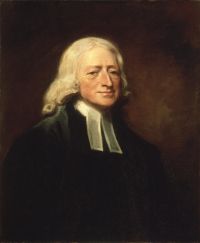 John Wesley,
The works of the Rev. John Wesley…
(1771)
“ IT is the intent of this chapter to shew, that altho’ common language ascribes a variety of faculties and principles to the soul, imputing this action to the blindness of our passions, that to the inconstancy of our tempers; one thing to the heat of our imagination, another to the coolness of our reason; yet, in strictness of truth, every thing that is done by us, is the action and operation of our reason, and is to be ascribed to it, as the sole principle from whence it proceeded, and by which it is governed and effected. ”
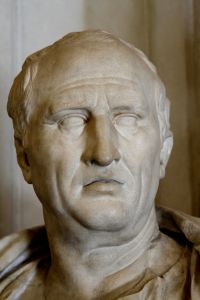 Marcus Tullius Cicero,
Cicero's Tusculan Disputations
(1888)
“ But human nature, when placed in a conspicuous point of view, gives us every argument for appeasing the mind, and, to make this the more distinct, the laws and conditions of life should be explained in our discourse. ”
Various, Popular Science Monthly (1905)
“ What our estimate of the world, of life and of our civilization will be must depend, of course, upon our values, upon our standards, upon our ideal, upon what we really prize. Hence, in order to understand our philosopher and his iconoclasm, we must understand his fundamental proposition, his basal thought, his ideal, the standard with which he approaches things. ”
Pseudo-Clement, Ante-Nicene Christian Library/Volume III (1867)
“ The discourse, then, which you delivered yesterday, which asserted that all things consist by art, and measure, and reason, does not fully persuade me that it is mind and reason that has made the world; for I have many things which I can show to consist by competent measure, and form, and species, and which yet were not made by mind and reason. Then, besides, I see that many things are done in the world without arrangement, consequence, or justice, and that nothing can be done without the course of genesis. ”
Bertrand Russell,
Mysticism and Logic and Other Essays
(1910)
“ I wish only to maintain that the motives and interests which inspire it are so exclusively practical, and the problems with which it deals are so special, that it can hardly be regarded as touching any of the questions that, to my mind, constitute genuine philosophy. ”
Josiah Royce,
The World and the Individual, First Series
(1899)
“ Our very theory insists that your internal meanings, your ideas viewed as internally significant, your selections and expressions, are typical instances of facts, and of precisely the facts of whose unity the world consists. ”
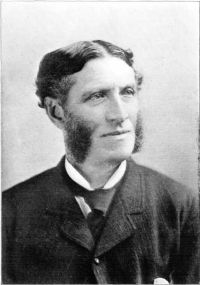 Matthew Arnold,
Culture and Anarchy — Chapter V: Porro Unum est Necessarium
(1882)
“ They arrived,—though failing, as has been said, to give adequate practical satisfaction to the claims of man's moral side,—at the idea of a comprehensive adjustment of the claims of both the sides in man, the moral as well as the intellectual, of a full estimate of both, and of a reconciliation of both; an idea which is philosophically of the greatest value, and the best of lessons for us moderns. ”
Josiah Royce,
The World and the Individual, First Series
(1899)
“ It is just because all meanings, in the end, will prove to be internal meanings, that this which the internal meaning most loves, namely the presence of concrete fulfilment, of life, of pulsating and originative will, of freedom, and of individuality, will prove, for our view, to be of the very essence of the Absolute Meaning of the world. ”
 Victor Hugo,
Les Misérables
(1862)
“ Elements and principles mingle, combine, wed, multiply with each other, to such a point that the material and the moral world are brought eventually to the same clearness. The phenomenon is perpetually returning upon itself. ”
Victor Cousin,
Lectures on the true, the beautiful and the good
“ The principles that govern our judgments, that preside over most sciences, that rule our actions,—have they in themselves an absolute truth, or are they only regulating laws of our thought? The question is, to know whether it is true in itself, that every phenomenon has a cause, and every quality a subject, whether every thing extended is really in space, and every succession in time, etc. ”
Various, The Atlantic Monthly (1858)
“ Concede intellectual power, or the spiritual element, then add this temperament, and there follows a certain subtile, penetrative, radical quality of thought, a characteristic percipience of principles. And principles are not only seen, but felt; they thrill the nerve as well as greet the eye ”
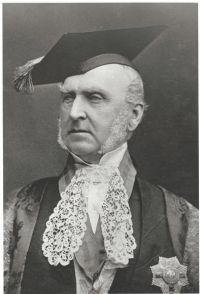 Redmond Barry,
Inaugural address, delivered before the members of the Victorian Institute…
(1854 | noyear)
“ In the elaboration of each separate idea, a compensating mutual relation with some other cognate idea is found, which brings a fresh agency to bear upon, assimilate or clash with it; such attrition, different from that which wastes and diminishes physical bodies, serving to sharpen and refine the mind, correct, enlarge or perfect the idea. ”
 Robert Adamson,
Fichte — Chapter VIII. Concluding Remarks
(1881)
“ Under this conception, the oppositions of thought which play so important a part in philosophy,—Being and Thought, Mind and Nature, Soul and Body, Freedom and Law, Natural Inclination and Moral Effort, Mechanism and Teleology,—are reconciled. ”
 Charles Dudley Warner,
Some Causes of the Prevailing Discontent
“ The world is ruled by ideas, by abstract thought. Society, literature, art, politics, in any given age are what the prevailing system of philosophy makes them. We recognize this clearly in studying any past period. ”
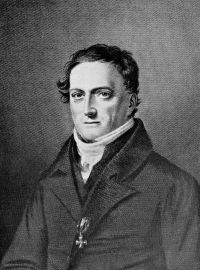 Johann Friedrich Herbart,
Outlines of Educational Doctrine
“ In consequence of frequent repetitions of similar acts of will, general concepts are gradually formed in the subjective side of character, concepts comprehending both the similar will actions already present under similar circumstances, and the requirements man sets up for himself with a view to determining his willing one way or another. ”
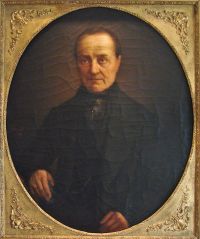 Auguste Comte,
A General View of Positivism
“ The object of all true Philosophy is to frame a system which shall comprehend human life under every aspect, social as well as individual. It embraces, therefore, the three kinds of phenomena of which our life consists, Thoughts, Feelings, and Actions. ”
J. Macbride Sterrett, The Philosophical Review (1892)
“ Our First Principle interprets it as the reason of humanity organizing and instituting its needs and ideals in its onward stumbling to and fro between its own true character and its passing caricature. ”
 George Henry Calvert,
Essays Æsthetical
“ Our birth, growth, and continued weal, depending on large, deep principles—principles deliberately elaborated and adopted by reason, and generously embracing the whole—our life must be interpenetrated by principle, and thence our literature must embrace the widest and most human wants and aspirations of man. ”
Ben. E. Rich, Mr. Durant of Salt Lake City, "That Mormon"
“ Right or wrong, one thing is plainly manifest—that you convey a philosophy each part of which is so reasonable, consistent and harmonious with every other part, and with the ground-work itself, that he who doubts must question himself as to why he doubts. ”
 William Wordsworth,
The Prose Works of William Wordsworth
“ Among the chief of these causes is to be reckoned a principle which must be well known to those who have made any of the Arts the object of accurate reflection; namely, the pleasure which the mind derives from the perception of similitude in dissimilitude. This principle is the great spring of the activity of our minds, and their chief feeder. ”
 Percy Bysshe Shelley,
A Defence of Poetry and Other Essays
“ Suppose, however, that the intellectual and vital principle differs in the most marked and essential manner from all other known substances; that they have all some resemblance between themselves which it in no degree participates. ”
Josef Donat, The Freedom of Science
“ Without Knowledge of the Human Nature. “Varied, according to character, are the demands made by heart and mind,” assures us a representative of modern philosophy, “corresponding to them is the image of the world to which the individual turns by inner necessity. ”
A World of Wonders, with Anecdotes and Opinions Concerning Popular Superstitions
“ Moreover, our features are constantly varying; and if our moral and intellectual faculties are to be inferred from these changes, how are we to establish or follow up any fixed principle, amid such a labyrinth of confusion? ”
Josiah Royce,
The World and the Individual, Second Series
(1901)
“ What I say is that our present recognition of the concrete things in which we all believe is not a mere acceptance of any content of sense, but does include an intention to act, and does fulfil, as far as it goes, a purpose, and our own conscious purpose. ”
 Woodrow Wilson,
The Meaning of a Liberal Education
(1909)
“ The bases of our lives and of our understanding of life is the interpretation which our own experiences put upon it, and the interpretation which the experiences of others put upon it, and the experiences of others as contained in literature. ”
Various, Blackwood's Edinburgh Magazine…
“ Taking, as our limits necessarily oblige us to take, a broad survey of the principle, and the results of the principle disclosed by experience, we cheerfully pronounce both to be positively and undeniably good. ”
 Albert Taylor Bledsoe,
A Theodicy, or, Vindication of the Divine Glory
“ They begin with the universal proposition, that every effect must have a cause, as a self-evident truth, and then proceed, not to examine and discover how the world is made, but to demonstrate how it must have been constructed. ”
Josiah Royce David HumeVictor CousinJohn Stuart MillBertrand RussellMikhail BakuninCora May WilliamsWilliam HazlittWilliam Benjamin CarpenterThomas Hill GreenGeorg Wilhelm Friedrich HegelWilliam O. DouglasHerbert SpencerAnatole FranceRedmond BarryMatthew ArnoldJohann Friedrich Herbart
 Alfred North Whitehead
 Walter Pater
 Joseph McCabe
