“ The gin-palace soon plants itself around these places of public entertainment and amusement, and finds in them a smooth and fascinating pathway to its snares; and few spectacles in our land are more riotous, more debased, more miserable, or more alarming as regards the future of our country, than a Sunday excursion-train, when it comes back and empties upon a city its pleasure-seekers and worshippers of nature. ”
Gin palace
Definition and stakes
The theme of “gin palace” has been addressed by authors such as Nathaniel Hawthorne, Richard Valpy French, Daniel Joseph Kirwan, Walter Jerrold and Alexander M. Thompson. It is often associated with terms like London, wine, champagne, gaslight and shop.
Quotes about “gin palace”
Daniel Joseph Kirwan, Palace and Hovel; Or, Phases of London Life
“ As the night came on apace, the smoky, old-fashioned, paneled room began to fill up, and before long nothing could be seen but rows of men lining the small tables, puffing vigorously from the long clay pipes, and at intervals taking deep draughts from the large, brightly burnished metal pots, holding a pint each, or perhaps sipping fourpenny glasses of hot gin and water. ”
John Bickerdyke, The Curiosities of Ale & Beer: An Entertaining History
“ Labour and art upheld by thee, Successfully advance, We quaff thy balmy juice with glee; And water leave to France. Genius of Health! thy grateful taste Rivals the cup of Jove, And warms each English generous breast With liberty and love. Look now at the noisome slum where the demon Gin reigns triumphant. Squalor, poverty, hunger, wretchedness and sin are depicted on all sides. Here flourish the pawnbroker and the keeper of the gin-palace—but the picture is too speaking a one to need comment.GIN. Gin! ”
James Hain Friswell, Our American Holidays - Christmas (1949)
“ In the towns, with close streets and fetid courts, where the flaring gas at the corner of an alley marks the only bright spot, a gin-palace, there a goose-club is held; and there, for a short time, is the resting-place, side by side with a bottle of gin, of one of those wise-looking and self-concentrated gobblers, whose name men have generally, and, as we think, unjustly, applied to the silly one amongst themselves. ”
Alexander M. Thompson, The Haunts of Old Cockaigne
“ These tokens of Democracy's advance are not unpleasing; the growth of the restaurant tendency affords one particular pleasure, as suggesting that the English are losing some of their dominant insular fault of sullen individualism, and are becoming more healthily disposed to the communal life.Much less hopeful is the swelling grandeur of the London gin-palace—the modern substitute for the pleasant tavern. ”
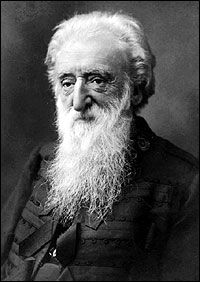 William Booth,
In Darkest England, and the Way Out
“ Mere lectures against the evil habit are, however, of no avail. We have to recognise, that the gin-palace, like many other evils, although a poisonous, is still a natural outgrowth of our social conditions. ”
Various, Popular Science Monthly (1895)
“ The men who make beers, brandies, etc., not only do this, but they go further, they provide all kinds of places where they shall be taken, they provide the gin palace with all its attractions of club rooms, billiards, daily papers, besides plenty of pretty girls to wait on their customers. Why should we not have fruit palaces where, at reasonable prices, people could get the choicest fruit at any hour of the day? ”
Daniel Joseph Kirwan, Palace and Hovel; Or, Phases of London Life
“ London, as elsewhere, and here Bohemianism has a lower depth than it ever was known to have in America, for it is here that the really depraved and abandoned Bohemian confines himself exclusively to the consumption of gin—raw and simple gin. ”
 Ossip Schubin,
The Story of a Genius
“ Meanwhile the jam has given way, and while C---- cream colors, striking out to regain lost time, bring the great man rapidly up to the countess's palace, the shabby stranger enters one of those butter shops out of which, in the rear, a liquor shop usually opens, and calls for a glass of gin. ”
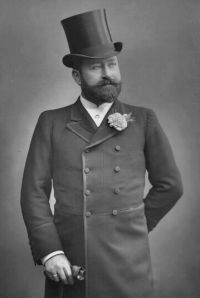 George R. Sims,
How the Poor Live; and, Horrible London
“ Drink is the curse of these communities; but how is it to be wondered at? The gin-palaces flourish in the slums, and fortunes are made out of men and women who seldom know where to-morrow's meal is coming from. Can you wonder that the gaudy gin-palaces, with their light and their glitter, are crowded? Drink is sustenance to these people; drink gives them the Dutch courage necessary to go on living; drink dulls their senses and reduces them to the level of the brutes they must be to live in such sties. ”
Blanchard Jerrold, The Life of George Cruikshank in Two Epochs…
“ Gin-drinking is a great vice in England, but poverty is a greater; and until you can cure it, or persuade a half-famished wretch not to seek relief in the temporary oblivion of his own misery with the pittance which, divided among his family, would just furnish a morsel of bread for each, gin-shops will increase in number and splendour If-Temperance Societies could suggest an antidote against hunger and distress, or establish dispensaries for the gratuitous distribution of bottles of Lethe-water, gin palaces would be numbered among the things that were. ”
 G. A. Henty,
All But Lost: A Novel. Vol. 2 of 3
“ The gaslights shine brightly out from the gin-palaces, and great business is in course of being there carried on. Numbers go in and out, and the glass-doors are ever on the swing. Through these doors glimpses can be caught of crowds of men and women standing at the bar drinking, and waiting to be served ”
 Charles Dickens,
Sketches by Boz — Gin-shops
(1836)
“ All is light and brilliancy. The hum of many voices issues from that splendid gin-shop which forms the commencement of the two streets opposite; and the gay building with the fantastically ornamented parapet, the illuminated clock, the plate-glass windows surrounded by stucco rosettes, and its profusion of gas-lights in richly-gilt burners, is perfectly dazzling when contrasted with the darkness and dirt we have just left. The interior is even gayer than the exterior. A bar of French-polished mahogany, elegantly carved, extends the whole width of the place ”
Sylvia Townsend Warner, Lolly Willowes (1926)
“ The two women sat by the fire, tilting their glasses and drinking in small peaceful sips. The lamp-light shone upon the tidy room and the polished table, lighting topaz in the dandelion wine, spilling pools of crimson through the flanks of the bottle of plum gin. ”
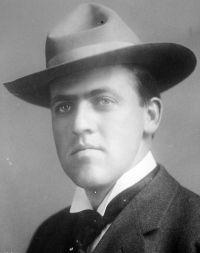
“ When the Clover Club is strained and descends like the gentle dew of heaven, when the Bronx is mixed and the Martini shimmers in the first rays of the electric light, then I humanize and harmonize, For me gin is a tonic, rum a restorative, vermuth a balm. Once I am stocked up with ales, wines, liquors, and cigars, I become attuned to the nobler sentiments of life. I aspire. I make friends with lonely derelicts whose digestions have foundered on seas of vichy and buttermilk, and I show them the joys of alcoholism—without cost. ”
 David Ross Locke,
Nasby in Exile
“ The brandy they drink is liquid lightning—chain lightning—which goes crashing through the system, breaking down and destroying every pulsation towards anything good. The gin—well, their gin is the very acme, the absolute summit, of vileness. There is a quarrel in every gill of it, a wife-beating in every pint, and a murder in every quart. A smell of a glass of it nearly drove me to criminal recklessness.A LONDON GIN DRINKING WOMAN.And yet they all drink it, and especially the women. ”
J. Castell Hopkins, The Life of King Edward VII
“ W. H. Russell thus described the surroundings in one of his letters to the London Times: "The valetaille, in liveries of green and gold, with white cuffs and collars, throng the passages and corridors, and black-coated Chibouquejees are ready at a clap of the hands to bring in pipes with amber mouth-pieces of fabulous value, crested with hundreds of diamonds and rubies, and coffee in tiny cups which fit into stands blazing with similar jewels. The cuisine cannot be surpassed and the wines are of the most celebrated vintage. All the persons attached to the Palace speak French or English. ”
active 1816-1830 John Badcock, Real Life In London, Volumes I. and II
“ It is lamentable to observe the avidity with which the lower orders of society in London resort to this fiery liquid, destructive alike of health and morals. The consumption of gin in the metropolis is three-fold in proportion to what it was a few years ago. Every public-house is now converted into “Wine Vaults,” as they are termed, which the venders of poison and their account in; it is true, that the occupants are compelled to sell beer also, but in many of these receptacles, there is not even sitting room, and “something short,” is thus the resource of men, women, and even children! ”
Richard Valpy French, Nineteen Centuries of Drink in England…
“ Coffee, which makes the politician wise, And see through all things with his half-shut eyes.Upon the accession ofWilliam III.the usual pageant was observed in London. The conduits ran with wine. The same reception greeted the king shortly after at Oxford. The drinking habits of the monarch are well known, though Evelyn speaks of him as naturally averse to drink. After the death of the queen, he became more addicted to his favourite drink, Hollands gin. The banqueting-house at Hampton Court, which was used by him as a drinking and smoking room, has been described as a royal gin-temple. ”
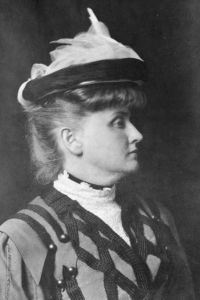 Gertrude Franklin Horn Atherton,
The Crystal Cup
“ In the large drawing-room and connecting dining-room the rest of the guests sat comfortably, drank the cocktails and whisky and soda passed by the host and gave a divided attention to the spontaneous performances of the livelier members of the company. There was a good deal of music tonight, a diseuse was convulsing and brief, there were impromptu little plays and much staccato talk. One distinguished exponent of bald realism untempered by art, too swiftly susceptible to synthetic gin, stole upstairs early in the evening and appropriated the divan for the night. ”
Charles Dickens,
Sketches by Boz — Gin-shops
(1836)
“ Although places of this description are to be met with in every second street, they are invariably numerous and splendid in precise proportion to the dirt and poverty of the surrounding neighbourhood. The gin-shops in and near Drury-Lane, Holborn, St. Giles’s, Covent-garden, and Clare-market, are the handsomest in London. There is more of filth and squalid misery near those great thorough-fares than in any part of this mighty city. ”
David Ross Locke,
Nasby in Exile
“ The most disgusting sight the world can produce is a London gin drinking woman standing at a bar, waiting feverishly for her “drain,” with unkempt hair, a small but intensely dirty shawl, with stockingless feet, and shoes down at the heel, with eyes rheumy and watery, that twinkle with gin light out from the obscurity of gin-swelled flesh, with a face on which the scorching fingers of a depraved appetite have set red lines, as ineffaceable as though they had been placed there by red-hot iron, every one of which is the unavailing protest of a long-outraged stomach. ”
Richard Valpy French, Nineteen Centuries of Drink in England…
“ In Gin Lane, the artist portrays a loathsome neighbourhood, the presiding genius of which is gin. To procure it no means are left untried. Every article of domestic comfort, even to the meanest shred of raiment, is carried to the pawnbroker for the wherewithal to purchase gin. ”
 Walter Lionel George,
A London Mosaic
“ It carries the bar sinister of all liqueurs. Bitters and curaçao, whisky and maraschino, brandy, vermouth and cassis, Fernet Branca, gentle raspberry, all of these; and crème de menthe, and gin, and absinthe, and apple-jack, these, too, are of its fiery soul, and apricot brandy that is like a blush, sherry like a burnt topaz, paprika to make you leap, and sly benedictine, dancing anisette, and port like a41 minor canon, gins from Plymouth, and Schiedam, virginal grenadine, all can join with all the fruits the world has ever known, cherry, lemon, tangerine, olive, spray of tarragon too. ”
 Mary Elizabeth Braddon,
The Trail of the Serpent
(1890)
“ A wretched woman who had just fetched half-a-quartern of gin from the nearest public-house, though a denizen of the place, and familiar with every broken flag-stone and crumbling brick, stumbled over her own threshold, and spilt a portion of the precious liquid. ”
Anonymous, Deadly Adulteration and Slow Poisoning Unmasked
“ The ripe taste which rum or brandy that has been long kept in oaken casks obtains, is imparted to new brandy and rum, by means of a spirituous tincture of raisin-stones and oak saw-dust. And the water distilled from cherry-laurel-leaves is frequently mixed with brandy and other spirituous liquors to impart to them the flavour of the cordial called Noyeau. Sugar of lead not unfrequently forms part of the flavouring ingredients of the retailers’ rums.But the perfection of adulteration is in gin,—cheap gin—“the real comfort,”—patronized by the poor for its supposed genuineness! ”

“ Uncle Anselmo was just now expatiating on the merits of gin, a beverage for which he confessed to a special liking. “Gin is, without doubt,” said he, “the flower of all strong drinks. I have always maintained that it is incomparable. And for this reason I always keep a little of it in the house in a stone bottle; for, when I have taken my maté in the morning, and, after it, one or two or three or four sips of gin, I saddle my horse and go out with a tranquil stomach, feeling at peace with the whole world. ”
Various, The Cornhill Magazine (Vol. I, No… (1860)
“ I wish I could persuade the temperance societies that this is in comparison a sober age; and that 130 years ago, not only did wine and punch slay their thousands among the upper classes, but gin and brandy—both of which were horribly cheap—slew their tens of thousands among the populace. Wait till we come to the Hogarthian tableaux of Beer Street and Gin Lane. In this Modern Midnight Conversation, everybody is tipsy. The parson, the doctor, the soldier, the gambler, and the bully—the very drawer himself—are all intoxicated. Few of the company can see out of more than one eye. ”
 George Gissing,
The Nether World
(1889)
“ On a Bank-holiday only a few insignificant shops remain open even in the poor districts of London; sweets you can purchase, and tobacco, but not much else that is sold across an ordinary counter. The more noticeable becomes the brisk trade of public-houses. At the gin-shop centres the life of each street; here is a wide door and a noisy welcome, the more attractive by contrast with the stretch of closed shutters on either hand. At such a door, midway in the sultry afternoon, John Hewett paused. ”
“ If there happened to be strolling players in town, the tradesmen were let go, for the players were more sociable, did not shy at the bottle, and were usually ready to undergo the miraculous—though never quite successful—cure of drinking themselves sober in gin after getting drunk on champagne. ”
M. D. Henry Porter, Cups and Their Customs
“ As to the best compound for a hunting-flask, it will seldom be found that any two men perfectly agree; yet, as a rule, the man who carries the largest, and is most liberal with it to his friends, will be generally esteemed the best concocter. Some there are who prefer to all others a flask of gin into which a dozen cloves have been inserted, while others, younger in age and more fantastic in taste, believe in equal parts of gin and noyau, or of sherry and Maraschino. For our own part, we must admit a strong predilection for a pull at a flask containing a well-made cold punch, or a dry Curaçoa. ”
James Greenwood, Low-Life Deeps — Chapter 18: London's Bane (1881)
“ But even the publicans there have a conscience that preserves them innocent of the crime of hastening their customers' deaths beyond the speed at which simple alcohol is capable of carrying them. The gin of Kent-street is of fair average quality, registering thirty and a half - water, sugar, and "aromatic seasoning" being called in as substitutes for the amount of alcohol of which the original liquor has been plundered. ”
 Achmed Abdullah,
The Adventures of Million Dollar Smith…
(1925)
“ Romance that starts with a double drink of gin and perhaps a chandoo pipe in the backroom of a Wapping tavern and winds up, quite possibly in a perambulator with a half-breed child peeping out, wonderingly, protestingly! ”
Richard Heath, The English Peasant (1893)
“ Its object was to ruin French commerce and to encourage the distilling of English brandy and spirits. What was its result? Little more than sixty years had passed away when Fielding and Hogarth drew their appalling pictures of the result of gin-drinking in England. Gin Lane, "full of strange images of death," shows vividly the moral murder which had been going on. "Should," said Fielding, "the drinking of this poison be continued at its present height during the next twenty years, there will be very few of the common people left to drink it." ”
Related terms
Authors who wrote about “gin palace”
 Nathaniel HawthorneRichard Valpy FrenchDaniel Joseph Kirwan
 Walter JerroldAlexander M. ThompsonJames Greenwood
 T. L. MitchellVariousCharles DickensDavid Ross Lockeactive 1816-1830 John BadcockJohn AshtonAnonymous
 Douglas William JerroldHector MacQuarrieJames Grant
 Katharine Brush
 Thomas MooreHenry C. Shelley
 Wilhelm Hauff
