Graham bread

Definition and stakes

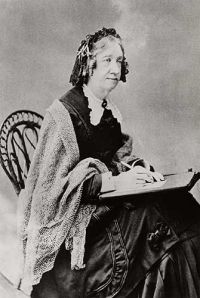
Portrait of Marion Harland Marion Harland,  Marion Harland's Cookery for Beginners

“ Take care that it does not burn in baking. The molasses renders it liable to scorching. The oven must be steady, but not so hot as for white bread, nor will the Graham bread be done quite so soon as that made of bolted flour. Turn the pans once while baking, moving them as gently as possible. If rudely shaken or jarred, there will be heavy streaks in the loaves.
Graham bread is wholesome and sweet, and ought to be eaten frequently in every family, particularly by young people whose bones and teeth are in forming.
”
Source: Gutenberg

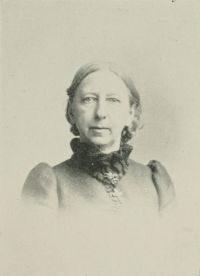
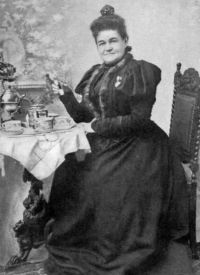
Portrait of Mrs. H. W. Beecher Mrs. H. W. Beecher,  Motherly talks with young housekeepers (1873)

“ Graham bread is made from unbolted wheat, the bran not separated from the flour. The coarse meal swells more in rising, and should not be made so stiff as fine flour. It sours more quickly, requires a hotter oven, and longer time to bake. Much kneading is essential to cement together the [Pg 106] starch, sugar, albumen, and gluten found in wheat. It is not easy to knead bread sufficiently for a satisfactory result. Many machines for this purpose have been invented, but we have yet to see one that can be as fully depended upon as a strong arm and a skillful hand. ”
Source: Gutenberg

Chautauqua Institution,  The Chautauquan, Vol. 05, November 1884…

“ Graham Bread.—The ferment for Graham bread should be of white flour, and prepared in the same manner as the ferment for white flour bread. When light add sugar and salt to taste, and work in Graham flour until the dough becomes elastic and clinging and is sufficiently stiff. Let stand till perfectly risen; then shape into loaves by rolling gently under the hand on a well floured molding-board, and place in greased baking pans. ”
Source: Gutenberg

Get perspective with Kwize: daily news enlightened by great literature