Graptolite

Definition and stakes

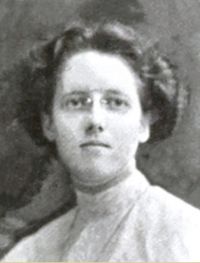
Portrait of Marjorie O'Connell Marjorie O'Connell,  The Habitat of the Eurypterida (1916)

“ If the graptolite-bearing beds are thin we may suppose that they were formed by frequent inundations from the sea, but when 1500 feet thick, as is the case of the Schenectady beds throughout the entire thickness of which graptolites occur at intervals, then the only interpretation is that the beds were a series of flood-plain and delta deposits, mostly above sea-level, and that the graptolites were stranded on the low-lying land areas by periodic incursions of the sea. ”
Source: Wikisource

Frederick Chapman,  Australasian Fossils: A Students' Manual of Palaeontology

“ The Graptolites were so named by Linnaeus from their resemblances to writing on the slates in which their compressed remains are found. They form a very important group of Palaeozoic fossils in all parts of the world where these rocks occur, and are well represented in Australasia. The species of the various Graptolite genera are often restricted to particular beds, and hence they are of great value as indicators of certain horizons or layers in the black, grey or variously coloured slates and shales of Lower Ordovician to Silurian times. ”
Source: Gutenberg

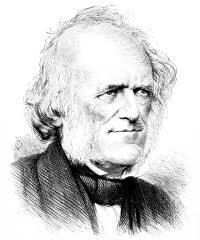
Portrait of Sir Charles Lyell Sir Charles Lyell,  The Student's Elements of Geology

“ With it have been found several other genera of the same family, such as Sphæronites, Hemicosmites, etc. Among the mollusca are Pteropods of the genus Conularia of large size (for genus, see Fig. 518) . About eleven species of Graptolite are reckoned as belonging to this formation; they are chiefly found in peculiar localities where black mud abounded. The formation, when traced into South Wales and Ireland, assumes a greatly altered mineral aspect, but still retains its characteristic fossils. ”
Source: Gutenberg

Get perspective with Kwize: daily news enlightened by great literature