 Letitia Elizabeth Landon,
Poetical Fragments from Ethel Churchill…
(1838)
Letitia Elizabeth Landon,
Poetical Fragments from Ethel Churchill…
(1838)
“ We might have been!—these are but common words, And yet they make the sum of life's bewailing; ”
Letitia Elizabeth Landon,
Poetical Fragments from Ethel Churchill…
(1838)
“ We might have been!—these are but common words, And yet they make the sum of life's bewailing; ”
 Bayard Taylor,
Joseph and His Friend: A Story of Pennsylvania
(1870)
Bayard Taylor,
Joseph and His Friend: A Story of Pennsylvania
(1870)
“ Who shall decide for me—if not myself—on their claims?—who can judge for me what strength requires to be exercised, what pleasure to be enjoyed, what growth to be forwarded? All around me, everywhere, are the means of gratification,—I have but to reach forth my hand and grasp ”
Sir Thomas Dick Lauder, The Wolfe of Badenoch: A Historical Romance of the Fourteenth Century
“ Yet hear me patiently, and thou shalt know all. Thou art not ignorant that I have long abjured the pitiful affairs of men. ’Tis now more than fifteen years since, quitting their society, I have devoted myself to those studies by which thou hast more than once benefited. ”
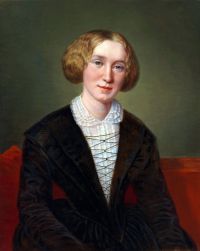 George Eliot,
Daniel Deronda
(1876)
George Eliot,
Daniel Deronda
(1876)
“ We must find our duties in what comes to us, not in what we imagine might have been. ”
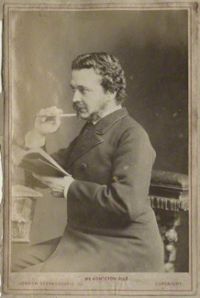 Charles Hamilton Aïdé,
Elizabeth's Pretenders
(1895)
Charles Hamilton Aïdé,
Elizabeth's Pretenders
(1895)
“ But it seems to me you have an enormous belief in your own capacity—that is different from conceit—and it may be, you know, that you are mistaken. So many are. The gift 'to see ourselves as others see us' is given to few. ”
Henry James, Notes of a Son and Brother
“ Sufficiency shuts us in but till the man of the world—never prefigured, as I say, only welcomed on the spot—appears; when we see at once how much we have wanted him. When we fail of that acknowledgment, that sense as of a tension, an anxiety or an indigence relieved, it is of course but that the extraordinary set of circumstances, or above all the extraordinary time of life I speak of, has indeed intervened. ”
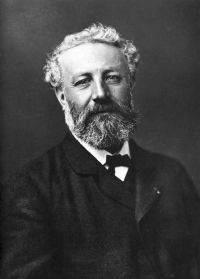 Jules Verne,
The Survivors of the Chancellor…
(1875)
Jules Verne,
The Survivors of the Chancellor…
(1875)
“ All these things seemed to have happened so long ago, and yet we were living still. Living, did I say? Ay, if such an existence as ours could be called a life, fourteen of us were living still. Who would be the next to go? ”
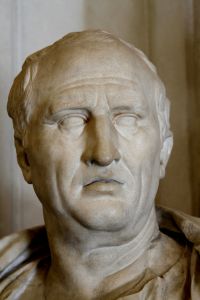 Marcus Tullius Cicero,
On Friendship
(44 BC)
Marcus Tullius Cicero,
On Friendship
(44 BC)
“ You should use what you have, and whatever you may chance to be doing, do it with all your might. ”
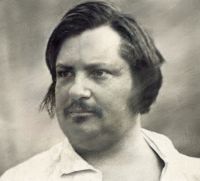 Honoré de Balzac,
The Magic Skin
Honoré de Balzac,
The Magic Skin
“ Two verbs cover all the forms which these two causes of death may take—To Will and To have your Will. Between these two limits of human activity the wise have discovered an intermediate formula, to which I owe my good fortune and long life. ”
Terence, The Comedies of Terence
“ I have every thing, yet have nothing; and although I possess nothing, still, of nothing am I in want.” ”
 Ann S. Stephens,
The Old Countess; or, The Two Proposals
Ann S. Stephens,
The Old Countess; or, The Two Proposals
“ Write to Lord Hope; tell him the truth—that you have won the respect of men by your actions, and have, with your own energies, acquired wealth enough to make you a fair match in that respect for his daughter. ”
Matthew Henry, Matthew Henry's Commentary on the Whole Bible… (1700s)
“ If thou canst, answer me. If thou hast so much strength and spirit left thee, and art not quite spent with the distemper and the dispute, set thy words in order, and they shall have their due consideration." Those that can speak reason will hear reason. ”
vicomte de François-René Chateaubriand, The Memoirs of François René Vicomte de Chateaubriand sometime Ambassador to England…
“ If I were destined to live, I should represent in my person, as represented in my Memoirs, the principles, the ideas, the events, the catastrophes, the idylls of my time, the more in that I have seen a world end and a world commence, and that the conflicting characters of that ending and that commencement lie intermingled in my opinions. ”
 Samuel Johnson,
The Works of Samuel Johnson, LL.D. in Nine Volumes…
Samuel Johnson,
The Works of Samuel Johnson, LL.D. in Nine Volumes…
“ Would any man, after him, venture to draw them over again, he would expose himself to the fate of those who have ventured to continue them. For instance, what could we add to his character of the absent man? ”
 O. Henry,
The Four Million
(1906)
O. Henry,
The Four Million
(1906)
“ Well, we agreed that night that we would meet here again exactly twenty years from that date and time, no matter what our conditions might be or from what distance we might have to come. We figured that in twenty years each of us ought to have our destiny worked out and our fortunes made, whatever they were going to be. ”
 Henry David Thoreau,
Autumn
(1892)
Henry David Thoreau,
Autumn
(1892)
“ You must be aware that no thing is what you have taken it to be. ”
Henry David Thoreau,
A Week on the Concord and Merrimack Rivers
(1849)
“ Go where we will on the surface of things, men have been there before us. ”
 Laurence Sterne,
A Sentimental Journey Through France and Italy
Laurence Sterne,
A Sentimental Journey Through France and Italy
“ I am positive I have a soul; nor can all the books with which materialists have pester’d the world ever convince me to the contrary. ”
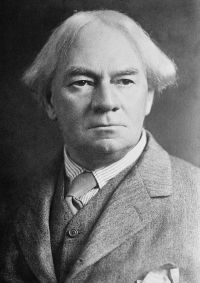 Jerome Klapka Jerome,
Idle Thoughts of an Idle Fellow…
(1886)
Jerome Klapka Jerome,
Idle Thoughts of an Idle Fellow…
(1886)
“ The truth is, we each of us have an inborn conviction that the whole world, with everybody and everything in it, was created as a sort of necessary appendage to ourselves. Our fellow men and women were made to admire us, and to minister to our various requirements. ”
G. Lowes Dickinson, The Meaning of Good—A Dialogue
“ I am only trying to discover what you make yourself do. And do you, as a matter of fact, really dispute the main conclusions to which we have come, or rather, if you will accept my phrase, the main 'postulates of the will' which we have elicited? ”
 Johann Wolfgang von Goethe,
The Sorrows of Young Werther
(1774)
Johann Wolfgang von Goethe,
The Sorrows of Young Werther
(1774)
“ I have possessed that heart, that noble soul, in whose presence I seemed to be more than I really was, because I was all that I could be. ”
 Josiah Royce,
The World and the Individual, First Series
(1899)
Josiah Royce,
The World and the Individual, First Series
(1899)
“ Is it not indeed plain that, as we ourselves have often heretofore said, when we talk of Being, we are indeed seeking for what, if present, would satisfy or tend to satisfy our conscious needs and meanings? Let us take this very character as the sole basis of our definition of what it is to be. Let us first say that whenever we talk of Being we mean a definitely Possible Fact of experience, viewed just as something possible for us. ”
 William Wordsworth,
The Excursion
(1814)
William Wordsworth,
The Excursion
(1814)
“ In describing the general tenour of thought which Epitaphs ought to hold, I have omitted to say, that, if it be the actions of a Man, or even some one conspicuous or beneficial act of local or general utility, which have distinguished him and excited a desire that he should be remembered, then, of course, ought the attention to be directed chiefly to those actions or that act ”
 John Ruskin,
Sesame and Lilies — Lecture I
(1895)
John Ruskin,
Sesame and Lilies — Lecture I
(1895)
“ You have, indeed, men among you who do not; by whose work, by whose strength, by whose life, by whose death, you live, and never thank them. Your wealth, your amusement, your pride, would all be alike impossible, but for those whom you scorn or forget. ”
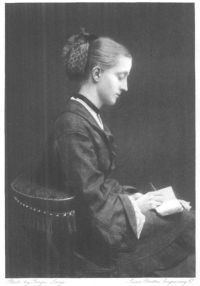 Juliana Horatia Ewing,
Miscellanea
Juliana Horatia Ewing,
Miscellanea
“ And those whom she has so long taught have, perhaps, some claim upon the lessons of her good example.Most well-loved pursuits, perhaps most good habits of our lives, owe their origin to our being stirred at one time or another to the imitation of some one better, or better gifted than ourselves. ”
George Eliot,
Middlemarch
(1872)
“ I’ve always felt that your belongings have never been on a level with you. ”
Anonymous, The Empress Frederick: a memoir
“ Your exertions, and the demands which have been made upon you, have been quite immense; you have done your best, and have won the hearts, or what is called the hearts, of all. In the nature of things we may now expect a little reaction. ”
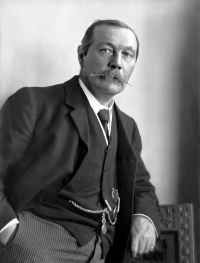 Arthur Conan Doyle,
A Study in Scarlet
(1887)
Arthur Conan Doyle,
A Study in Scarlet
(1887)
“ “What you do in this world is a matter of no consequence,” returned my companion, bitterly. “The question is, what can you make people believe that you have done. ”
William James, The Philosophical Review (1892)
“ Now the sort of 'fact of experience' on which in my book I have proposed to compromise, is the so-called 'mental state,' in whose existence not only common men but philosophers have uniformly believed. ”
Fred S. Lincoln, An Indiana Girl — Chapter 5 (1901)
“ I am afraid that, in the order of circumstances, you have failed to grasp the exchange between the two, as it lies hidden beneath the achievements of the man, and yet is most often evidenced in his achievements. Of course we make offerings, and why should we not? We, as men, have these things to give. ”
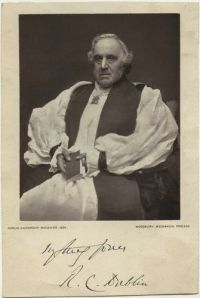 Richard Chenevix Trench,
Proverbs and Their Lessons
Richard Chenevix Trench,
Proverbs and Their Lessons
“ Those who have occupied themselves herein have sought to trace historically the circumstances out of which various proverbs have sprung, and to which they owe their existence; that so by the analogy of these we might realize to ourselves the rise of others whose origins lie out of our vision, obscure and unknown. ”
 Oscar Wilde,
The Picture of Dorian Gray
(1890)
Oscar Wilde,
The Picture of Dorian Gray
(1890)
“ And yet it seems to me to be the one thing I have been looking for all my life." ”
 Charles Kingsley,
Lectures Delivered in America in 1874
Charles Kingsley,
Lectures Delivered in America in 1874
“ And, indeed, if modern philosophers had stuck more closely to this old proverb, and its defining verb ‘make,’ and tried to show how some person or persons—let them be who they may—men, angels, or gods—made the sow’s ear into the silk purse, and the savage into the sage—they might have pleaded that they were still trying to keep their feet upon the firm ground of actual experience. ”
 Julian of Norwich,
Revelations of Divine Love
(1907)
Julian of Norwich,
Revelations of Divine Love
(1907)
“ "God, of Thy Goodness, give me Thyself;—only in Thee I have all" IN this same time our Lord shewed me a spiritual [1] sight of His homely loving. ”
Henry James, The Ambassadors (London: Methuen & Co…
“ Everything has come as a sort of indistinguishable part of everything else. Your coming out belonged closely to my having come before you, and my having come was a result of our general state of mind. Our general state of mind had proceeded, on its side, from our funny ignorance, our funny misconceptions and confusions—from which, since then, an inexorable tide of light seems to have floated us into our perhaps still funnier knowledge. ”
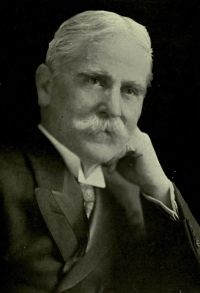 Henry Van Dyke,
Joy and Power: Three Messages with One Meaning
Henry Van Dyke,
Joy and Power: Three Messages with One Meaning
“ and so it does not depend on what we have, but on what we are. ”
 Anthony Trollope,
Mr. Scarborough's Family
Anthony Trollope,
Mr. Scarborough's Family
“ You make me talk of a condition of things which is quite, quite impossible. When I say that I like you, I am talking of the present condition of things. I have not the least desire to kill you, or myself, or anybody. ”
Elias Johnson, Legends, Traditions, and Laws of the Iroquois…
“ Our present condition, if considered in connection with the ordeal through which we have passed, shows that there is the presence of an element in our character which must eventually lead to important results. ”
 Johann Gottlieb Fichte,
Characteristics of the Present Age
(1806)
Johann Gottlieb Fichte,
Characteristics of the Present Age
(1806)
“ That you should actually be necessitated to approve, admire, and reverence such a Life as we have described, was the first step in our argument, upon which all else depended, and from which all else necessarily followed;—and this we must commit entirely to your own reflection, without interference on our part. ”
Henry David Thoreau,
Familiar Letters
“ I have thought there was some advantage even in death, by which we "mingle with the herd of common men." ”
 Jeanne Marie Bouvier de la Motte Guyon,
The Autobiography of Madame Guyon
Jeanne Marie Bouvier de la Motte Guyon,
The Autobiography of Madame Guyon
“ O, my God, how true it is that we may have of Thy gifts, and yet be very imperfect, and full of ourselves! ”
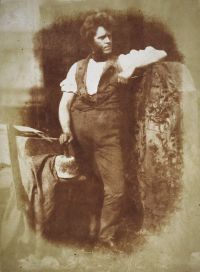 Hugh Miller,
Scenes and legends of the north of Scotland
(1869)
Hugh Miller,
Scenes and legends of the north of Scotland
(1869)
“ And surely He who in His providence cares for all my bodily wants, without sinking, in the littleness of the object cared for, aught of the greatness of His character, might, without lessening in aught His character for wisdom, have taken this way of making me see, more distinctly than in all my life before, that there is indeed an invisible world, and that all the future is known to Him. ”
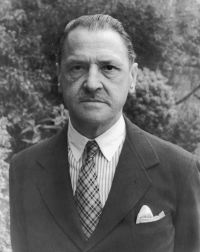 W. Somerset Maugham,
The Painted Veil
(1925)
W. Somerset Maugham,
The Painted Veil
(1925)
“ Thou shalt have it only, the answer seemed to come to me, when thou hast ceased to desire it." ”
 James Champlin Fernald,
English Synonyms and Antonyms
James Champlin Fernald,
English Synonyms and Antonyms
“ The direct experiences of the soul, as joy, grief, hope, fear, are purely subjective; the outward causes of these experiences, as prosperity, bereavement, disappointment, are objective. That which has independent existence or authority apart from our experience or thought is said to have objective existence or authority ”
Virgil M. Harris, Ancient, Curious, and Famous Wills
“ The will itself is thus indited:“Seeing that I have no direct descendants, and that I am wholly unacquainted with those I may possess collaterally, I bequeath my fortune to any one among them who, in the course of a twelve-month from the date of my death, may distinguish himself by an act of heroism worthy of ancient times. ”
Marcus Tullius Cicero,
The Academic Questions, Treatise De Finibus…
(1891)
“ Do we forget how much we are affected at hearing or reading when we are brought to the knowledge of anything which has been done in a pious, or friendly, or magnanimous spirit? Why should I speak of men like ourselves, who have been born and brought up and trained to praise and glory? ”
 Edward B. Hall,
Memoir of Mary L. Ware, Wife of Henry Ware…
Edward B. Hall,
Memoir of Mary L. Ware, Wife of Henry Ware…
“ The uniform disposition you have ever [Pg 50] shown to promote the ease and happiness of all around you, will long remain a sweet remembrance of one whose image is connected in my mind with every softer virtue, accompanied by that strength of mind which would enable you, if called upon, to sustain uncommon trials. ”
Henry James, The Letters of Henry James (Vol…
“ And all your missings and memories and contrasts and tendernesses are a part—the essence—of the very force that is in you to live, and to feel again—and yet again and again; when, at last, to have so felt will be the thing in the world you'll be gladdest to have done. ”
David Francis Bacon, Lives of the apostles of Jesus Christ (1836)
“ At this day, the most trifling circumstances connected with them,――their actions, their dwelling-places, their lives or their deaths, have a value vastly above what could ever have been appreciated by those of their own time, who acted, dwelt, lived, and died with them,――a value increasing through the course of ages, in a regular progression, rising as it removes from the objects to which it refers. ”
