Hyperbola

Definition and stakes

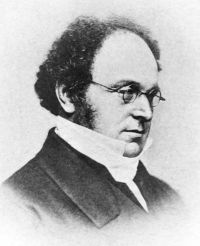
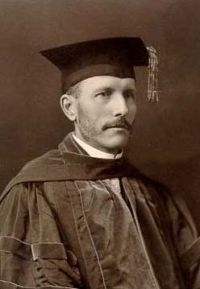
Portrait of Lewis Carroll Lewis Carroll,  The Dynamics of a Parti-cle (1874)

“ What mathematician has ever pondered over an hyperbola, mangling the unfortunate curve with lines of intersection here and there, in his efforts to prove some property that perhaps after all is a mere calumny, who has not fancied at last that the ill-used locus was spreading out its asymptotes as a silent rebuke, or winking one focus at him in contemptuous pity? ”
Source: Wikisource

Various,  Encyclopaedia Britannica, 11th Edition…

“ If the tangent at P meets the asymptotes in R, R′, then CR·CR′ = CS2. The geometry of the rectangular hyperbola is simplified by the fact that its principal axes are equal.
Analytically the hyperbola is given by ax2 + 2hxy + by2 + 2gx + 2fy + c = 0 wherein ab > h2. Referred to the centre this becomes Ax2 + 2Hxy + By2 + C = 0; and if the axes of coordinates be the principal axes of the curve, the equation is further simplified to Ax2 − By2 = C, or if the semi-transverse axis be a, and the semi-conjugate b, x2/a2 − y2/b2 = 1. This is the most commonly used form.
”
Source: Gutenberg

Charles Everitt, Olaus Henrici, Edwin B. Elliott, John H. Grace, Bertrand A. W. Russell and Alfred N. Whitehead,  1911 Encyclopædia Britannica (1911)

“ The curve is in this case called an Hyperbola (see fig. 20) . The tangents at the two points at infinity are finite because the line at infinity is not a tangent. They are called Asymptotes. The branches of the hyperbola approach these lines indefinitely as a point on the curves moves to infinity.
§ 60. That the circle belongs to the curves of the second order is seen at once if we state in a slightly different form the theorem that in a circle all angles at the circumference standing upon the same arc are equal.
”
Source: Wikisource

Get perspective with Kwize: daily news enlightened by great literature