Iron(II) oxide

Definition and stakes

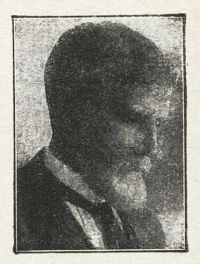
la Verne W. Spring,  Non-technical chats on iron and steel and their application to modern industry (1917)

“ Reaumur, who about 1722 discovered the annealing process, used iron oxide for the purpose. The white iron was packed in iron ore or mill scale. At the high temperatures employed the oxygen of the ore in some way not yet definitely known, gradually removed the greater amount of the carbon from the casting. It has always been a scientific conundrum how a solid, iron oxide, surrounding another solid, a piece of white iron, could remove from the latter its carbon when neither of them melts nor mingles with the other. ”

Source: Gutenberg

Henley's Twentieth Century Formulas…

“ As picture-producing bodies, the large group of iron salts are above all eminently adapted, but other substances, such as chromium, manganese, etc., as well as pigments with glue solutions may also be employed. The development takes place as follows: When the paper which has been in contact with the negative is drawn through a solution of ferrous oxide, the protoxide is transformed into oxide by the peroxide, hence a yellow positive picture, consisting of iron oxide, results, which can be readily changed into other compounds, so that the most varying tones of color can be obtained. ”
Source: Gutenberg

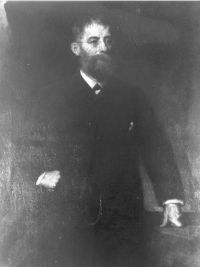
Portrait of Andrew Ure Andrew Ure,  A Dictionary of Arts, Manufactures and Mines

“ This oxide requires, at most, one or two proportions of flux, either saline or metallic, to enter into complete fusion; but a much smaller dose is commonly taken, and a little oxide of iron is introduced. To four pounds of frit, for instance, two ounces of oxide of copper and 48 grains of red oxide of iron are used; and the ordinary measures are pursued for making very homogeneous enamel.
The green produced by the oxide of chrome is much more solid; it is not affected by a powerful fire, but it is not always of a fine shade.
”
Source: Gutenberg

Get perspective with Kwize: daily news enlightened by great literature