Ivory carving

Definition and stakes

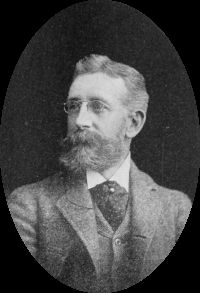
Alfred Ogle Maskell,  1911 Encyclopædia Britannica (1911)

“ Ivory carving follows the vulgar fashion, is content with copying or adapting, and until the revival in our own times is, except in rare instances, no longer to be classed as a fine art. It becomes a trade and is in the hands of the mechanic of the workshop. In this necessarily brief and condensed sketch we have been concerned mainly with ivory carving in Europe. It will be necessary to give also, presently, some indications enabling the inquirer to follow the history—or at least to put him on the track of it—not only in the different countries of the West but also in India, China and Japan. ”
Source: Wikisource

Juan F. Riaño,  The Industrial Arts in Spain

“ There is a constant connection between these objects and those made of ivory: the same characteristics exist which I shall hereafter point out as appearing in Moorish ivory carvings. The art of ivory carving was imported from the East, the subjects are much alike in ivory and metal when men and animals are represented, and the inscriptions and bands of ornamentation are similar in style. The main variations consist in the different systems employed in metal work, by which the work differs according to the proceedings adopted, of repoussé or chiselling, filigree, niellos or enamels. ”
Source: Gutenberg

Richard Glazier,  A Manual of Historic Ornament

“ A beautiful treatment of ivory was used in the 13th and 14th centuries by the Saracens of Egypt; they frequently worked a fine geometric inlay of ivory upon ebony; in other examples ivory panels were pentagonal, hexagonal, or star-shaped, and carved with delicate arabesques, the framing of the panels being of cedar or ebony. In India ivory carving reached a high degree of perfection, especially in the many ivory combs, with pierced and relief work representing the figure of Buddha surrounded with foliage and richly caparisoned elephants. ”
Source: Gutenberg

Get perspective with Kwize: daily news enlightened by great literature