Language teaching

Definition and stakes

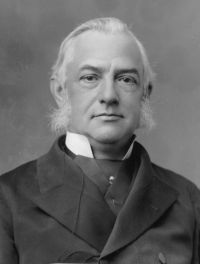
Portrait of H. G. Wells H. G. Wells,  Mankind in the Making

“ The language of literature and of civilized ideas is, for the English-speaking world to-day, English—not the weak, spoken dialect of each class and locality, but the rich and splendid language in which and with which our literature and philosophy grow. That, however, is by the way. Our point at present is that the exhaustive teaching of a language so that it may serve as a key to culture is a second function in the school. ”
Source: Gutenberg

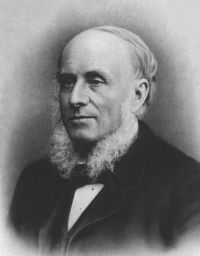
Thomas Sheridan,  A Discourse Being Introductory to his Course of Lectures on Elocution and the English Language…

“ Can any man communicate more knowlege than he is himself possessed of? Can any man teach an art which he never learned? Can any man instruct others in a language, in which he never was instructed? Can either any art or language be regularly taught without a well digested system of rules? And if no such system has hitherto been formed, either with respect to the English language, or the art of speaking it, how shall any man set about teaching them? ”
Source: Gutenberg

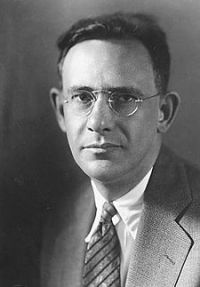
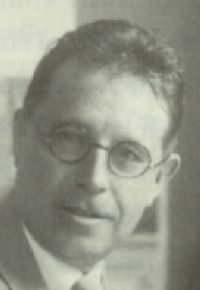
Portrait of Harold E. Palmer Harold E. Palmer,  The Principles of Language-Study

“ Now, as we have seen and proved to our satisfaction, language-learning is essentially a habit-forming process, is an art and not a science, and if we insist on considering as a science what is an art we are confusing the issues and creating a breeding-ground for all sorts of fallacies. Linguistics is a science, language-teaching is largely a science, but the practical study of languages is not ”
Source: Gutenberg

Get perspective with Kwize: daily news enlightened by great literature