Law of inertia
Definition and stakes
Quotes about “law of inertia”

Various, The Contemporary Review, Volume 36…
“ If we consider that rest or motion when once established is the normal state of matter, then the force which causes a change causes a breach of the law of inertia. But if we consider that the liability to be moved, or to have motion stopped by force, is itself a property of matter, then the application of force with such result is merely calling into operation the law of inertia. ”
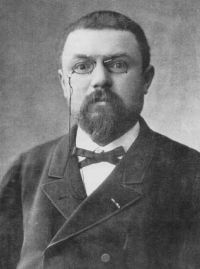 Henri Poincaré,
The Foundations of Science: Science and Hypothesis…
Henri Poincaré,
The Foundations of Science: Science and Hypothesis…
“ To make it clear that this is really the natural generalization of the law of inertia, I shall beg you to permit me a bit of fiction. The law of inertia, as I have said above, is not imposed upon us a priori; other laws would be quite as compatible with the principle of sufficient reason. If a body is subjected to no force, in lieu of supposing its velocity not to change, it might be supposed that it is its position or else its acceleration which is not to change. ”
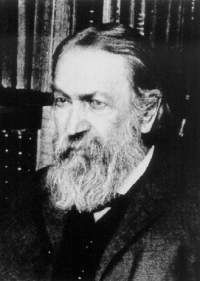 Ernst Mach,
Popular scientific lectures
Ernst Mach,
Popular scientific lectures
“ No man of sound common sense could ever have doubted that a pressure or force is requisite to set a body in motion in a given direction and that a contrary pressure is required to stop suddenly a body in motion. Though the law of inertia was first formulated with anything like exactness by Galileo, the facts at the basis of it were known long previously to men of the stamp of Leonardo da Vinci, Rabelais, and others, and were illustrated by them with appropriate experiments. ”
S. A. Reilly, Our Legal Heritage, King AEthelbert… (2012)
“ So if a force acts on a planet, it produces a change in velocity that is proportional to the force and in the same direction as the force. His law of inertia is that any body, persists in its state of rest or of uniform motion in a straight line, unless affected by an outside force. ”
 Herbert Spencer,
Essays: Scientific, Political, & Speculative…
Herbert Spencer,
Essays: Scientific, Political, & Speculative…
“ In every case where it is remarked that a body stops the sooner, the more it is obstructed by other bodies or media, the law of inertia is assumed to hold in the obstructing bodies or media. The very conception of greater or less retardation so caused, implies the belief that there can be no retardations without proportionate retarding causes; which is itself the assumption otherwise expressed in the first law of motion. ”
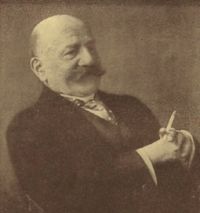 Alexander Moszkowski,
Einstein, the searcher
(1921)
Alexander Moszkowski,
Einstein, the searcher
(1921)
“ The Law of Inertia, according to our human standard, seems unsurpassable in simplicity and completeness; it seems to us fundamental. But this law, which prescribes uniform rectilinear motion to a body subject to no external forces, selects only one possibility out of an infinite number as being valid for us. It does not seem evident to a child, and it is easy to imagine a good scholar in some branch of knowledge other than physics, to whom it would likewise not seem evident. ”
Alexander Moszkowski,
Einstein, the searcher
(1921)
“ But the constancy of the velocity of light is such a law, as also is the law of inertia, according to which a body that is left to itself moves uniformly in a straight line. I confessed to him that this limitation to a few very general laws would be a painful matter for many an enthusiast of average attainments, who has great difficulty in distinguishing the laws that are generally valid from those that hold only within circumscribed limits. But if this were not so, we should have to alter our conception of what is conveyed by a popular exposition. ”
 William Whewell,
Astronomy and General Physics Considered with Reference to Natural Theology
William Whewell,
Astronomy and General Physics Considered with Reference to Natural Theology
“ Newton, and many English philosophers, teach the existence of three separate fundamental laws of motion, while most of the eminent mathematicians of France reduce these to two, the law of inertia and the law that force is proportioned to velocity. As an example of the views which we wish to illustrate, we may take the law of inertia, which is identical with Newton’s first Law of Motion. ”
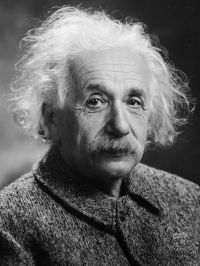 Albert Einstein,
Fundamental ideas and problems of the theory of relativity
(1923)
Albert Einstein,
Fundamental ideas and problems of the theory of relativity
(1923)
“ Moreover the previously mentioned vagueness in the definition of the inertial frame or in the formulation of the law of inertia raises doubts which obtain their decisive importance, owing to the empirical principle for the equality of the inertial and heavy mass, in the light of the following consideration. Let be an inertial frame without a gravitational field, ' a system of coordinates accelerated uniformly relative to . The behaviour of material points relative to ' is the same as if ' were an inertial frame in respect of which a homogeneous gravitational field exists. ”
 Henry Adams,
The Education of Henry Adams — Chapter 34…
(1918)
Henry Adams,
The Education of Henry Adams — Chapter 34…
(1918)
“ No one is likely to suggest a theory that man’s convenience had been consulted by Nature at any time, or that Nature has consulted the convenience of any of her creations, except perhaps the Terebratula. In every age man has bitterly and justly complained that Nature hurried and hustled him, for inertia almost invariably has ended in tragedy. Resistance is its law, and resistance to superior mass is futile and fatal.Fifty years ago, science took for granted that the rate of acceleration could not last. ”
 George Santayana,
Some Turns of Thought in Modern Philosophy…
George Santayana,
Some Turns of Thought in Modern Philosophy…
“ Yet inherent inertia can only be observed relatively: it makes no difference to me whether I am said to be moving at a great speed or absolutely at rest, if I am not jolted or breathless, and if my felt environment does not change. Inertia, or weight, in so far as it denotes something intrinsic, seems to be but another name for substance or the principle of existence: in so far as it denotes the first law of motion, it seems to be relative to an environment. ”
Erwin Freundlich, The foundations of Einstein's theory of gravitation (1924)
“ Such an inertial system is determined by the straight lines which connect three point-masses infinitely distant from one another (and thus unable to exert a mutual influence upon one another) and which are not subject to any other forces. This definition makes it evident why no [Pg 89] inertial system will be discoverable in nature, and why, consequently, the law of inertia will never be able to be formulated so as to satisfy the physicist. References:— C. Neumann. "Ueber die Prinzipien der Galilei-Newtonschen Theorie," Leipzig, 1870. ”
Thomas Bassnett, Outlines of a Mechanical Theory of Storms
“ What the ether wants in inertia, is made up by its motion or specific heat, considering in this case inertia to stand for weight when compared with ponderable matter; so that to raise an equivalent amount of inertia of ether to the same temperature as atmospheric air, will require as much more motion or specific heat as its matter is less. And this we conceive to be a law of space in relation to all free or gaseous matter. To apply it to solids would require a knowledge of the amount of force constituting the cohesion of the solid. ”
 E. E. Smith,
Galactic Patrol
(1937)
E. E. Smith,
Galactic Patrol
(1937)
“ It takes power, plenty of it, to maintain the force which neutralizes the inertia of mass, and if that force fails, even for an instant, while a ship is upon a planet's surface, the consequences are usually highly disastrous. For in the neutralization of inertia there is no magic, no getting of something for nothing, no violation of Nature's law of the conservation of matter and energy. The instant that force becomes inoperative the ship possesses exactly the same velocity, momentum, and inertia that it possessed at the instant the force took effect. ”
Oliver Lodge, Life and Matter A Criticism of Professor Haeckel's 'Riddle of the Universe' (August 15, 2008 [eBook #26321] [Most recently updated June 7, 2022])
“ But, then, inertia is not an easy property to measure,—very difficult to measure with great accuracy: it is in practice nearly always inferred from weight; and in terms of inertia the law of conservation of matter cannot be considered really an experimental fact; it is, strictly speaking, a reasonable hypothesis, an empirical law, which we have never seen any reason to doubt, and in support of which all scientific experience may be adduced in favour. ”
 William Stanley Jevons,
The principles of science
William Stanley Jevons,
The principles of science
“ Perhaps the best established law is that which asserts an invariable correlation to exist between gravity and inertia, so that all gravitating bodies are found to possess inertia, and all738 bodies possessing inertia are found to gravitate. But it would be no reproach to our scientific method, if something were ultimately discovered to possess gravity without inertia. ”
Michael Pupin, From Immigrant to Inventor (1922)
“ The moving prongs have a momentum, and a change in the momentum opposes a reacting force, the so-called inertia reaction, which is equal to the rate of this change. This was discovered by Galileo over three hundred years ago. We experience the operation of this law every time we bump against a moving object. The Irish sailor who, after describing the accident which made him fall from the mast, assured his friends that it was not the fall which hurt him but the sudden stop, appreciated fully the reacting force due to a rapid change of momentum. ”
A. E. Dolbear, The Machinery of the Universe: Mechanical Conceptions of Physical Phenomena
“ The resistance that a mass of matter opposes to a change in its position or rate and direction of movement, is called inertia. That it should actively oppose anything has been already pointed out as reason for denying that matter is inert, but inertia is the measure of the reaction of a body when it is acted upon by pressure from any source tending to disturb its condition of either rest or motion. ”
Henry Kater, A Treatise on Mechanics
“ The language sometimes used to explain the property of inertia in popular works, is eminently calculated to mislead the student. The terms resistance and stubbornness to move are faulty in this respect. Inertia implies absolute passiveness, a perfect indifference to rest or motion. It implies as strongly the absence of all resistance to the reception of motion, as it does the absence of all power to move itself. The term vis inertiæ or force of inactivity, so frequently used even by authors pretending to scientific accuracy, is still more reprehensible. ”
1911 Encyclopædia Britannica, Volume 18… (1911)
“ On the other hand, under the influence of the mechanics of his day, which had hardly distinguished between inertia, or the inability of a body to change itself, and resistance or the ability of bodies to oppose one another, he concluded that, as inertia is passive, so is resistance, and refused to recognize that in collision the mutual resistance of moving bodies is a force, or active power, of changing their movements in opposite directions. ”
Various, The Catholic World, Vol. 19, April 1874‐September 1874
“ Hence what physicists call “force of inertia” is not a passive resistance proceeding from the inertia of matter, but an active exertion of the molecular powers, and has been so called only because, all other things being equal, its intensity is proportional to the mass of the inert body.160 Evidently, inertia itself cannot resist or check the advance of an impinging body. Nothing but a positive action can do it; for nothing but a positive action can communicate to the advancing body that impetus in the opposite direction which alone is competent to neutralize the impetus of the advance. ”
Henry Hobart Bates, Popular Science Monthly (1883)
“ One class of philosophers, recognizing the self-existent character of motion, has exhausted ingenuity in the effort to deduce attraction from it, of course wittingly or unwittingly bringing into co-operation the occult force inertia, to obtain vis viva. Another class would deduce all motion from attraction: while in the attempt to contrive a mechanism to explain resiliency—the most incomprehensible of all in a body without parts—immensely greater complications and difficulties have been introduced. Inertia, so far as I am aware, has always been accepted as an inscrutable fact, or ignored. ”
Henri Poincaré,
Science and Hypothesis
(1905)
“ If it be said that the velocity of a body cannot change, if there is no reason for it to change, may we not just as legitimately maintain that the position of a body cannot change, or that the curvature of its path cannot change, without the agency of an external cause? Is, then, the principle of inertia, which is not an à priori truth, an experimental fact? Have there ever been experiments on bodies acted on by no forces? ”
Francis John Kean, The Petrol Engine
“ We have seen how the rotating parts of the engine can be balanced, but we have not considered the reciprocating parts. To understand this question of balancing we must talk about “inertia forces.” All bodies possess inertia, that is, they resent changes in their state of rest or motion. If a body is moving uniformly it tends to keep on doing so, whereas if it is at rest it tends to remain so. To start the body off from rest, or to stop the body and bring it to rest, requires a force to be exerted, and this force may be called the inertia force. ”
T. H. Pasley, The Philosophy Which Shows the Physiology of Mesmerism and Explains the Phenomenon of Clairvoyance
“ Inertia, a passive power, is as death, being passive animation; and inertia enabling a body to act against force, is nothing short of active inertia, or vis inertiæ, which means the force of inability. This monstrous perversion of a natural fundamental principle, and by such high authority, pervades the whole of the established philosophy. It makes the planets, which are but clumps of deadly inert matter, gravitate themselves through space; and makes inert atoms competent to perform attraction on each other wherever they exist. ”
Aram D'Abro, The evolution of scientific thought from Newton to Einstein (1927)
“ It was assumed, therefore, by classical science that there existed around a body like the earth a real absolute field of force distributed radially through space, whereas in the accelerated enclosure the forces were merely fictitious or relative.There is yet another way of bringing out the difference between forces of inertia and forces of gravitation. Forces of inertia are generated by motion, whereas forces of gravitation are generated by matter. Thus, if we arrest the rotation of a disk, the observer, fixed to the disk, will note that the forces of inertia have vanished. ”
 Denison Olmsted,
Letters on Astronomy
Denison Olmsted,
Letters on Astronomy
“ The heavenly bodies are actually in this condition: they continue to move, not because any new forces are applied to them; but, having been once set in motion, they continue in motion because there is nothing to stop them. This property in bodies to persevere in the state they are actually in,—if at rest, to remain at rest, or, if in motion, to continue in motion,—is called inertia. The inertia of a body (which is measured by the force required to overcome it) is proportioned to the quantity of matter it contains. ”
 John Wesley Powell,
Truth and Error — Chapter XXII.
(1898)
John Wesley Powell,
Truth and Error — Chapter XXII.
(1898)
“ There yet remain certain properties or bodies as forces which usually are not conceived as modes of motion. Inertia and rigidity are the two most important. If they are deprived of their occult attributes, all other forces fall into line as modes of motion. Inertia, as defined by Newton, is resistance to deflection of motion, or resistance to acceleration, positive or negative; but when we remember that a body has the internal motion of its parts, and properly conceive that these motions are deflected when the body is accelerated, inertia becomes simple as resistance to deflection. ”
Chautauqua Institution, The Chautauquan, Vol. 03, February 1883
“ A. If a body is at rest, inertia is that quality by which it will forever remain so, unless acted upon by some force from without; and if a body is in motion, it will continue on at the same speed, in a straight line, forever, unless it is quickened, retarded, or turned from its path by some other force. ”
 John Strutt, 3rd Baron Rayleigh,
On the Light from the Sky, Its Polarization and Colour
(1899)
John Strutt, 3rd Baron Rayleigh,
On the Light from the Sky, Its Polarization and Colour
(1899)
“ Even with the particles retarding the motion of the aether, the same will be true if, to counterbalance the increased inertia, suitable forces are caused to act on the aether at all points where the inertia is altered. ”
Henry Adams,
The Education of Henry Adams — Chapter 30…
(1918)
“ So long as these motives were habitual, and their attraction regular, the consequent result might, for convenience, be called movement of inertia, to distinguish it from movement caused by newer or higher attraction; but the greater the bulk to move, the greater must be the force to accelerate or deflect it. ”
A. E. Dolbear, The Machinery of the Universe: Mechanical Conceptions of Physical Phenomena
“ It is the equivalent of mass, or the amount of matter as measured by gravity, and is a fixed quantity; for inertia is as inherent as any other quality, and belongs to the ultimate atoms and every combination of them. It implies the ability to absorb energy, for it requires as much energy to bring a moving body to a standstill as was required to give it its forward motion. ”
Related terms
Authors who wrote about “law of inertia”
Henri PoincaréErwin FreundlichAlbert EinsteinHenry KaterCharles NordmannA. E. Dolbear Wilhelm WienWilliam George HooperAram D'AbroOliver LodgeT. H. PasleyPaul LangevinHenry Hobart BatesWilliam Bower TaylorJohn Bernhard StalloAlbert Einstein, Philipp Lenard…Various
 John LawJohn Wesley PowellHenry Adams