Lunar day

Definition and stakes

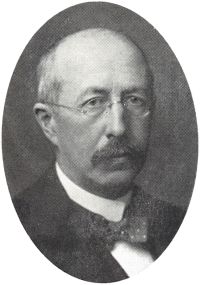
Portrait of Frances Elizabeth Fryatt Frances Elizabeth Fryatt,  Popular Science Monthly (1881)

“ To the east is reigning the brilliant lunar day, so long, so fierce, so hot; beyond it is evening, with sunset touching the mountain-peaks on the terminator; in the remotest west, midnight!
This is more than one can see on one's own terrestrial ball, where the vision is bounded by atmosphere, and objects "by degrees grow beautifully less."
One must not look at the full moon to view all these wonders, for seen through the telescope it is merely a brilliant, dazzling sphere; mountains, valleys, and plains are flooded with intensest light; no shadows fall; the white glitter is intolerable!
”
Source: Wikisource

James Nasmyth,  James Nasmyth, Engineer: An Autobiography

“ One portion of the moon, on which the sun is shining, is brilliantly illuminated, while all in shade is dark.
While the disc of the sun appears a vast electric light of overpowering rayless brilliancy, every star and planet in the black vault of the lunar heavens is shining with steady brightness at all times; as, whether the Sun be present or absent during the long fourteen days' length of the lunar day or night, no difference on the absolutely black aspect of the lunar heavens can appear.
”
Source: Gutenberg

J. A. Gillet,  The Heavens Above: A Popular Handbook of Astronomy

“ The Lunar Day.—The lunar day is twenty-nine times and a half as long as the terrestrial day. Near the moon's equator the sun shines without intermission nearly fifteen of our days, and is absent for the same length of time. Consequently, the vicissitudes of temperature to which the surface is exposed must be very great. During the long lunar night the temperature of a body on the moon's surface would probably fall lower than is ever known on the earth, while during the day it must rise higher than anywhere on our planet.
Fig.
”
Source: Gutenberg

Get perspective with Kwize: daily news enlightened by great literature